
What are Offshore Vessels?
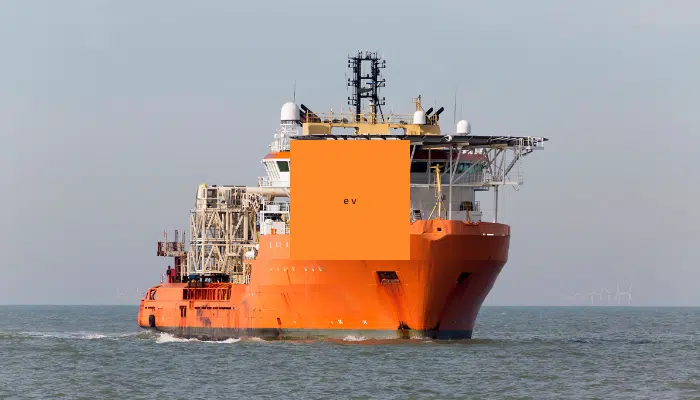
Offshore vessels primarily serve the offshore oil and gas sector and are also engaged in offshore construction projects like offshore wind farms. Different types of offshore vessels handle specific tasks such as transporting supplies to oil platforms, undertaking drilling etc. Crew members of offshore rigs or floating structures also use them to go home or return to work.
Offshore Vessels can be classified into the following major groups:
- Oil Exploration and Drilling Vessels
- Offshore Support Vessels
- Offshore Production Vessels
- Construction/Special Purpose Vessels
Each of these categories comprises a variety of vessels.
Oil Exploration and Drilling Vessels
Oil exploration vessels, as the name suggests, help in the exploration and drilling of oil on high seas. The main types of oil exploration vessels are:
- Drillship
- Jack Up Vessels
- Semi-submersible Vessels
- Offshore barge
- Floating Platforms
- Tenders
Offshore Support Vessels
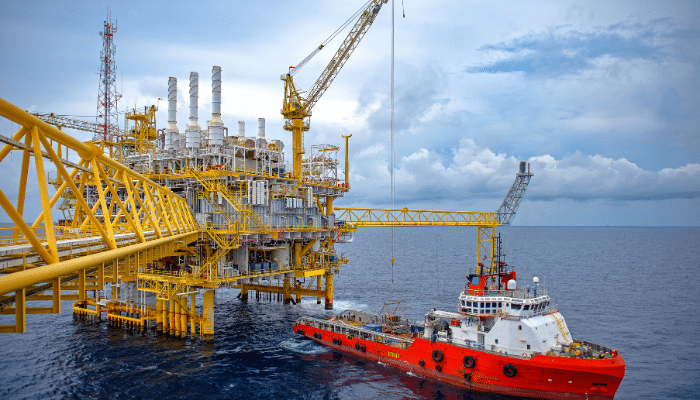
Certain offshore vessels provide manpower and technical reinforcement so operational processes on the high seas continue smoothly without interruptions. Such vessels are called as ‘offshore support vessels.’
Offshore supply vessels transport the required structural components and supply freight too. They are purpose-built to suit the operational demands.
Some of the main offshore support vessels are:
- Anchor Handling Tug Vessel (AHTV)
- Seismic Vessel
- Platform Supply Vessels (PSVs)
- Well Intervention Vessel
- Accommodation Ships
Offshore Production Vessels
Offshore production vessels aid the production processes on offshore structures. FPSOs (Floating, Production, Storage and Offloading) are an example. The main types are:
- Floating Production Storage and Offloading (FPSO)
- Single Point Anchor Reservoir (SPAR) platform
- Shuttle Tankers
- Tension Leg Platform (TLP)
Offshore Construction Vessels
These ships are involved in construction projects on the high seas involving oil rigs/platforms and offshore wind farms.
They also offer anchorage and tugging assistance and help in positioning underwater cables and pipelines.
The main types are:
- Diving Support Vessel
- Crane Vessel
- Pipe Laying Vessel
Additionally, ships that offer aid in maritime emergencies and those involved in marine research in oceans and seas also fall under the category of offshore vessels.
The rise in maritime activities, especially offshore oil and gas projects has raised the demand for these vessels. Today, offshore vessels are highly advanced and often purpose-built with features needed to perform specific tasks.
Some famous offshore vessels are:
- North Sea Giant – World’s Tallest Offshore Vessel
- Neptune – Powerful Jack-up Vessel
- Type o – Semi-submersible heavy transport vessel (SSHTV)
- Bourbon Front Platform supply vessel
- Solitaire – The Largest Pipe Laying Vessel in the World
You might also like to read:
- Introduction To the Royal Navy’s New Offshore Patrol Vessels
- 12 Biggest Semi-Submersible Heavy Transport Vessels
- Top 12 Biggest Offshore Wind Farms in The World
References: gulfmark, bumiarmada
Disclaimer :
The information on this website is for general purposes only. While efforts are made to ensure accuracy, we make no warranties of any kind regarding completeness, reliability, or suitability. Any reliance you place on such information is at your own risk. We are not liable for any loss or damage arising from the use of this website.


Related Articles

About Author
Zahra is a maritime writer with 6 years of technical writing experience spanning port operations, offshore wind, oil and gas, and maritime policy. Her analytical edge...Read More ->
Disclaimer :
The information on this website is for general purposes only. While efforts are made to ensure accuracy, we make no warranties of any kind regarding completeness, reliability, or suitability. Any reliance you place on such information is at your own risk. We are not liable for any loss or damage arising from the use of this website.
Subscribe To Our Daily Newsletter
By subscribing, you agree to our Privacy Policy you can unsubscribe anytime.


Great information, I would like to get permission to use some of your drawings in a student reader.
Dear Sir/Madame
I am mechanical crane operator at sparrows, I have 19 years offshore experience in lifting operations and have knowledge in mechanical, and hydraulic systems, I am looking for vacancies in your organization.