
World’s First Global Maritime Competition
What is Freeboard on Ships?
We are all aware of the concepts of reserve buoyancy and draft, which are measures of the sinkage of the vessel. Freeboard is something closely related to these.
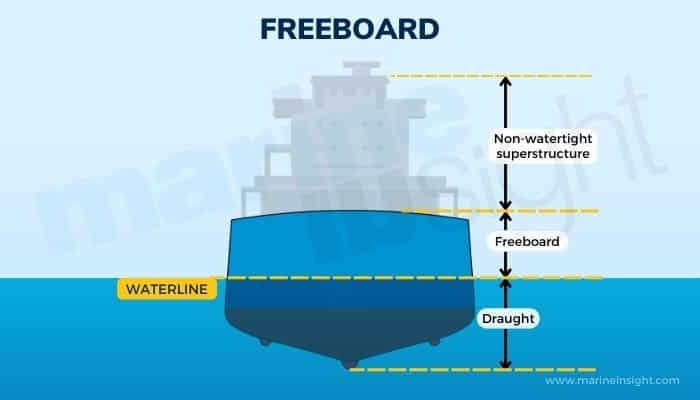
A freeboard is a minimum distance between the exposed deck edge and the waterline for a floating vessel. In other words, it is the difference between depth and draft.
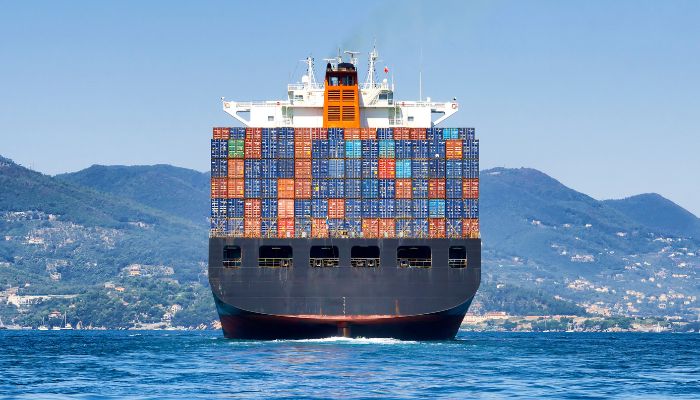
The word minimum is crucial as the minimum value of the freeboard gives a picture of the safety margin before there is a risk of deck flooding and loss of buoyancy. For all practical purposes, freeboard is the inverse of the draft (maximum or service) and a margin for sinkage.
For example, if a vessel on an even keel has a depth of 10 metres and an average draft of 6 metres, the freeboard is 10-6=4 metres.
The freeboard is very similar to reserve buoyancy, which is the ratio of the enclosed hull volume above the waterline to the total hull volume. It gives a measure of the margin of safety for flotation.
The factors governing the freeboard are the same as those governing the draft.
The inherent conditions of the vessel’s loading and displacement.
A fully loaded vessel, having a higher displacement, has a greater draft and, thus, lesser freeboard than when it is in lightship conditions. The hull form of a vessel is also essential.
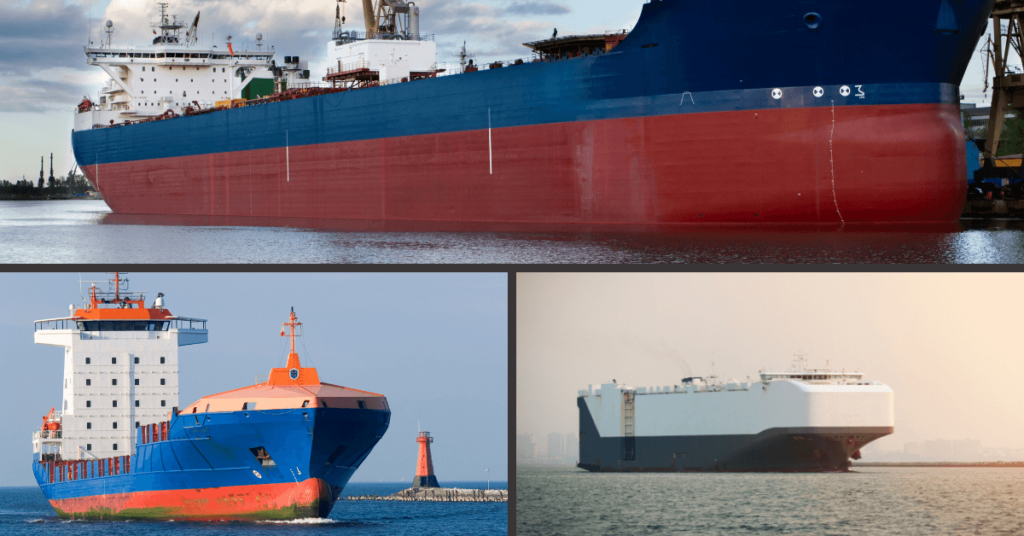
Consider a fuller-form vessel, for example, a tanker, and a finer-form vessel, for example, a frigate having the same displacement. Assuming a similar length, the finer-form vessel will have a greater sinkage. Thus, it will have a lower freeboard than the fuller-form vessel.
The cargo type
Vessels laden with denser cargo have higher sinkage and lower draft than vessels laden with lighter cargo, like timber. Similarly, the cargo distribution also defines the conditions of draft and freeboard.
The conditions of stability and sinkage
They are directly associated with the freeboard. Look at the figure below. For example, if the vessel has a trim by bow, the distance between the waterline and the forward is the least distance or clearance.
Thus, if this distance is 2 metres, the vessel’s freeboard is 2 metres. Likewise, if the vessel has heeled or listed, the freeboard is given from the side with the highest draft for a given condition of sinkage and trim.
Density
As we all know, the same vessel has a higher draft in freshwater as compared to seawater. The freeboard also varies accordingly.
Hydrodynamics
The draft of a vessel highly varies based on the wave dynamics and the mechanics of the flow, and subsequently, the freeboard is affected from time to time.
Depth of the hull itself
This factor is the only one not affecting the vessel’s draft. Depth purely depends on the design of the vessel itself. Moreover, design parametrical factors such as sheer and camber influence the depth.
A Brief on Freeboard assignment, minimum freeboard requirements and load line markings.
As per the IMO International Convention of Load Lines 1966, all vessels need to adhere to a minimum requirement for freeboard except for warships, some private vessels like pleasure yachts, fishing vessels, planning crafts of certain categories, existing cargo ships lesser than 150 GT, and very small vessels lesser than 24 metres in length.
The objective of this regulation is to ensure that the vessels have sufficient reserve buoyancy and margin for sinkage and stability.
The freeboard requirement concentrates on the minimum maintained freeboard and the risks for deck flooding under worst-case conditions.
In a broad sense, the standard freeboard values for a type of vessel take into account the following:
The vessel type, size and kind.
Larger vessels have a greater requirement for reserve buoyancy owing to their displacement than smaller vessels. Moreover, ships with heavier and denser laden cargo like stone or ore carriers experience higher drafts and have more potential risks of buoyancy loss due to sinkage, and hence mandate greater minimum values of freeboard compliance.
Similarly, other factors like hull-from, vessel service, nature of voyages, and so on influence the minimum criteria for freeboard.
Vessel layout and structural integrity
The vessel layout is directly related to damaged stability and subdivisions. Structural integrity or intactness is another very crucial factor taken into consideration. Vessels with more openings in the way of the deck(s), like cargo hatches or manholes, are at a greater risk of compromising on the reserve buoyancy due to more physical means of water entry into the hull.
Thus, they are to comply with higher minimum freeboard requirements.
- Vessel construction and related design aspects like sheer or camber, bulwarks, etc.
- Stability conditions
- Operational requirements, areas of operation, crew and other effects
- Superstructure or deckhouses: The extent of how they contribute to the necessary reserve buoyancy and the safety margin in case of vessel sinkage.
As per regulations guiding the conformity of freeboard, all ships are broadly categorised into two major types:
- Type A
- Type B
Type A ships are those ships that carry liquid cargo in bulk, such as tankers, product carriers, chemical tankers, LNG or LPG carriers, etc. Moreover, for all practical purposes, they have limited openings in the way of main decks, such as hatches.
From the stability and intactness point of view, most compartments are watertight and oil-tight. Also, due to the nature of liquid cargo stowed in bulk, the compartments in these kinds of vessels have low permeability.
Hence, for all practical purposes, these vessels are considered ‘safer’ from the reserve buoyancy point of view. This is because, due to the nature of the cargo and the low permeability in the spaces, the chance of sudden external water ingress and flooding in the event of flooding or breach is minimal.
During such damages, the liquid cargo maintains a pressure differential and seeps out gradually into the sea. Even when there is a significant amount of water ingress into the holds, the loss in buoyancy is not very critical, and full vessel sinkage, even if there, is gradual as such vessels are designed to carry liquid.
In many cases, since most oils are less dense than water, there is more outflow of oil as compared to water ingress, and thus there is a decrease in displacement and an increase in freeboard!
Furthermore, in Type A ships, as there are limited openings in open spaces such as the main deck, ingress of water from there in the occasion of severe weather, wave slaps, or other reasons causing deck flooding is not much.
On the other hand, Type B ships are all vessels other than Type A. Their conditions are taken differently from type A, depending on the requirement. For example, if there is a coal carrier, and due to a breach in the hull, there is rapid water ingress, the vessel gains more displacement, experiences buoyancy loss, and a decrease in freeboard that may ultimately result in sinkage.
Hence, as Type A vessels are safer, the minimum freeboard requirements are lesser than Type B.
As per regulations, tabular freeboards are given for both Type A and Type B ships. However, this is not the absolute freeboard that is applicable. To compute the minimum required freeboard, the value obtained from the corresponding table needs to be adjusted depending on the specifications and characteristics of the vessel based on certain procedures given as per the rules.
Since wood or timber is always classified as an exceptional form of cargo owing to its low density, the procedures applicable for such vessels regarding minimum freeboard requirements are differently stated.
You might also like to read-
- What Is Underwater Keel Clearance?
- What are Margin Lines in Ships?
- What Is The Centre Of Floatation?
- How Are Containers Stacked And What is Stacking Weight ?
- What is Rise Of Floor in Ships?
Disclaimer :
The information on this website is for general purposes only. While efforts are made to ensure accuracy, we make no warranties of any kind regarding completeness, reliability, or suitability. Any reliance you place on such information is at your own risk. We are not liable for any loss or damage arising from the use of this website.


About Author
Subhodeep is a Graduate of Naval Architecture and Ocean Engineering. He has deep interest in marine structures and goal-based design aspects, and is dedicated to sharing and propagating technical knowledge of the industry.
Disclaimer :
The information on this website is for general purposes only. While efforts are made to ensure accuracy, we make no warranties of any kind regarding completeness, reliability, or suitability. Any reliance you place on such information is at your own risk. We are not liable for any loss or damage arising from the use of this website.
Related Articles
⚓️ Enhance Your Knowledge. Prevent Accidents. Stay Safe at Sea.
1. eBooks for Engine Department
Master machinery operations, troubleshooting, and safety procedures with expertly written guides tailored for marine engineers. Prevent costly breakdowns and onboard accidents through practical knowledge.
👉 Explore Engine Department eBooks
2. eBooks for Deck Department
Sharpen your seamanship, navigation, and cargo-handling skills with real-world case studies and practical insights designed for deck officers and cadets.
👉Discover Deck Department eBooks
3. eBooks on Electrical Fundamentals & Issues
Understand marine electrical systems, identify potential faults, and prevent onboard electrical failures with step-by-step explanations from industry experts.
4. Pocket Guides for Quick Reference
Compact, handy, and loaded with essential checklists—perfect for on-the-go reference during operations and emergencies at sea.
5. Combo Packs to Save Big
Access multiple expert eBooks at discounted prices. Ideal for professionals seeking complete safety and operational knowledge across various ship departments.
6. Digital Maritime Courses – Learn at Your Own Pace
Upgrade your competence with Marine Insight Academy’s online courses. Learn from industry professionals anytime, anywhere, and become a safer, smarter seafarer.
Subscribe To Our Daily Newsletter
By subscribing, you agree to our Privacy Policy and may receive occasional deal communications; you can unsubscribe anytime.
BE THE FIRST TO COMMENT