


How Spark Erosion Can Damage the Main Propulsion Engine of a Ship?
There are several automation systems utilized onboard ship to ensure efficient and smooth running of the Machinery. However, machines still fail, mainly because of the lack of knowledge of the crew on that particular system. For this reason it is is very important to install and maintain the system in correct order to avoid any damage to the machinery.
What is Spark Erosion?
Technically, when two current carrying dissimilar metals are in contact, a sparks travels at the point of contact which erodes the small metal by making a cavity.
In a Vessel, different metals are used to building propeller, hull, bedplate, crankshaft, bearing etc. The current from the cathodic protection system is generally present in these parts, which eventually creates the perfect situation for spark erosion.
Even a ship’s hull made up of steel which is immersed in sea water, small galvanic current flows through anodic area leading to corrosion and erosion.
Effects of spark erosion
To suppress the effect of galvanic corrosion, especially at the stern part of the ship where the propeller is present, an Impressed Current Cathodic Protection system is used. The propeller shafting is earthed to achieve continuous circuit and to avoid malfunction of the same.
When the propeller is at rest, the stern tube, propeller shaft and bearings are in contact with each other. Similarly main engine bearing and journal are in contact with each other, maintaining continuity of the circuit. When the ship is running, due to the rotation of the propeller and lubricating oil film the shaft becomes partially electrical insulated. It may also happen on the tail shaft using non metallic bearing which acts as an insulation.
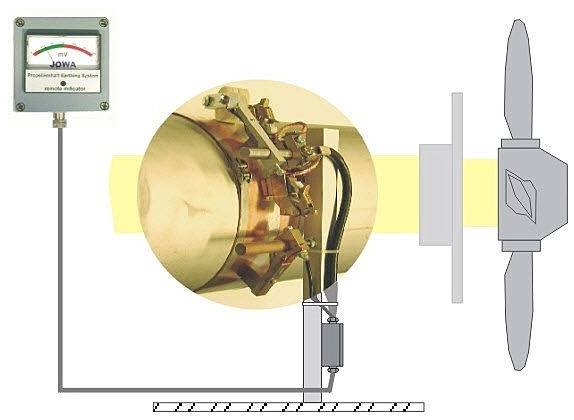
The propeller at the aft is a large area of exposed metal which attracts protective cathodic current which produces an arc while discharging from the lubricating film. This results in spark erosion of bearings, which can lead to worse situation if lube oil is contaminated with sea water.
If this effects continue for a considerable amount of time, it may lead to overheating of Main engine bearings caused by improper lubrication resulted by cavities from spark erosion. It may also lead to formation of oil mist, emergency shutdown of the engine or in extreme cases crank case explosion.
Reasons for Spark Erosion
Some of the main reasons which results in Spark erosion related problems on ship are
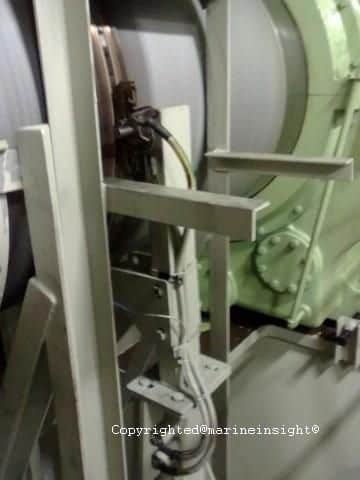
- The shaft earthing arrangement is not working or improperly fitted
- The Cathodic protection current system setting is wrong
- The hull coating is excessive than required which will increase the galvanic corrosion of the shaft
- Slip rings and brushes in the earthing device are worn out
- The contact between shaft and earth device is not clean
It is advisable to use two earthing devices for the shaft of the main engine. One for earthing purpose and the other to connect with the voltmeter for measuring the potential difference between the shaft and the hull of the ship.
The effect of spark erosion will be minimum if the potential difference is below 50 mv.
You may also like to read – What is a Bearing Scraper?
Disclaimer :
The information contained in this website is for general information purposes only. While we endeavour to keep the information up to date and correct, we make no representations or warranties of any kind, express or implied, about the completeness, accuracy, reliability, suitability or availability with respect to the website or the information, products, services, or related graphics contained on the website for any purpose. Any reliance you place on such information is therefore strictly at your own risk.
In no event will we be liable for any loss or damage including without limitation, indirect or consequential loss or damage, or any loss or damage whatsoever arising from loss of data or profits arising out of, or in connection with, the use of this website.
Do you have info to share with us ? Suggest a correction
Disclaimer :
The information contained in this website is for general information purposes only. While we endeavour to keep the information up to date and correct, we make no representations or warranties of any kind, express or implied, about the completeness, accuracy, reliability, suitability or availability with respect to the website or the information, products, services, or related graphics contained on the website for any purpose. Any reliance you place on such information is therefore strictly at your own risk.
In no event will we be liable for any loss or damage including without limitation, indirect or consequential loss or damage, or any loss or damage whatsoever arising from loss of data or profits arising out of, or in connection with, the use of this website.

About Author
An ardent sailor and a techie, Anish Wankhede has voyaged on a number of ships as a marine engineer officer. He loves multitasking, networking, and troubleshooting. He is the one behind the unique creativity and aesthetics at Marine Insight.
Latest Marine Technology Articles You Would Like:
- 10 Harmful Effects Of Impure Air On Ship’s Machinery

- 10 Important Things to Check While Starting Fuel Oil Purifier on Ships
- 10 Noteworthy LNG-Powered Vessels
- 10 Points for Efficient Turbocharger Operation On Ships
- 10 Practical Tips to Handle Engine Room Pumps
- 10 Precautions to Take Before Operating Controllable Pitch Propeller (CPP) on Ships




Subscribe To Our Newsletters
By subscribing, you agree to our Privacy Policy and may receive occasional deal communications; you can unsubscribe anytime.
HI ANISH.I HAVE A QUESTION:IF FOR ANY REASON THE SHAFT EARTHING DEVICE FAILED DURING SAILING IN OCEAN WHAT CAN WE DO FOR SAFE OPERATION?
Dear Modamad,
As stated in the article: “When the ship is running, due to the rotation of the propeller and lubricating oil film the shaft becomes partially electrical insulated”- The bearing will not be effected if the shaft is rotating and proper lubrication is maintained. You can reach the next port of call and then do the troubleshooting on the earthing device.
Dear Modamad,
can you please inform us if the steering gear machinery is required to be earthed?
is there an IACS rule for auxiliary machinery for stearing gear (to be earthed)?
Hi, can you please tell me if the voltage that has to be monitored is ac or dc? Many thanks!