
The Ultimate Guide To Ship Sizes
Merchant ships are broadly classified by size and area of operation. The classification of the ship is decided at the design stage based on the route of operation and the purpose of the ship. The ship’s dimensions play an important part in determining the areas of operation of any type of merchant vessel.
A variety of parameters, such as draft, beam, length overall, gross tonnage, deadweight tonnage, etc., are taken into consideration while designing and constructing a merchant ship.
| Class Name | Primary Vessel Type | Typical Length (LOA) | Typical Beam (Width) | Typical Capacity (DWT/Vol) |
|---|---|---|---|---|
| Seawaymax | General Cargo/Bulk | 225.5 m | 23.8 m | 28,000 DWT |
| Handymax / Supramax | Bulk Carrier | 150 to 200 m | 32 m | 40,000–60,000 DWT |
| Panamax | Bulk/Container | 294 m | 32.3 m | 60,000–80,000 DWT (or ~5,000 TEU) |
| Aframax | Oil Tanker | 245 m | 34 m | 80,000–120,000 DWT |
| New Panamax | Container/Gas/Bulk | 366 m | 51.25 m | 120,000 DWT (or ~13,000+ TEU) |
| Suezmax | Oil Tanker | 275 m | 50-77.5 m | 120,000–200,000 DWT |
| Capesize | Bulk Carrier | 290 m plus | 45 m plus | 150,000–200,000 DWT+ |
| Q-max | LNG Carrier | 345 m | 53.8 m | 266,000 m³ (Liquefied Gas) |
| VLCC | Oil Tanker | 330 m | 60 m | 200,000–320,000 DWT |
| Malaccamax | Tanker/Container | 400 m | 60 m | 300,000 DWT (Draft restricted <25m) |
| ULCC | Oil Tanker | 415 m | 63 m | >320,000 DWT |
| Chinamax ( Valemax) | Ore Carrier (VLOC) | 360 m | 65 m | 400,000 DWT |
E.g. for designing a ship that would be able to pass through the Suez Canal, the dimensions of the ship would be decided in such a way that the ship can smoothly transit through the narrowest and shallowest areas of the canal, in both fully loaded and unloading conditions.
Ship sizes chiefly vary according to their load-carrying capacity, just as their variance alters according to the constructional capacity of the various ports and harbours. Considering the above-mentioned factors, the ships are classified into the following categories based on their size:

Panamax and New Panamax
Panamax and New Panamax are terms used for ships that are designed to travel through the Panama Canal. The ship classification indicates the minimum dimensions required by the ship to be able to pass smoothly through the Panama Canal. The sizes of Panamax ships are determined by considering the dimensions of the smallest lock of the canal.
Panamax: These dimensions are determined by the size of the canal’s original locks. A standard Panamax vessel has a maximum length of 294.13 m, a beam of 32.31 m, and a maximum draft of 12.04 m.
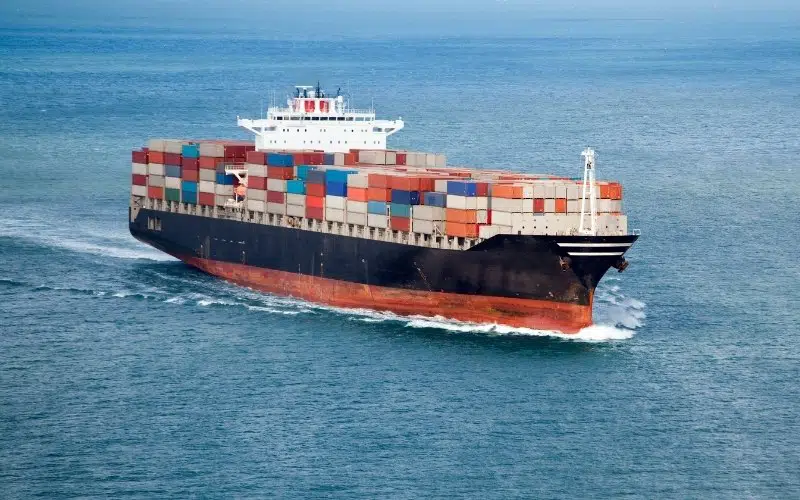
New Panamax (Neopanamax): After the expansion of the Panama Canal in 2016, a new category of vessels emerged. These vessels were built to fit the new, larger locks. A New Panamax vessel can have a length of up to 366m, a beam of 51.25m, and a draft of 15.2m. These vessels boast a carrying capacity of approximately 13,000 to 14,000 Twenty-foot Equivalent Units (TEUs), significantly increasing the volume of cargo passing through the region.
Post-Panamax
Previously, a vessel which could not pass through the original Panama Canal locks was called a Post-Panamax vessel. Today, the term is often used more broadly to describe super-sized vessels that exceed even the New Panamax limits, requiring them to bypass the canal entirely or use alternative routes like the Suez Canal or Cape Horn.
Aframax

The term Aframax is usually used for medium-sized oil tankers with an approximate weight of 1,20,000 DWT. These ship sizes gain their title from the Average Freight Rate Assessment schematic devised by the shipping conglomerate Shell in the mid-1950s. Mainly oil tanker vessels, Aframax vessels can be loaded with over 7, 00,000 crude oil casks. Aframax tankers ply in areas that have limited port facilities or lack large ports to accommodate giant oil carriers. The beam of the vessel is restricted to 32.3 meters or 106 feet.
Chinamax

Chinamax vessels are one of the largest bulk carrier ships in the world and are often classified under Very Large Ore Carriers (VLOC). Unlike other cargo-carrying vessels, which are measured in terms of their size, the Chinamax cargo ships are measured not just in terms of their size but also in terms of their length.
These vessels were initially custom-built to cater for the Chinese port facilities and the South American nation of Brazil, though presently the development of appropriate harbour facilities has ensured their applicability beyond these two regions.
Also commonly famous as Valemax vessels, Chinamax ships have a Dead Weight Tonnage (DWT) of up to 4,00,000 tonnes and measure about 360 meters lengthwise with a breadth of about 65 meters and a draft of 25 meters.
Handymax

Handymax vessels are small-to-medium-sized bulk carriers, ranging from 40,000 to 50,000DWT. However, the modern shipping industry has largely evolved toward a slightly larger variation known as Supramax (50,000 to 60,000DWT). Handymax and Supramax vessels usually have their own cranes, allowing them to operate in smaller ports that lack sophisticated shore-based cargo handling equipment.
Handysize: This refers to vessels under 40,000DWT, with lengths between 150 m and 200 m.
Capesize

Capesize vessels are basically dry cargo ships that are too large and too deep to transit the Suez Canal or Panama Canal. Hence, they take the route around the Cape of Good Hope (South Africa) and Cape Horn (South America).
They range from 150,000 to 200,000DWT, though larger variations also exist. They transport raw materials such as coal and iron ore. This category includes subtypes like VLBCs (Very Large Bulk Carriers) and VLOCs (Very Large Ore Carriers).
Suezmax

Suezmax represents the largest ship size capable of transiting the Suez Canal in a laden condition. Unlike the Panama Canal, the Suez Canal has no locks, so the primary constraint is draft (depth) and beam (width).
A typical Suezmax tanker ranges from 120,000 to 200,000DWT.
These ships usually have a length of about 275 m.
Q-Max
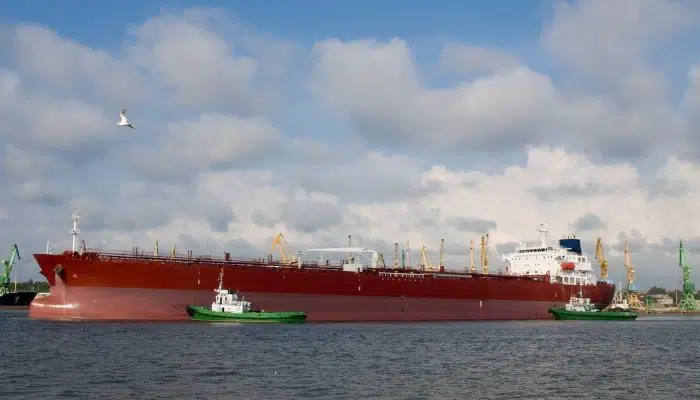
Q-Max (“Qatar Max”) ships are the largest Liquefied Natural Gas (LNG) carriers in the world, designed to dock at the deep-water LNG terminals in Ras Laffan, Qatar.
These sophisticated vessels have a capacity of 266,000 m3 of LNG. They are 345 m long, 53.8 m wide and have a 12 m draft.
They have a membrane containment system to transport natural gas efficiently across the globe.
Malaccamax

Malaccamax refers to the maximum size of a vessel capable of passing through the Strait of Malacca, a critical maritime choke point connecting the Indian Ocean to the Pacific Ocean. The depth of the strait (approximately 25 m) is the limiting factor.
True Malaccamax vessels are usually Very Large Crude Carriers (VLCCs) specifically designed with a draft of less than 20.5m to ensure safe under-keel clearance.
A Malaccamax VLCC can have a deadweight of up to 300,000 DWT and a length of nearly 400m (such as Maersk’s Triple-E class containerships, which are also designed with this route in mind).
VLCCs (Very Large Crude Carriers)

Supertankers with a capacity ranging from 200,000 to 320,000 DWT are called VLCCs. These are the primary vessels used for transporting crude oil from the Middle East to Asia, Europe, and North America.
ULCCs (Ultra Large Crude Carriers)
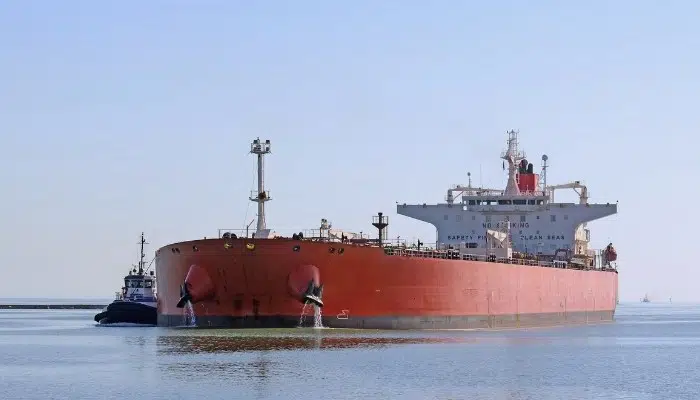
Cargo carrying supertankers having a DWT range of 320,000 to 550,000 are classified as ULCCs. These cargo vessels are the biggest carrying tanker vessels with select areas of operation extending to European, North American and certain Asian harbours and port facilities.
Seawaymax

The Saint Lawrence Seaway forms an important sea passage between the water routes linking the United States and Canada. Seawaymax vessels are those vessels that can easily pass through this important waterway.
They are around 226 meters long with widths of 24 meters and drafts of up to 8 meters.
Conclusion
The entire shipping industry rests on the smooth functioning of these merchant vessels. The operational viability of the ships and their sustenance have helped in nurturing the global cargo shipping domain, while also preserving the integrity of a commercial set-up completely and thoroughly across borders.
You may also like to read –
- What Is A Statement Of Facts In Shipping?
- What Are Supramax Cargo Vessels?
- Shipping Largest Sector- Dry Bulk
- 15 Largest Ships In The World
Disclaimer :
The information on this website is for general purposes only. While efforts are made to ensure accuracy, we make no warranties of any kind regarding completeness, reliability, or suitability. Any reliance you place on such information is at your own risk. We are not liable for any loss or damage arising from the use of this website.


Related Articles

About Author
Raunek Kantharia is a marine engineer turned maritime writer and entrepreneur. After a brief stint at the sea, he founded Marine Insight in 2010. Apart from managing Marine Insight, he also writes for a number of maritime magazines and websites.
Disclaimer :
The information on this website is for general purposes only. While efforts are made to ensure accuracy, we make no warranties of any kind regarding completeness, reliability, or suitability. Any reliance you place on such information is at your own risk. We are not liable for any loss or damage arising from the use of this website.
Subscribe To Our Daily Newsletter
By subscribing, you agree to our Privacy Policy you can unsubscribe anytime.


Very informative and good website. I am impressed by the sip size and photos.
My advice for future is to similarly write about Kamsarmax and Post- Panamax as these are commonly used sizes now a days.
@CK Sharma: Thank you for your kind words and suggestion. We will definitely post something soon on the suggested topic
Thank you so much for creating Marine Insight, its a ton of help.
The content is so useful, qualitative and totally worth the time.
Hello:
I am exploring a supply route that requires a max draft of 7 meters, long distance, Load of 40-50,000 Tons. Do you know of a ship category that is designed for those specifications?
Thanks
Khader Basha KK Exports even though having a decade experience this Marine in sight have really referesehed and made a quick recknor , made very easy for all our upcoming raisins starts also in industry . Keep it up really a very very good job and presentation. Khader Basha KK ceo kkexports.com
I have been sailing sailing for years as marine engr till yr knowledge have opened my understanding to various sizes & name of ships keppt it up sir
@Jbn: Glad the info is useful to the experienced sailors like you.
Very useful piece of information! Thanks for sharing your compilation. I have been looking for a vesssel to charter for quite sometimes that carries 50K MT bulk cargo of ore and sand. I was told what we need is Panamax. I now know and realized the different types of the vessel to use. What apps we could be able to determine the depth of the shoreline .just by key-ing in the location? Or there is no such invention yet. Please recomend a 50K bulk carrier. I still need it. Thanks for the reply.
Worth information for a Mariner & for those related to Shipping field.
I didnt see Handy size? and what about sizes for Feeders.
“Supertankers which have a maximum DWT of 3, 20,000 tonnes a…..”
you mean
“Supertankers which have a maximum DWT of 320,000 tonnes a”
?