


Real Life Accident: Small Defect Leads To A Large Collision Of Ships
A small container vessel was making way in a restricted waterway under pilotage. Earlier that day there had been intermittent main engine problems due to a drop in lubricating oil pressure, but the exact cause of the reduced oil pressure was not yet known.
The vessel decided to overtake a much larger container vessel. As it was overtaking, the lubricating oil problem occurred again, and main propulsion on the small container vessel automatically shut down. Hard starboard rudder was quickly applied, but the vessel became unmanoeuvrable and was drawn to port towards the larger vessel due to hydrodynamic interactions.
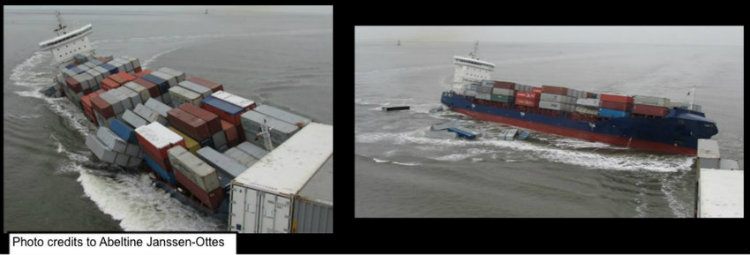
The forecastle of the smaller ship rammed into the starboard side of the larger vessel’s aft section at an angle of about 60°. The force of the collision caused 15 containers on the smaller vessel to fall overboard. Due to the ebb current and the loss of manoeuvrability, the smaller vessel then ran aground outside the fairway. Both ships sustained material damage above the waterline and the fairway had to be temporarily closed to transiting shipping.
Lessons learned
- The loss of main propulsion on the smaller container vessel caused a reduction in speed, among other things, and made the vessel unmanoeuvrable. Hydrodynamic effects then took over and caused the smaller vessel to move unavoidably towards the larger.
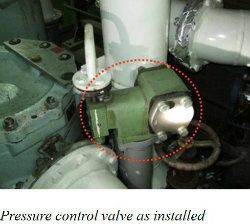
- Even after extensive investigations it was not possible to conclude, with absolute certainty, the cause of the oil pressure drop of the

- Considering the vessel had several episodes of main engine problem during the day, it would appear that insufficient attention was given to the risk of an accident due to this anomaly during the time the vessel was in the restricted waterway.
- VDR data for the time of the accident on the small container vessel was not available for the investigation. No technical faults were found on the VDR; it is likely that the data backup button was not depressed as per the manufacturer’s specifications. It may have been held down for either less than the two seconds specified by the manufacturer, or longer than the maximum five seconds.
Editor’s note: Since the introduction of VDRs, accident investigation and hence root cause analysis has made great strides. However, a lack of VDR data subsequent to an accident, as in this case, is still all too common. Owners and operators that value safety should consider regular testing of this equipment and ensure clear, vessel-specific procedures on how to operate the VDR. Test procedures can even include the use of the VDR ‘test data’ for navigational audit purposes, thus accomplishing two important tasks at once.
Reference: nautinst.org
Do you have info to share with us ? Suggest a correction

- Real Life Incident: Vessel Collision in Good Visibility

- Real Life Incident: Severe Injury To Deck Crew While Leaving Berth
- Real Life Incident: Departure Damage in Very Restricted Waterway
- Real Life Incident: Low Situational Awareness Has High Impact Consequence
- Real Life Incident: Fouled Anchor in a Designated Anchorage
- Real Life Incident: Fire On Barge Carrying Scrap Metal Causes $7 Million Worth Of Damage
Latest Case studies Articles You Would Like:


Subscribe To Our Newsletters
By subscribing, you agree to our Privacy Policy and may receive occasional deal communications; you can unsubscribe anytime.
this article is unclear .
What are the lessons learned? I see none, only a few vague factual findings none of which being particularly clear.