
Understanding The Ship Recycling Process
Maritime vessels have a limited operational life. In general, the life of passenger ships, container vessels, and warships is a minimum of 25 years. This is the period when such vessels can be operated smoothly with the proper prescribed maintenance and service. Their performance can be considered to be at its peak during this period.
However, ships are often operated for a longer period, and some of them sail for 30 years while others are used for up to 50 years. As they come close to the end of this period, ships start showing signs of irreversible damage. Quite often, this is the period when such ships are docked for costly and time-consuming repairs.

By this time, the maintenance and repair costs of ships go up dramatically. Also, with the advancements in ship technology, old ships quickly become outdated unless they are refitted with the latest technology – another very costly affair.
Environmental Regulations
Environmental regulations that are introduced from time to time make maritime vessels obsolete, too. The International Convention for the Prevention of Pollution from Ships [MARPOL], which functions under the International Maritime Organisation [IMO], governs this area and covers pollution caused by ships as a result of oil and other noxious liquids spills, discharge of sewage, air pollution, ballast water discharge, emission control, and ship recycling.
Ship recycling is usually planned for vessels that have reached the end of their operational lives, i.e., between 25 and 30 years.
Usually, ships that sail in fresh water, such as lakes, rivers, etc., last longer than those that sail on high seas and in rough sailing conditions. It is normally the very large vessels that are operated for a longer period.
Decommissioning a Ship
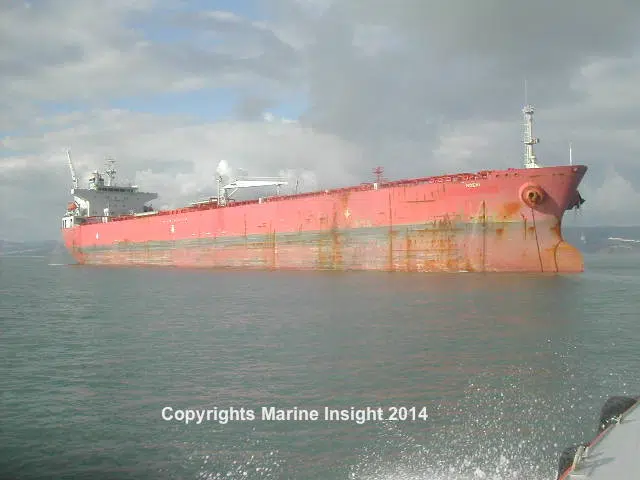
Decommissioning a maritime vessel is the process of ending its active, operational life. At the end of their life or in the event of a catastrophe, ships are usually decommissioned, and such vessels are sold to be dismantled and recycled safely in an environmentally friendly manner, referred to as the Ship Recycling Process. It is also known as the ship dismantling or ship breaking process.

Once a shipyard [that is compliant with the Hong Kong Convention] is selected for recycling a ship, the aged ship is generally sailed to the ship breaking yard, beached, broken, and then stripped. The dismantling is often done in stages – first the machinery, then furniture and fixtures, followed by cutting and removal of the steel structures.
Hazardous waste materials are carefully removed in accordance with safety regulations and disposed of. Over 95% of materials salvaged from the ship are recycled. Using recycled steel for making new products is energy-efficient, requiring only one-third of the energy of virgin steel production.
In a nutshell, the ship recycling process includes dismantling a ship into much smaller parts and removing hazardous materials such as asbestos, fuel residues, etc., as per the Inventory of Hazardous Materials [IHM], particular to that ship and disposing of them responsibly.
Reusable machinery, equipment, and other parts are retrieved to be sold to ship manufacturing or ship repair yards. Steel, for example, is recycled for reuse. Larger parts are cut into smaller pieces. Salvaged machinery, equipment, and parts are tested and upgraded as necessary and used by the secondary market, i.e., parties that purchase existing vessels and upgrade them for resale.

An estimated 500 – 600 ships are sent for recycling each year, with a major portion of this work going to countries such as India, Bangladesh, or Pakistan. In 2025, according to Lloyd’s List, 321 commercial ocean-going vessels were sent for the ship recycling process. Other countries that do ship breaking are China, South Korea, Russia, etc.
In the ship recycling process, almost all the materials and equipment on a decommissioned vessel are reused, thereby drastically reducing the impact on energy and the environment. For example, when recycled steel is used, it uses just one-third of the energy that is otherwise used in the manufacture of steel from raw materials.
Extraction of Equipment and Materials from a Decommissioned Vessel
What are the main equipment and materials that can be extracted and reused from decommissioned vessels? Machinery that is critical for operating a sailing vessel, such as the main engine, generators, pumps, and compressors are on top of the list of equipment that can be reused.
Ship recycling process also often yields key navigation and communication equipment such as radar systems, echo sounders, GPS [Global Positioning System], gyro compasses, autopilot systems, AIS [Automatic Identification systems], etc. Electrical and control systems, such as electric motors, lighting equipment, switchboards, systems panels, etc., are also taken from old vessels to be reused.

From the hull and deck of a ship, machinery such as anchors, anchor chains, davits, valves, mooring winches, lifeboats, lifebuoys, etc., is retrieved. The cabins often have furniture and fittings in good condition that are taken during the ship recycling process. Materials that can be taken from a retired ship include stainless steel, copper wires, and brass parts.
The main reusable components that can be retrieved from a decommissioned ship during the ship recycling process may be summarised as follows:
Critical machinery –
- Main engine
- Generators
- Pumps
- Compressors
Navigation and communication equipment-
- Radar systems
- Echo sounders
- Global Positioning System [GPS]
- Gyro compasses
- Autopilot systems
- Automatic Identification systems [AIS]
Electrical and control systems-
- Electric motors
- Lighting equipment
- Switchboards and systems panels
Hull and Deck-
- Anchors and anchor chains
- Davits
- Valves
- Mooring winches
- Lifeboats and lifebuoys
Cabin-
- Furniture
- Fittings
- Parts
Other Materials-
- Stainless steel parts and steel plates
- Copper wires
- Brass parts
Making use of used components and parts, besides being economical, helps the economy to reduce wastage and promotes sustainability. We have seen that for materials such as steel, using recycled steel from the ship recycling process saves two third the cost of using newly manufactured steel, as there are drastic savings in the usage of energy.
Hazardous Materials and Residues Found During Ship Recycling Process
Ship recycling has to be carried out in a manner that is safe for human health as well as the environment.
An estimated 1/10 of a ship’s total weight is made up of hazardous materials that are dangerous to human health and safety. It is also damaging to the marine environment.
Asbestos
Of this, asbestos is considered to be one of the most dangerous materials. It is used as an insulation material around the ship’s machinery that produces very high temperatures, such as pipes, exhaust systems, boilers, etc.
During the ship recycling process, if asbestos is not handled properly, it can cause asbestosis, a chronic respiratory disease. Asbestos is also highly carcinogenic. During cutting and removal, if care is not taken, the fine asbestos fibres can become airborne and be inhaled by workers, leading to the severe medical condition called asbestosis.
Glass Wool and Foam Insulations
Glass wool and foam insulation found in ships is a major skin irritant and becomes a dangerous waste when mixed with other toxic materials.
Polychlorinated Biphenyls [PCB]
Polychlorinated Biphenyls [PCB] that are found in a ship’s capacitors, cables, paints, etc., besides being carcinogenic, cause organic pollution.
Heavy Metals
Heavy metals cause major contamination to the soil and water if not handled properly. Lead, mercury, chromium, etc., found in paints used on ships, batteries, and other electronic components of a ship, are heavy metals.
Oil and Fuel Residues
Oil and fuel residue, commonly known as sludge, is highly damaging to the marine environment. These dense oils cover the ecosystems, blocking sunlight and preventing oxygen transfer, gradually causing their death.
Bilge and Ballast Water
Bilge and Ballast water are a mixture of oils and other pollutants. It can also harbour invasive species that cause ecological imbalance when discharged carelessly into the environment.
Chlorofluorocarbons [CFC] and Hydrochlorofluorocarbons [HCFC]
Chlorofluorocarbons [CFC] and Hydrochlorofluorocarbons [HCFC] are found in ships’ refrigeration systems, air conditioning, and fire-fighting equipment. These potent greenhouse gases are damaging to the Earth’s ozone layer, causing its depletion.
Radioactive Materials
Besides the above, radioactive materials may be found in some ship equipment. Density gauges that are used to scan cargo or structure, level gauges, industrial radiography cameras that are used for testing welded joints, smoke detectors, static eliminators, etc., have traces of radioactive materials in them.
Volatile Organic Compounds [VOC]
Some of the materials used on ships are volatile organic compounds. They include paints, cleaning agents, fuels, etc. Such materials release gases or vapours into the atmosphere, sometimes even at room temperature.
An example is gases that are generated during torch-cutting of certain painted parts of the ship. In addition to causing eye, nose, and throat irritation, long-term exposure may result in liver and kidney problems. They are also ozone-depleting.
The ship industry follows certain standards to ensure the safety of workers involved in ship recycling and the surrounding environment at large. The industry manages this safety and security by following the Hong Kong Convention that came into force in June 2025.
You might also like to read-
- Marine Pollution by Ships -Tips for Reducing & Recycling Waste at Sea
- What Are PFOS and Why Are They Being Prohibited in Fire-Extinguishing Systems in the Shipping Industry?
- PFOS Ban In Firefighting Media – A Critical Regulation Shipowners Cannot Ignore
Disclaimer :
The information on this website is for general purposes only. While efforts are made to ensure accuracy, we make no warranties of any kind regarding completeness, reliability, or suitability. Any reliance you place on such information is at your own risk. We are not liable for any loss or damage arising from the use of this website.


About Author
Hari Menon is a Freelance writer with close to 20 years of professional experience in Logistics, Warehousing, Supply chain, and Contracts administration. An avid fitness freak, and bibliophile, he loves travelling too.
Disclaimer :
The information on this website is for general purposes only. While efforts are made to ensure accuracy, we make no warranties of any kind regarding completeness, reliability, or suitability. Any reliance you place on such information is at your own risk. We are not liable for any loss or damage arising from the use of this website.
Related Articles


Subscribe To Our Daily Newsletter
By subscribing, you agree to our Privacy Policy you can unsubscribe anytime.


BE THE FIRST TO COMMENT