
China’s Dolphin-Skin Like Marine Bionic Propeller Reduces Emissions & Fuel Consumption

China has made a unique propeller for ships, inspired by dolphin skin to reduce fuel consumption and harmful emissions.
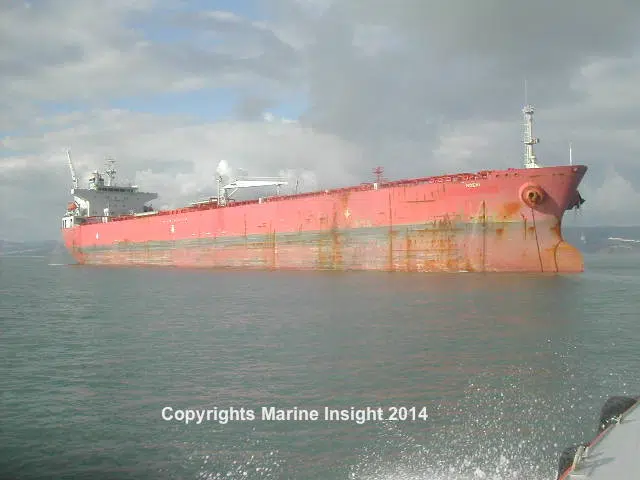
The propeller was tested on a 300,000 ton VLCC, which completed 3 oil delivery voyages, with 2% less fuel consumption, thanks to the new propeller.
China also stated that it can save 1.5% energy within a 2.5 year-maintenance cycle.
The VLCC, with bionic dolphin skin, sailed for more than 200 days and 35,000 nautical miles between Chinese coastal ports and Middle Eastern ports.
Since the VLCC consumes less fuel, if it operates with the dolphin skin propeller, it will save more than 300 tons of fuel every year, with economic benefits of more than $ 140,000 and a reduction of more than 900 tons of carbon dioxide emissions.
The research behind the new propeller design was done by a team from the Ningbo Institute of Materials Technology and Engineering, in collaboration with Cosco Shipping Energy Transportation.
Their focus was to develop a marine bionic skin which would reduce energy consumption and enhance propeller efficiency.
The researchers observed nature and saw that dolphins and sharks face minimal resistance in water due to their skin’s microstructure and mucus secretion.
The new marine bionic skin is composed of liquid-like dynamic interfacial materials and flexible materials with a microstructure between 0.1 and 0.2 mm.
Placing such a skin on a propeller would amount to $20,000; however, it reduces the shear force with water, counteracts the work of the reverse thrust on the water, improves the propeller efficiency, and reduces energy consumption.
Researchers say that the crude carrier’s bionic flexible drag-reducing material adheres to the International Convention for the Control of Harmful Anti-fouling Systems on Ships.
Cosco Shipping Energy Transportation and Ningbo Institute of Materials Technology and Engineering plan to equip at least 100 crude carriers with this bionic skin.
Such technologies should be marketed since they help in reducing emissions, helping the maritime industry decrease its carbon footprint.
Disclaimer :
The information on this website is for general purposes only. While efforts are made to ensure accuracy, we make no warranties of any kind regarding completeness, reliability, or suitability. Any reliance you place on such information is at your own risk. We are not liable for any loss or damage arising from the use of this website.


About Author
Zahra is a maritime writer with 6 years of technical writing experience spanning port operations, offshore wind, oil and gas, and maritime policy. Her analytical edge...Read More ->
Disclaimer :
The information on this website is for general purposes only. While efforts are made to ensure accuracy, we make no warranties of any kind regarding completeness, reliability, or suitability. Any reliance you place on such information is at your own risk. We are not liable for any loss or damage arising from the use of this website.
Related Articles


Subscribe To Our Daily Newsletter
By subscribing, you agree to our Privacy Policy you can unsubscribe anytime.


BE THE FIRST TO COMMENT