


What is Near Miss Investigation Process on Ships?
Accidents on ships are a result of a chain of occurrences that combine to create a situation which leads to potential loss of life, property, human injury, environmental damage etc. Technically, accidents are later stages of “near miss conditions”, and hence for an accident to occur; a near miss is considered as a primary stage and steps are taken to avoid such conditions in the first place.
What Exactly is Near Miss Condition?
A near miss can be defined as a sequence of events that could have lead to an unfortunate condition, but the loss was prevented due to a fortune or sudden break in the train of events, thus preventing an accident.
If the chain of events would have occurred successfully then it might have lead to potential loss of life, pollution, or loss of property etc.
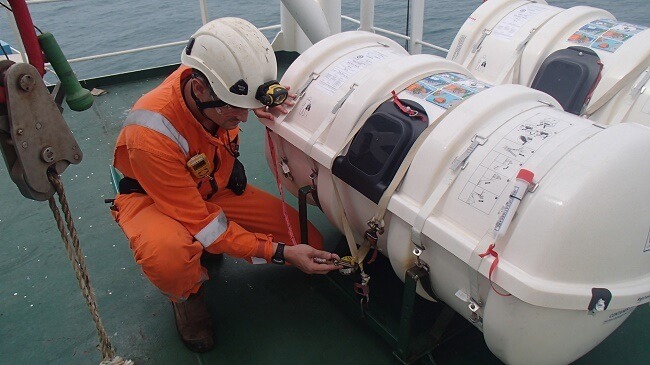
What can be learnt from Near Miss conditions?
If any kind of near miss occurs on a ship, it must be reported to the concerned management officer and to the master. The master must report it to the authority and an investigation should be carried out as per the near miss events.
With the help of this investigation, future near miss situations of similar kind may be avoided by discussing the outcome of the investigation with all crew members. A copy of the same is to be sent to P & I club so that the maritime industry can be made aware of such situations.
Such efforts would avoid such near miss situations and prevent them from converting into accidents in future.
The Near Miss Investigation Process
As a minimum requirement, the following information should be gathered about any near miss situation:
1. Who and what was involved?
2. What happened, where, when and in what sequence?
3. What were potential losses and their potential severity?
4. What was the likelihood of a loss being realized?
5. What is the likelihood of a recurrence of the chain of events and/or conditions that led to Business Unit
2. Name/Location of Business Unit operation
3. Date/Time of Near Miss
4. Weather/Environmental conditions
5. Specific Location
6. Description of Near Miss
7. Causes of Near Miss
8. Combined with Personal Injury accident? (Yes or No)
9. Combined with Equipment Damage incident? (Yes or No)
If yes, briefly describe
10. Equipment or facility defect involved? (Yes or No)
If yes, briefly describe
11. Additional information or remarks to include:
- Witness Names/Rating
- Master’s recommendation
You may also like to read-How to Rescue a Person from a Confined Space on a Ship?
Do you have info to share with us ? Suggest a correction
Latest Ship Safety Articles You Would Like:


Subscribe To Our Newsletters
By subscribing, you agree to our Privacy Policy and may receive occasional deal communications; you can unsubscribe anytime.


can i get some example of near miss which happen onboard the ships
@Ali- A Perfect example will be – You slipped in the engine room floor plating because of oil, however, you were able to hold onto something (may be a railing) from falling and injuring yourself. There are no injuries or accident. This is Near Miss.