
What Happens When An Automated Terminal’s System Goes Down?
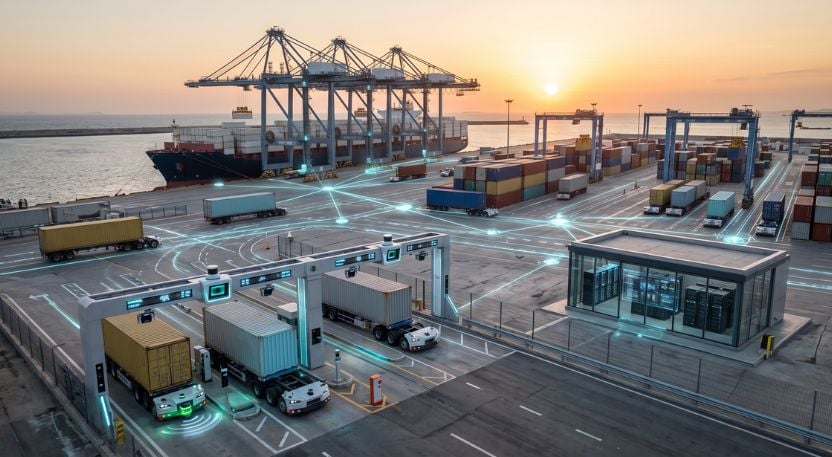
A modern port relies on automation software, helping it speed up operations and increase the end-to-end efficiency of cargo loading and offloading, from gate to ship and vice versa. Modern terminal operating software now includes a dashboard that can track cargo, operate cranes, show real-time data, and minimise human intervention.
What happens if this system goes down while cargo operations are underway with ships alongside the port? The operator sitting in the terminal operation centre won’t have any visibility of the cargo, their location, or where it is going, as the software which is responsible for coordinating all the linked operations has gone dark.
The real test of this Terminal Operating System (TOS) is when it has to communicate with data from different departments of the port operation or when the whole or part of the software goes dark.
How does an automated port work?
An automated terminal system connects all sectors of the port on a single platform using a network where data from every operation is shared in real time.
Port automation usually comprises:
- Terminal Operating System: It is the central command and display system which coordinates the movement of cargo and other related operations.
- Gate Automation: It serves as a point of entry where the system identifies and tracks the cargo entering or leaving the port premises.
- Automated Cranes: There are different types of cranes, such as gantry or cargo cranes and port stacking cranes, which are present in the port for moving the container from ships to trucks or around the terminal yards. Automation makes their operation faster and more efficient without any human operating them.
- AGVs: These are automated guided vehicles are driverless trucks that move cargo between the terminal yard and the ship and vice versa.
All these systems are interconnected, where each automation has a role to play, and these interdependencies can become a weakness when one of these systems fails.
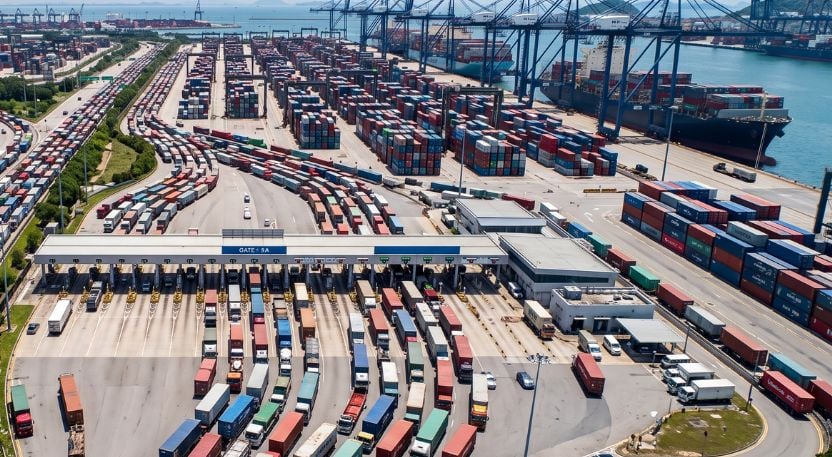
How is an automation failure different from conventional port system failure?
A manually operated panel comes with higher human flexibility and human intervention. If there is an issue in the software which handles one part of the terminal operation, humans can still coordinate using radio and use paper logs or manual instructions to override and operate the work for the affected system, area or machinery. In a highly automated terminal, the automation is responsible for the coordination of all the internal systems and equipment, including cranes and AGVs
The port operators may or may not have immediate visibility of the cargo locations and their movement. As the automated systems are interconnected and interdependent, a failure in one system can lead to no data going to the connected system, resulting in a data blackout, operational slowdown and congestion.
For example, if the ToS fails, the equipment connected to it, such as AGVs or cranes, does not receive the next instruction. This will lead to goods not being moved to their designated place and building a backlog and congestion in the port.
The port cranes and AGVs are mechanical equipment that can be operated manually when automation fails; however, if visibility of the cargo movement is not available to the operator, they simply cannot move the cargo, as they do not know where the goods are planned to go.
A crane may still be physically capable of moving a container. An automated vehicle may still be ready to drive. But if it does not know where the container needs to go, it cannot simply continue as normal.
The Cost of Automation Failure
The Automated port can increase the productivity and efficiency of the terminal, depending on how flexible, dependent, and secure all the interconnected systems are. However, a downtime in any of these automation systems directly adds to vessel and cargo delays, truck queues and port congestion, demurrage issues and disrupted shipping schedules. It will also add to the manual intervention required to mitigate the automation failure to continue port operations.
During the year 2015-16, Auckland Fergusson Container Terminal invested US $45 million in automating the mobile container handler machinery called straddle carriers for internal transportation of containers.
However, the project was abandoned in 2022, as the port operators experienced serious software issues, which led to the straddle carrier hitting and toppling a stack of containers. This led to port congestion and delays, and COVID-19 disruption also added to the problem, leading to the scrapping of this project.
Even though it seems that it was an automation failure, the actual cause was poor risk management and testing of the software, which led to this incident.
The Right Automation for Terminals
When automating a cargo port or terminal, the critical point management has to consider is not to think automation won’t fail, but to limit the impact that automation failures will have on the port operation. The ToS has to be designed in such a way that any downtime can be resolved at the earliest and all the critical operations can still operate.
Even when the system goes offline, the operator can still perform all the operations and log the information. Infyz’s iTOMS comes with the offline capability to give more flexibility to the operators even in a scenario where the terminal goes offline.
The best way forward is to ensure the automated software has a modular architecture, and it is capable of isolating different areas by dividing the terminals into operational zones so that failure in one part does not halt the operation in the other part of the terminal.
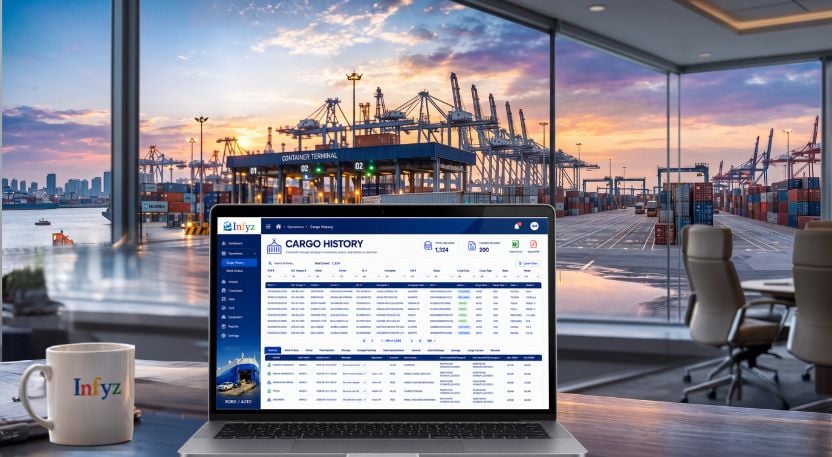
Another critical factor for the right ToS is its cybersecurity features. It has to have security and authentication layers so that it can be protected from external cyber attacks. Automation can deliver better results and higher efficiency; however, the role of the software should not be calculated based on what automated software can do, but also on the basis of how fail-safe it is.
When selecting the right software, the management should also consider the time it will take to recover when it or a portion of the system fails, whether there are manual fallback options, whether it is secure, and its modular structure for isolation and offline capabilities.
Infyz/iTOMS is one example of this approach, with a modular architecture designed to support independent recovery and offline operation for critical functions. The broader principle is that resilience needs to be part of the automation architecture and ROI calculation from the beginning.
You might also like to read-
- Port Automation: The Reality Nobody Tells You
- The $6.9 Billion Cost of Non-Automated Port Operations: Why Delays Are Becoming More Expensive
- Why Modern Terminals Are Replacing Legacy Software with AI?
- What Can Operators Expect From a Modern Terminal Operating System (TOS) ?
- Small Ports Don’t Need Rotterdam’s Budget To Automate – Here’s What They’re Doing Instead
- Inside the Terminal’s Digital Twin: What Real-Time Yard Visibility Looks Like
Disclaimer :
The information on this website is for general purposes only. While efforts are made to ensure accuracy, we make no warranties of any kind regarding completeness, reliability, or suitability. Any reliance you place on such information is at your own risk. We are not liable for any loss or damage arising from the use of this website.

About Author
Founded in 2007 and headquartered in Hyderabad, India, Infyz Solutions is a premier technology company specialising in cloud-native and AI-enabled software solutions for the ports, shipping, and logistics industries. With nearly two decades of domain excellence, Infyz empowers terminal operators and logistics providers worldwide through its flagship suite of enterprise products, including iTOMS (Terminal Operations Management System), iNauka (Maritime & Shipping Operations), iVBS (Vehicle Booking System), iEPS (Equipment Processing System), iDepot (Container Depot Management System) and iCLMS (Cargo Logistics Management System).


Disclaimer :
The information on this website is for general purposes only. While efforts are made to ensure accuracy, we make no warranties of any kind regarding completeness, reliability, or suitability. Any reliance you place on such information is at your own risk. We are not liable for any loss or damage arising from the use of this website.
Related Articles


Subscribe To Our Daily Newsletter
By subscribing, you agree to our Privacy Policy you can unsubscribe anytime.


BE THE FIRST TO COMMENT