
Download 18 FREE Maritime eBooks
7 Important Shipping Routes Vulnerable To Maritime Piracy
Maritime piracy is one of the biggest threats plaguing the international maritime sector presently. While the international maritime authorities have set up various measures to counter the piracy problem, certain shipping routes are still vulnerable from piracy attacks.
Known as chokepoints or constrictions, these water conduits are naturally narrow. They are also of extreme importance as they facilitate vital cargo operations in the smoothest of manner possible. Needless to say, they are some of the busiest shipping routes in the maritime industry.
Seven such water conduit chokepoints have been listed primarily by various maritime bodies as being the most indefensible to potential acts of maritime piracy. Spread across the globe, each of these seven shipping routes holds its unique place in the totality of the global shipping operations.
1. The Suez Canal: Forming a viable marine network between the Mediterranean and the Red Sea, the Suez Canal has been a favored shipping route for countless years.
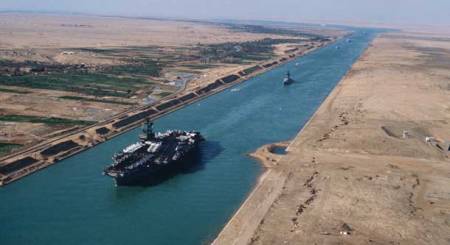
But in the recent times, the presence of certain maritime piracy groups and terrorist sects have increased the threat to the shipping operations along this route.
2. The Turkish Strait of Bosporus: The Strait of Bosporus is one of the two Turkish Straits, linking the Black Sea to the Mediterranean Sea through the Marmara Sea.
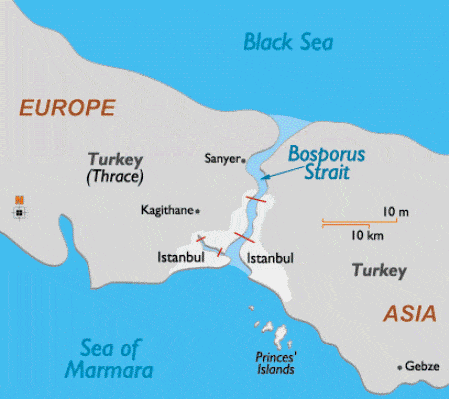
It is an important shipping route linking the European maritime network with its Asian counterpart and as such has a very high relevance in the global maritime sector.
3. The Hormuz Strait: Positioned quite strategically, the Hormuz Strait links the Omani Gulf with the Gulf of Persia in Middle-east Asia.
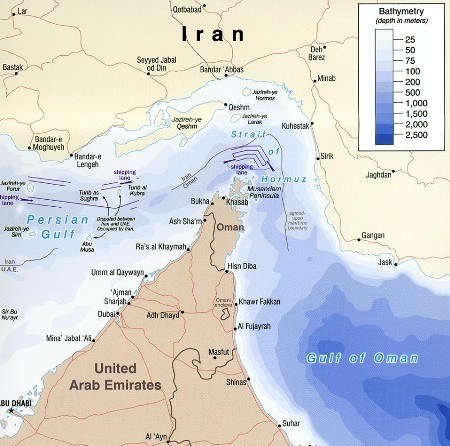
It is one of the most widely used shipping routes both for vessels incoming from the Western countries and for cargo vessels outbound for the West. It is also one of the maritime piracy affected areas.
4. The Bab el-Mandeb Strait: The Strait of Bab el-Mandeb allows the passage of vessels along North-eastern Africa. For vessels wanting to cross into the Suez Canal, this strait is a necessary route and thus forms a major choke point.
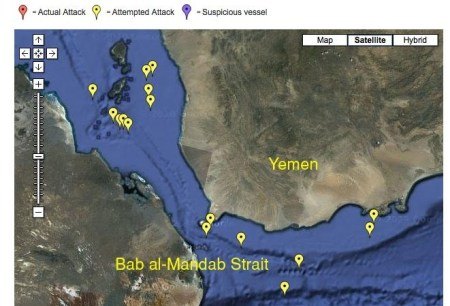
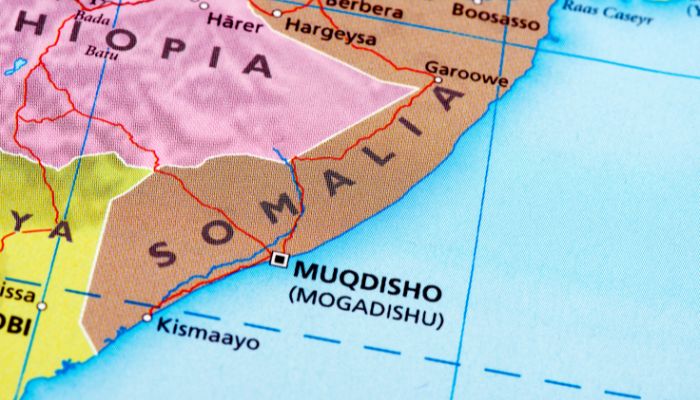
The shipping route’s location in the North-eastern part of Africa makes it highly susceptible to attacks by African pirates in the waters near the Somali Peninsula (Horn of Africa).
5. The Malaccan Strait: Connecting the Pacific and the Indian Ocean through the South China Sea, the Malaccan Strait is a very significant choke point in the Eastern global maritime sector.
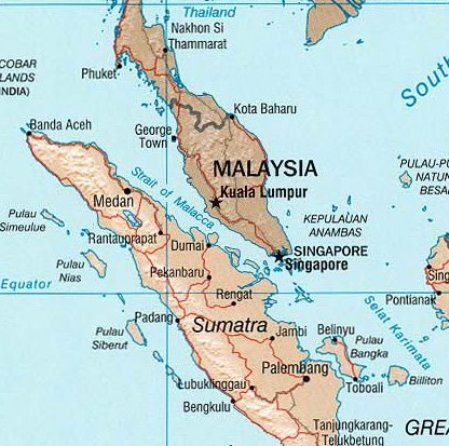
Placed strategically between the countries of Singapore, Malaysia and Indonesia, the shipping route has over the years come under various attacks of maritime piracy.
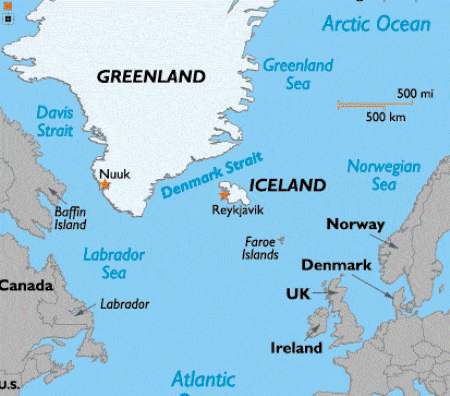
6. The Danish Strait: Of extreme importance in the Northern European maritime network, the Danish Strait shipping route helps to interlink the North Sea with the Baltic Sea especially with respect to oil tanker ships that cross from Eastern Europe – mainly Russia – towards the West.
7. The Panama Canal: Interlinking the Atlantic Ocean with the Pacific via the Sea of Caribbean, the Panama Canal is a lesser significant marine constriction, as compared to the others specified here.
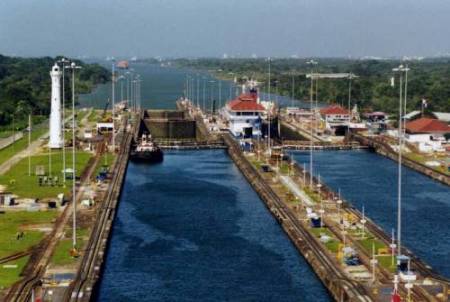
However as a busy shipping route, the Panama Canal is one of the major facilitators of international cargo shipping activities and is thus vulnerable to maritime piracy.
Apart from the threat of maritime piracy, yet another threat to these shipping routes is that of border conflict. The locations of most of these chokepoints are strategic in nature. Therefore maritime transportation through these chokepoints stands to get affected in case of conflict between nations. Even aside from border conflicts, hostile governmental authorities also stand to disrupt the smooth flow of operations along these constricting water conduits.
Alternate shipping routes are being considered so as to eliminate the utilisation of these chokepoints and thus solve the core problems. The viability of some of these alternate shipping routes though is still under immense doubt specifically because of the huge operational costs. Till such alternate routes can come into existence at a future date, several restrictions and protocols to reduce the threats to these chokepoints have been introduced and implemented by various maritime bodies.
You may also like to read – 10 Most Famous Pirates of the Marine World
Disclaimer :
The information on this website is for general purposes only. While efforts are made to ensure accuracy, we make no warranties of any kind regarding completeness, reliability, or suitability. Any reliance you place on such information is at your own risk. We are not liable for any loss or damage arising from the use of this website.

About Author
Raunek Kantharia is a marine engineer turned maritime writer and entrepreneur. After a brief stint at the sea, he founded Marine Insight in 2010. Apart from managing Marine Insight, he also writes for a number of maritime magazines and websites.
Disclaimer :
The information on this website is for general purposes only. While efforts are made to ensure accuracy, we make no warranties of any kind regarding completeness, reliability, or suitability. Any reliance you place on such information is at your own risk. We are not liable for any loss or damage arising from the use of this website.
Related Articles
⚓️ Enhance Your Knowledge. Prevent Accidents. Stay Safe at Sea.
1. eBooks for Engine Department
Master machinery operations, troubleshooting, and safety procedures with expertly written guides tailored for marine engineers. Prevent costly breakdowns and onboard accidents through practical knowledge.
👉 Explore Engine Department eBooks
2. eBooks for Deck Department
Sharpen your seamanship, navigation, and cargo-handling skills with real-world case studies and practical insights designed for deck officers and cadets.
👉Discover Deck Department eBooks
3. eBooks on Electrical Fundamentals & Issues
Understand marine electrical systems, identify potential faults, and prevent onboard electrical failures with step-by-step explanations from industry experts.
4. Pocket Guides for Quick Reference
Compact, handy, and loaded with essential checklists—perfect for on-the-go reference during operations and emergencies at sea.
5. Combo Packs to Save Big
Access multiple expert eBooks at discounted prices. Ideal for professionals seeking complete safety and operational knowledge across various ship departments.
6. Digital Maritime Courses – Learn at Your Own Pace
Upgrade your competence with Marine Insight Academy’s online courses. Learn from industry professionals anytime, anywhere, and become a safer, smarter seafarer.
Subscribe To Our Daily Newsletter
By subscribing, you agree to our Privacy Policy and may receive occasional deal communications; you can unsubscribe anytime.
How do merchant marines cope with the danger of maritime piracy?
I mean… I watched Captain Phillips movie but I guess nowadays naval troops from many countries are more protective (or so I want to think)…
Are merchant vessels always struck by pirates every single time they sail abroad, especially through these routes? Or is it just that Captain Phillips had bad luck? Shouldn’t merchant vessels from them on be escorted by two or four destructors?
Oh, well… all this just to say that from all the perils that merchant seamen are exposed to, the most dangerous one doesn’t seem to be the storms or the icebergs but the pirates.
Some merchant vessels do get struck by pirates but most of the times the naval troops comes to the rescue.. However, there are some who falls victims to piracy and ships being taken over by the bad guys.. But that’s very minimal