
18 Serious Offences under Merchant Navy Code of Conduct Resulting in to Dismissal from Job at Sea
Seafaring is a civilian occupation which imposes on seafarers particular demands not found in land-based jobs. Seafarers are often required to spend both their working and leisure hours in the confined environment of a ship with the same individuals. This can make seafarers more susceptible to the stresses of everyday life than those working ashore. In this environment, the need for discipline and good behaviour is of particular importance.
A ship at sea is a small floating city with a limited number of crew members who have to behave with a certain code of conduct with fellow members. Any misbehaviour or deliberate damage either to the ship or fellow members can hinder general operation or threaten the safety of the ship. Rightfully so, a strict code ought to be followed on board for the proper functioning of the ship even when individual issues might not be great! It is for this purpose that the Code of Conduct for the Merchant Navy is in place, and the UK Chamber of Shipping and the Maritime and Coastguard Agency stick by it, adhered to by merchant ships across the world.
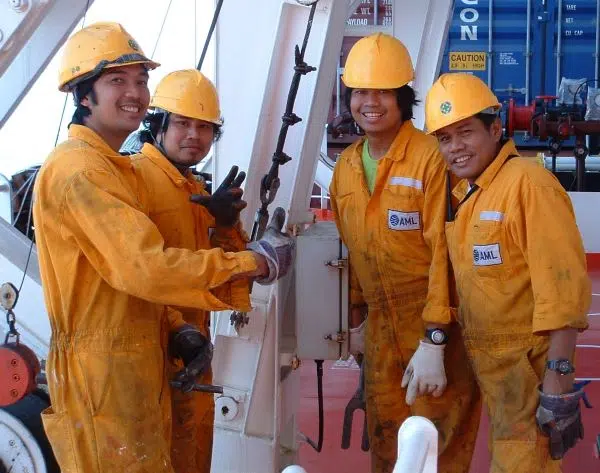
In conditions when any of the Codes is breached, the concerned seafarer might face serious legal charges or can even have permanent dismissal from his or her sea job.
In this article, we list 18 different acts which are considered as an offence under the code of conduct in merchant navy. The following crimes are considered severe and can lead to dismissal of the crew if found guilty.
1. Assault to fellow member/threatening behaviour: The ship is a closed loop system with respect to its human resources and like any workplace there are bound to be differences. Under such circumstances, it is imperative to maintain the decorum onboard and retain the sanctity of professional environment. It is for this reason that the offender must be kept under the purview of this aspect of the Code
2. Acts that pose threat to the safety of the ship: Wilful damage to property onboard, for any reason, is punishable and rightfully so. The ship is an expensive object and every part of it down to the last nut and bolt contributes to the functionality of the vessel. Any tendency of violence towards the ship is testament to unstable behaviour and punishable by the Code
3. Intentional act of polluting marine environment: This includes endangering the ship, persons or cargo on board, or the marine environment. Merchant ships are under international regulations to prevent any harm to the marine environment, and if carried out, exposes the ship to substantial financial risks. The act of doing so intentionally as an act of defiance or revenge towards the Master holds the doer accountable for his actions and therefore, punishable.
4. Unlawful possession of drugs and alcohol: Duty onboard is to be carried out sober and as history will be witness, navigating under influence poses great risks to the safety of the vessel. Additionally, many ports of call might call for unwanted approaches to transport contrabands. For those with a weak constitution, it might seem like a quick way to profit from this illicit trade nut one must remember the extreme implications that come with this sort of criminal behaviour. Breach of company rules and procedures relating to alcohol, drugs or smoking can also be clubbed under this.
5. Act of smuggling: Various commodities are variably priced and taxed across the world. The act of profiteering from such trade is obviously a grave misconduct. For example, gold is cheap in the Gulf, any attempts to transport it to another country with high gold rates would classify as smuggling and highly illegal.
6. Intentional act resulting in damage to ship’s property and equipment: Quite self-explanatory and related to point 2
7. Possession of arms or weapons: While merchant ships of some nations might be allowed to bear arms as the law of their Government, the possession of it individually is illegal. A seafarer visits many countries, some with very lax gun laws; this should not be a reason to be armed onboard. Possession of the same increases the risk of life while at sea for every personnel on board not to mention the prosecution that would come with it if caught
8. Willful act of not performing the assigned duties: To refuse to work as specified by the company (duties listed in the ISM Code), means that the seafarer is not compliant and does not deserve to be paid his dues. The ship has a professional environment running smoothly because everyone does their job
9. Not following orders of seniors related to ship’s safety: There’s a reason that progressing in the shipboard hierarchy is also pegged to experience (aside from passing examinations). A senior officer knows more and a genuine order to protect the safety of the ship cannot be hindered
10. Persistently late reporting for duty or remaining absent from the duty: Again, seafaring calls for a high degree of professionalism. A general attitude of nonchalance towards one’s assigned duty is not acceptable. As mentioned, every ought to stick to their job for the smooth running of the vessel and failure to do so causes a disbalance in the chain of command. For example, an officer on cargo watch for 6 hours expects the next to be punctual as he is exhausted and has another 6 hour cycle to execute; not showing up on time just negates a good work environment
11. Sleeping or avoiding work during the duty period: This can be read and interpreted with regard to points 9 and 10
12. Revelation of a major health problem at sea, hidden from the company before joining: Again, the keyword here is professionalism. This is not a job that can be done without being at a certain physical efficiency level. It is important to disclose all medical history to the doctor and the during the checkup before joining the ship. Sudden disclosure at sea is only going to disrupt the shipboard efficiency
13. Smoking using naked light in no smoking zone or near dangerous goods: Rather obvious! Certain cargoes carry a very high risk of flammability and must be not have any ignition source around it. Also, with designated rooms for smoking, there is just no reason to smoke on deck. As far as naked lights go, they are a complete no-no as well for the same reasons.
14. Reporting to duty after consuming alcohol or under the effect of alcohol: Sobriety is of paramount importance. While there is always the aspect of human error, error under influence and error when sober are worlds apart. The former can be classified as a violation while the latter might not be so
15. Interfering with the work of other fellow crew members, resulting in danger to the safety of the ship: As mentioned above, STICK TO YOUR JOB! While it is a great gesture to help another personnel out in need onboard, it should not interfere with the workings of one staff and in any case, not be at the cost of the safety of the ship. As displayed on the outer bulkhead of the accommodation “SAFETY FIRST”
16. Conduct of sexual abuse which may harm the dignity of fellow women or men at work or passengers onboard: This can be classified as ugly “disgusting”. Women are very slowly integrating into the merchant navy workforce and such an act will only deter them from joining and for those already in the workforce, it will kill their will to continue and cause them grief. It is also against basic human principles. The same goes in case that sexual advances are made towards a man. Any sexual harassment ought to be treated with the strictest punishment. On ship, everyone is present because of their qualifications and that is irrespective of their gender or attraction levels. It is for this reason that all corporate houses have a sexual harassment clause that protects their workers
17. Offending fellow crew members in terms of their religion or nationality: While the world is suffering under the weight of racism and crimes in the name of religion, the shipping industry takes pride in its international nature, free from such useless barriers. A multicultural and multinational crew should be celebrated and taken pride in instead of targeting
18. Allowing or bringing unauthorised person onboard while at sea: Unless authorised by the Master who liaises with the agents and the port authorities for this purpose, bringing anyone on board is an offence. If for legitimate reasons, the individual can always request the Master for permission- for example, getting a family member onboard for a brief period when at the home port
All in all, it is really great that such acts are punishable under the Code as the absence of it would result in total chaos and different interpretations of a questionable act.
Disclaimer :
The information on this website is for general purposes only. While efforts are made to ensure accuracy, we make no warranties of any kind regarding completeness, reliability, or suitability. Any reliance you place on such information is at your own risk. We are not liable for any loss or damage arising from the use of this website.



About Author
Shilavadra Bhattacharjee is a shipbroker with a background in commercial operations after having sailed onboard as a Third Officer. His interests primarily lie in the energy sector, books and travelling.
Disclaimer :
The information on this website is for general purposes only. While efforts are made to ensure accuracy, we make no warranties of any kind regarding completeness, reliability, or suitability. Any reliance you place on such information is at your own risk. We are not liable for any loss or damage arising from the use of this website.
Related Articles


Subscribe To Our Daily Newsletter
By subscribing, you agree to our Privacy Policy you can unsubscribe anytime.


