


Real Life Accident: Unsafe Cargo Handling Procedures Lead To Fire On LPG Ship
A Liquified Petroleum Gas (LPG) vessel was loading LPG that was at a higher temperature than desired for transit. In order to cool the LPG cargo, the gas was re-liquefied to a lower temperature by using the vessel’s boil off system.
The gas was first directed to a compressor, compressed to a higher pressure, and then condensed back to a liquid at a lower temperature. From the condenser it flowed through an expansion valve and back to the tank. It was reported that while this system was operating, the piping near the expansion valve began constricting flow due to freezing hydrates. This then caused an increase in system pressure from the expansion valve back via the condenser and to the outlet of the compressor.
It appears probable that the drains at a sample point were left cracked open, or just leaking, to allow hydrates to escape. In any event, significant accumulations of ice were noted in the bilge areas below the same sample point for two of the three liquid line drains. A hazardous flammable atmosphere was therefore allowed to develop and a spark of unknown origin ignited a fire near the condenser. It was extinguished quickly by a crew member using handheld dry chemical extinguishers.
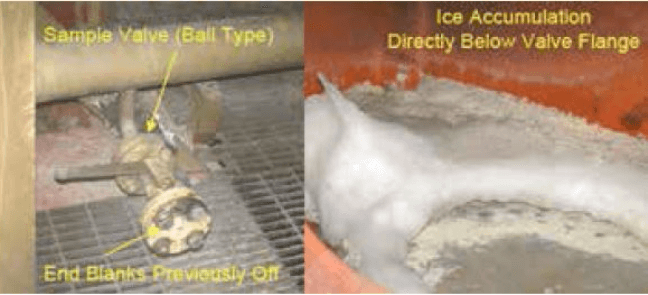
The investigation also identified other concerns, such as:
- An emergency system left in the manual mode prevented remote activation;
- Senior organisational personnel for the operator and facility were not informed of the hydrate situations;
- Procedures for taking actions when gas alarms sounded were not followed; and
- Gas detection devices were not properly calibrated.
Lessons learned
It is likely that unsafe cargo handling procedures associated with manual draining of hydrates from the drain line on the outlet of re-liquefaction condensers directly contributed to this casualty. Although not every scenario that involves decision making of officers and crewmembers can be documented, it is reasonable to expect that those procedures that are part of day-to-day operations are documented in the SMS. In this case, removal of hydrates was not a documented procedure. Routine and frequent training should be given to shipboard officers and crew based on documented procedures; in the case of LPG vessels it should cover such topics as;
- The safety risk of releasing LPG in open and enclosed spaces;
- Proper methods to acknowledge and investigate gas detection alarms regardless of location (including making proper notifications to responsible parties);
Note: Hydrates are compounds, in the form of crystalline substances, developed from the interaction of water and hydrocarbons at certain pressures and temperatures. They are commonly present in LPG cargoes and must be safely managed throughout the cargo system. Hydrates, if not removed, can result in frozen regulating valves, clogged filters, damaged equipment, and other problems in the related cargo systems.
Reference: nautinst.org
Do you have info to share with us ? Suggest a correction

- Real Life Incidents: Near Miss In Open Water And Good Visibility

- Real Life Incident: Poor Situational Awareness Leads to Collision
- Real Life Incident: Monkey’s Fist Knocks on Office Window
- Real Life Incident: Paint Storage Slip-Up On Ship
- Real Life Incident: Checklist Mentality Is A Burning Problem
- Real Life Incident: Vessel Speed Exacerbates Bank Suction
Latest Case studies Articles You Would Like:
Subscribe To Our Newsletters
By subscribing, you agree to our Privacy Policy and may receive occasional deal communications; you can unsubscribe anytime.