
Offshore Well Drilling : A General Overview
The process of oil well drilling at deep sea starts with locating offshore reservoir and using mobile drilling units for the drilling process. Once the the job of temporary drilling units is over, permanent offshore gas/oil production structures or platforms are installed for carrying out further processes.
Well Drilling is a process of drilling a hole in the ocean floor for extraction of natural resources. It is a challenging part of the exploration and development process that is carried out in several stages.
Moreover, drilling a well under difficult conditions such as freezing sea water temperatures and strong sea bed currents with pressures enough to crack even high tensile metals, is extremely taxing. Drilling structures are therefore so designed that they could withstand the nature of external subsea forces.
After the companies possibly ascertain of a site and employ the drilling units in position, wells are drilled on the sea floor using high tech drilling equipment in order to extract either natural gas or oil. The main stages of installing a deep sea drilling well are:
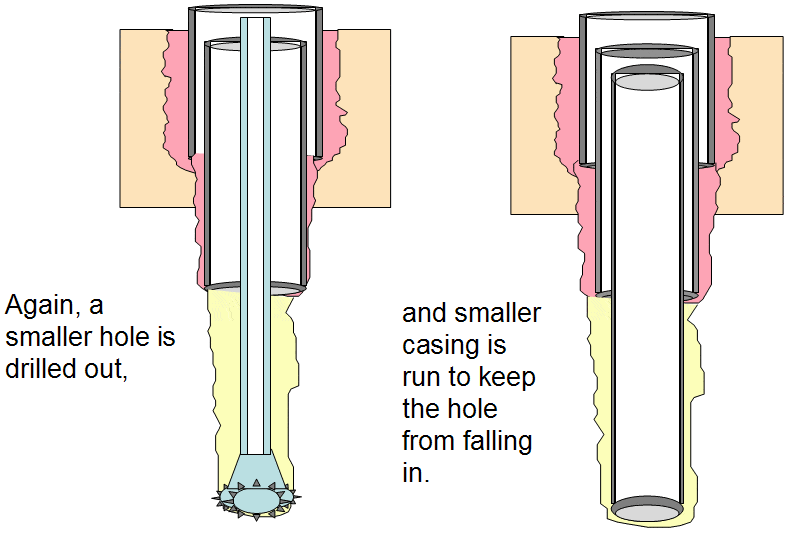
1.Spudding – This is the first stage in the drilling process, where drilling is carried in an open hole location by one of the mobile drilling units, initially with 36” casing being forced up to 100 meters into the sea floor. This 36” casing is the backbone of the well creating a foundation for further drilling. This process is followed by drilling to deeper depths and by continuously adding lesser sized casings until the desired drilling depth is reached.
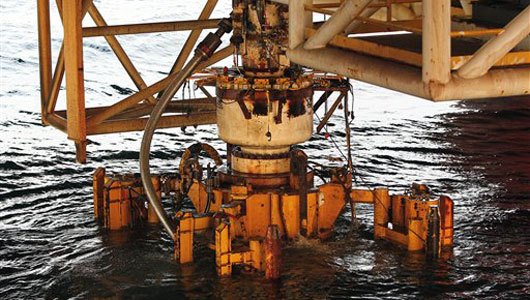
Setting up the BOP Stack – Once the casings are secured and cementing, a well head or a guide base is set up on the sea floor above the casing unit, the Marine Riser and the Blow Out Preventer is lowered to be setup at the well head which provide continuity from the drilling deck on the Mobile drilling unit to the well for further drilling processes.
Drilling – After the initial setups of the drilling stages are complete; the drill bits and drill collars, drill pipes, turntables on the drilling units’ deck and derrick work in unison and under tension to cut through the rocks and dig out wells that allow oil or natural gas to flow through the casings and ‘up’ to the receiving platform in a very controlled manner.
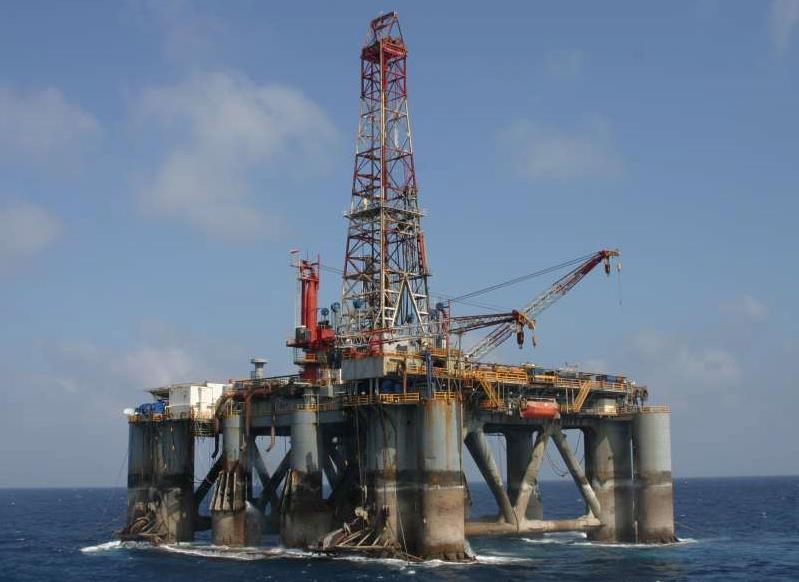
Drilling at sea means a lot is at stake! Exploration, production and transportation of oil and gas, pollution caused when handling these fossils, development and utilisation of the drilling machinery and related specialised equipment, skilled man-power, etc. are some of the hazards faced when drilling offshore.
Petroleum companies have developed many techniques over the years to satisfy the voracious demands. Earlier, there were lesser alternatives to conventional drilling in shallow waters. Today, the oil and gas explorations and offshore developments have given rise to newer technologies in order to sustain fossil fuel enslavement.
You may also like to read – How Subsea Components Of ROV Sustain Tremendous Seawater Pressure?
Disclaimer :
The information on this website is for general purposes only. While efforts are made to ensure accuracy, we make no warranties of any kind regarding completeness, reliability, or suitability. Any reliance you place on such information is at your own risk. We are not liable for any loss or damage arising from the use of this website.


About Author
Bikram Pal Singh is a professional mariner and blogger. He has sailed extensively, serving on various Oil tankers and Offshore Vessels. He enjoys reading and compiling notes about critical shipboard operations and crew psychology.
Disclaimer :
The information on this website is for general purposes only. While efforts are made to ensure accuracy, we make no warranties of any kind regarding completeness, reliability, or suitability. Any reliance you place on such information is at your own risk. We are not liable for any loss or damage arising from the use of this website.
Subscribe To Our Daily Newsletter
By subscribing, you agree to our Privacy Policy you can unsubscribe anytime.


good guide on how offshore drilling works. I am also a merchant mariner for the SIU for about a year now. Lately, I have been reading about maritime stuff of free time. I look forward to reading more on here.
hi we need to purchase a rotary machine of Drilling concerning water , if you please send us some modles in images with its prices
can you help to find some write-up relevant to casing inserted and its process of insertion in case of shallow water conventional drilling and blasting technique