
Download 18 FREE Maritime eBooks
5 Instruments of International Maritime Organization (IMO) Every Seafarer Should Know
United Nation’s International Maritime Organization (IMO) plays an important role in handling all international maritime affairs with support from the maritime nations of the world.
One of the main aims of IMO is to ensure co-operation among maritime governments of the world. It also uses a number of instruments to implement and maintain the highest standards in areas of maritime safety, prevention of marine pollution, and shipping navigation and trade.
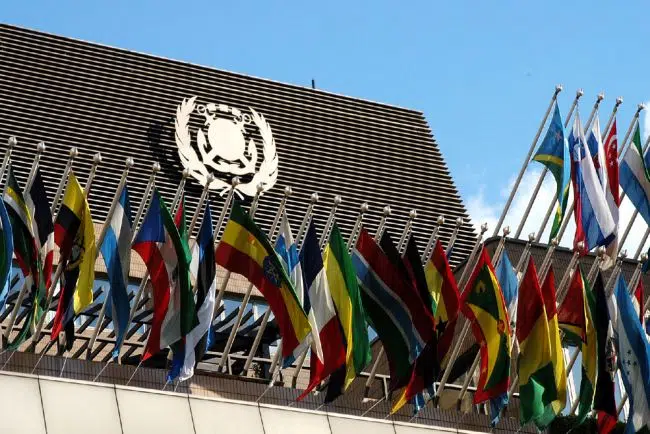
In this article, we will learn about 5 important instruments which IMO uses to ensure smooth operations at the sea, backed by highest standards of maritime safety.
The 5 important instruments of IMO are:
- Conventions
- Protocols
- Amendments
- Recommendations, codes, and guidelines
- Resolutions
Conventions
A convention is a written agreement with several parts. Conventions form a major part of maritime affairs governed by the IMO. Some of the major conventions by IMO are Safety of Life at Sea (SOLAS) 1974 convention and International convention for prevention of pollution from Ships (MARPOL).
It is to note that conventions generally have several sub-parts, which would describe in details various aspects of the subject defined by that particular convention. For e.g. MARPOL convention has six parts which are known as annexes. Each of this annexe deals with different aspect of marine pollution.
It is also possible that details given within a convention are put under an associated code, which provides further technical details of that aspect; for e.g. the Life saving appliances (LSA) code gives details for minimum requirements for safety equipment used on board ships.
Each member state must accept the details mentioned in conventions put forth by the IMO and agree to international supervision required under such conventions.
Thus, conventions act as a treaty between the IMO and member states. It is imperative that every member state abides by the rules and regulations put forth by the IMO.
Protocols
Protocol is an important instrument used by the IMO to introduce changes to conventions, which are already adopted but not yet entered into force.
For e.g. SOLAS convention 1973 was amended twice using protocols – by 1978 SOLAS protocol which entered into force in 1st May 1981 and by 1988 SOLAS protocol which entered into force on 3rd Feb 2000. Both the protocols are now known as SOLAS 74/78 and SOLAS 74/88.
Amendments
As mentioned above, amendments are major changes that are brought into action using protocols. Amendments are the reforms that are needed in a convention and are backed by the protocols.
For e.g. Because of several accidents at sea, there was an urgent need to change the MARPOL 1973 convention in 1970s. These changes or amendments were brought into action by the combined convention-protocol instrument called MARPOL 73/78 on 2nd October 1983.
Recommendations, codes, and guidelines
Recommendations are mainly guidelines which are not legally accepted. They are not formal documents like convention or protocol but are a list of recommended practices that are closely linked to conventions. For e.g. timber deck cargo code
Recommendations can also be guidelines which are waiting to be accepted by the IMO.
However, it is to note that though recommendations are not legally binding, some governments might apply them in whole or in part.
Codes and guidelines can be both mandatory and non mandatory. Codes such as ISM and IBC codes are mandatory and are a part of a parent convention or protocol.
Resolutions
Resolutions are the finalized documents which are accepted by the IMO or any of the main body under IMO. They generally result from an agreement on a recommendation or amendment.
Resolution passed by the assembly is denoted in a peculiar manner.
For e.g. Resolution A. 586 (XIV)
Where, A = assembly; 586 = serial number of resolution; and XIV = Made by the 14th session of the assembly
E.g. 2: MEPC. 54 (32)
Where, MEPC = Marine environment protection committee; 54 = serial number; 32 = 32nd session of the committee
Disclaimer :
The information on this website is for general purposes only. While efforts are made to ensure accuracy, we make no warranties of any kind regarding completeness, reliability, or suitability. Any reliance you place on such information is at your own risk. We are not liable for any loss or damage arising from the use of this website.



About Author
Raunek Kantharia is a marine engineer turned maritime writer and entrepreneur. After a brief stint at the sea, he founded Marine Insight in 2010. Apart from managing Marine Insight, he also writes for a number of maritime magazines and websites.
Disclaimer :
The information on this website is for general purposes only. While efforts are made to ensure accuracy, we make no warranties of any kind regarding completeness, reliability, or suitability. Any reliance you place on such information is at your own risk. We are not liable for any loss or damage arising from the use of this website.
⚓️ Enhance Your Knowledge. Prevent Accidents. Stay Safe at Sea.
1. eBooks for Engine Department
Master machinery operations, troubleshooting, and safety procedures with expertly written guides tailored for marine engineers. Prevent costly breakdowns and onboard accidents through practical knowledge.
👉 Explore Engine Department eBooks
2. eBooks for Deck Department
Sharpen your seamanship, navigation, and cargo-handling skills with real-world case studies and practical insights designed for deck officers and cadets.
👉Discover Deck Department eBooks
3. eBooks on Electrical Fundamentals & Issues
Understand marine electrical systems, identify potential faults, and prevent onboard electrical failures with step-by-step explanations from industry experts.
4. Pocket Guides for Quick Reference
Compact, handy, and loaded with essential checklists—perfect for on-the-go reference during operations and emergencies at sea.
5. Combo Packs to Save Big
Access multiple expert eBooks at discounted prices. Ideal for professionals seeking complete safety and operational knowledge across various ship departments.
6. Digital Maritime Courses – Learn at Your Own Pace
Upgrade your competence with Marine Insight Academy’s online courses. Learn from industry professionals anytime, anywhere, and become a safer, smarter seafarer.
Related Articles
Subscribe To Our Daily Newsletter
By subscribing, you agree to our Privacy Policy and may receive occasional deal communications; you can unsubscribe anytime.
Sir plz tell me the name of 10 important IMO instruments and notes also
THANKS FOR ALL EASY TO GETTING EXAM STUDY
Hoping that you can give any sites for IMO recommendations about Major International Shipping Conventions. Btw, it was really helpful. Thank you chief. ❤
Please what are the relevance of IMO
It is the governing body for the Maritime industry.
Thanks for thats
@Kaung: ??
thanks