


Ship Departure Checklist for Engine Department: What to Do When a Ship Leaves a Port?
There are many things that are to be kept in mind when a ship leaves a port and prepares for a long voyage at the sea. In this article we will learn about the various jobs that are to be taken care of without fail for a smooth sail at the sea. The article is presented in the form of a checklist so that those interested can take a printout for their personal use.
Presented here is the engine department departure checklist for a ship leaving a port, assuming cold start with boiler and generator in running condition.
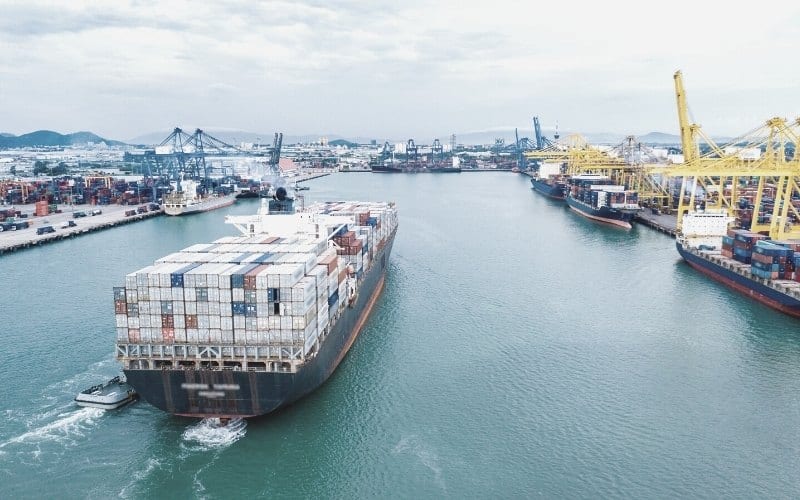
Things to do 24 hours notice prior to departure for the first time
- Check the oil level or sound the bunker tanks to measure level and make sure that the temperature is maintained to about 40 degrees or as per analysis report by opening steam. This is done for the transfer of oil from bunker tank to settling tank. If the oil is kept cold the pump might get damaged due to very high viscosity.
- Check the jacket water header tank for level and fil accordingly. Do not fill to much as when the engine starts running the water expands and it will start overflowing.
- After checking the level start the jacket water circulating pumps if there is a separate system for main engine.
- Check the jacket water temperature of the main engine and maintain it about 60 degrees as below this temperature it might start leaking into the scavenge space.
Things to do at 6 hours notice period
- Check the oil level in the main engine sump, turbocharger tank.
- The duty engineer will start the lubricating oil pump and the cross head pump (generally in sulzer engines) and turbocharger pump.
- Check the oil flow through the sight glass of turbocharger outlet.
- Check the pressure of lube oil pump and turbocharger pump and cross head pumps.
- Start the shaft bearing pumps and check the level of header tank.
- Generally in UMS there is a program for starting all these pumps in sequence. This program is started after taking the engine room rounds and the levels are checked.
Things to do at 1 hour notice period
- A quick round of engine room is taken and chief engineer has to be reported regarding the departure.
- Check oil level, header tank level, cylinder oil daily tank level.
- Check the pressure of fuel oil pump, booster pump, lube oil pump etc.
- Check sump oil level in air compressor.
- Drain air bottles for any water inside.
- Check that the turning gear is out.
- Check parameters of the running machinery.
- Start an additional generator so as to supply for additional demand of power from winches and thrusters.
- Start exhausts gas boiler water circulating pump.
- Check the telegraph for functioning in conjunction with deck officer on watch.
- Telegraph is checked for local and remote panels.
- Emergency telephones to be checked for functioning.
- When the chief engineer is present in control room, go to the steering gear and check for any leaks and port to starboard movement.
- Check the functioning of limit switches in steering gear.
- Check gyro reading in steering gear and cross check with reading on the bridge.
Things to do at 15 minutes notice
- Open the main air starting valve for main engine.
- Ensure all air compressors are in auto and air bottles are full.
- Main engine is blown with open indicator cocks with air to check for any water ingress in main engine.
- If no leaks or ingress is found chief engineer is reported and the indicator cocks are closed.
- Close the turbocharger drain valves.
- Chief engineer reports to captain on bridge that the engine is ready for use and control is transferred to the bridge from engine control room.
- Flow meter counters of main engine, generator and boiler are taken for calculation purposes of oil in port.
Checks made when the engine is running
- Engine room round is taken again.
- Check for any abnormality.
- Check all the parameters of the main engine like temperature of exhaust valve, jacket water etc.
- Close steam heating for jacket later if not auto controlled.
- Once the ship is out from the port and pilot has left, open the other sea suction valve.
Checks made when ship is full away
- Stop the additional generator.
- Stop the boiler if exhaust gas boiler is fitted.
- Start fresh water generator.
- Open sewage overboard valve.
- Start turbine and shaft generator if fitted.
- Take flow meter counter again for calculation of fuel consumed from port to full away.
- The watch is handed over to next duty engineer if watch has to be changed.
- In case of UMS ship, the bridge is informed after taking rounds of the engine room, about your taking break.
If you have read the checklist for departure, you might also like to read the checklist for arrival of the ship at port.
You may also like to read – Free Sample Checklist : Engine Room Before Departure Checklist
Do you have info to share with us ? Suggest a correction
Latest Shipboard Guidelines Articles You Would Like:



Subscribe To Our Newsletters
By subscribing, you agree to our Privacy Policy and may receive occasional deal communications; you can unsubscribe anytime.
Nice web packered information. I luv dis
Nice information luv it
I guess even the auxiliary blowers need to be put on auto. I did not find it mentioned