
U.S. Navy’s Largest Infrastructure Project Includes A 1,210-Foot Dry Dock For Aircraft Carriers
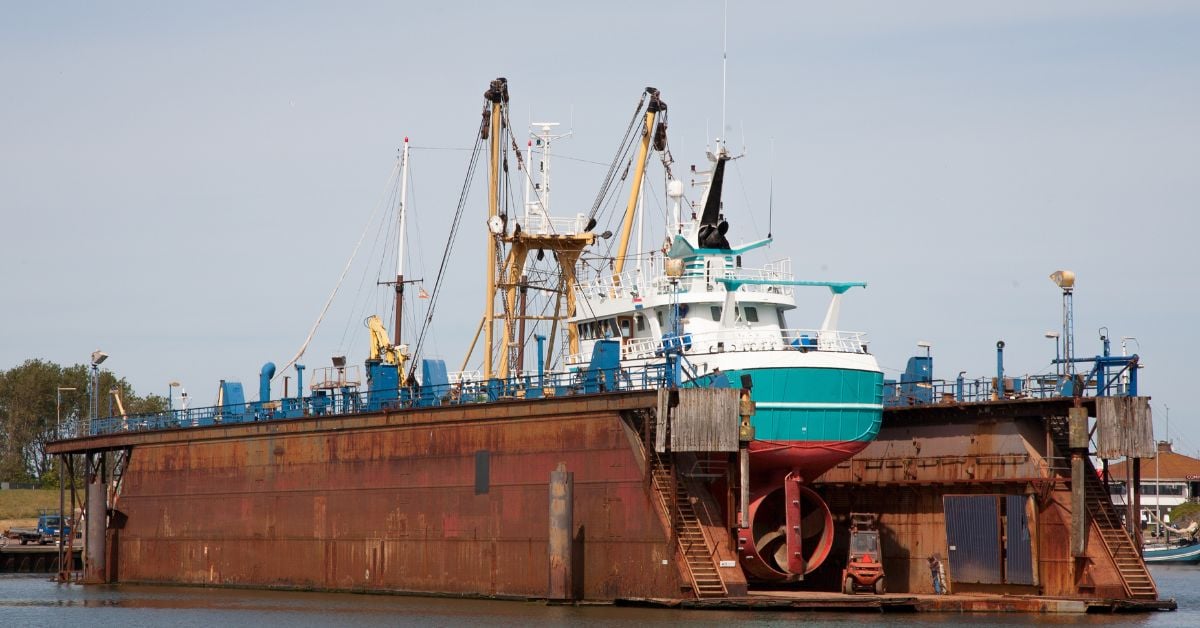
The United States Navy is launching the largest infrastructure project in its history to cement its maritime presence in the Pacific Northwest for centuries to come.
The centerpiece of this endeavour, costing around 30 billion dollars, is the Multi-Mission Dry Dock (M2D2) at the Puget Sound Naval Shipyard & Intermediate Maintenance Facility in Bremerton, Washington.
The facility will be engineered to survive severe earthquakes and serve the warships for more than 100 years, highlighting the evolving nature of naval warfare.
Selections for a contractor would begin in 2027, with major construction to advance in 2028, requiring a workforce of 350 in the initial phase to more than 1200 as work progresses.
The dry dock would be 1200 metres long and 210 feet wide. The decision to build the dock comes as the U.S. lacks a dedicated facility on the West Coast to accommodate its supercarriers.
Once completed, it will welcome the nuclear-powered Gerald R. Ford-class aircraft carriers, which are the largest in the world, including the USS John F. Kennedy, scheduled to homeport in Bremerton in 2029, along with the older Nimitz-class carriers.
This project is the main focus of the service’s Shipyard Infrastructure Optimization Program (SIOP). The initiative has been ongoing for decades and aims to modernise, reconfigure and optimise the country’s four public naval shipyards.
There has been an 85% drop in shipbuilding output since the 1950s, which left the Navy’s 17 dry docks obsolete and incapable of servicing new ships.
Hence, the U.S. is focusing on revamping its maritime industry with investments in new facilities, autonomous shipping technologies, smart vessels, and so on to compete with China and maintain maritime dominance.
The immense scale of the Bremerton project is astounding, as it would require more than twice the volume of the Roman Colosseum and use 11 times more iron by weight than the Eiffel Tower in Paris.
Construction is broadly divided into three phases, with the first one focusing on dredging, demolishing old piers, and building a double-walled cofferdam.
The second phase would involve the construction of the dry dock and the installation of a pressure-relief system, along with demolishing Dry Dock 3.
The last phase would focus on modernising utility networks, building pump wells for dewatering and installing crane rails.
Even though only a few national firms have the bonding capacity to bid as prime contractors, the project itself would inject billions into the local economy, strengthen supply chains, and involve hundreds of engineering firms and marine contractors in each phase.
RELATED POSTS


Disclaimer :
The information on this website is for general purposes only. While efforts are made to ensure accuracy, we make no warranties of any kind regarding completeness, reliability, or suitability. Any reliance you place on such information is at your own risk. We are not liable for any loss or damage arising from the use of this website.

About Author
Zahra is a maritime writer with 6 years of technical writing experience spanning port operations, offshore wind, oil and gas, and maritime policy. Her analytical edge...Read More ->
Disclaimer :
The information on this website is for general purposes only. While efforts are made to ensure accuracy, we make no warranties of any kind regarding completeness, reliability, or suitability. Any reliance you place on such information is at your own risk. We are not liable for any loss or damage arising from the use of this website.
Subscribe To Our Daily Newsletter
By subscribing, you agree to our Privacy Policy you can unsubscribe anytime.


