
World’s First Global Maritime Competition
What are Shuttle Tankers?
Shuttle tanker is a revolutionary development in the domain of tanker shipping. This is a type of tanker ship, which provides invaluable contribution in the high seas’ oil exploratory areas, thereby helping to maintain a steady constancy in the oil and gases’ supply chain.
Shuttle tankers were first mobilized in the North Sea, when oil exploration began in the oceanic area during the 1970s. Their immediate success has led to slow yet unequivocal acceptance of the tanker vessels across the world.
Operational Areas
Although this type of tanker vessels can be utilized in any kind of oceanic exploratory condition, they are best suited for those areas which are comparatively less accessible through exploratory piping.
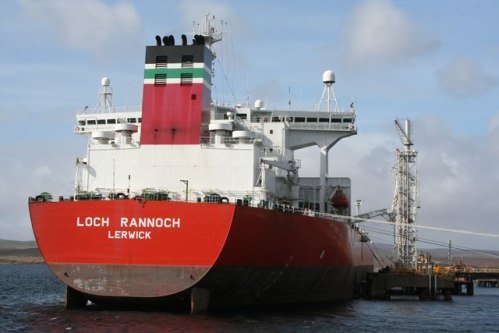
Similarly, in those areas where the weather conditions are tricky, these vessels can be successfully deployed with successful results.
Features and Benefits
As compared to extraction pipes, shuttle tankers offer a multitude of feasibility. In cases of technical and maintenance problems, operations in pipes need to be completely shut down which causes unnecessary delay. Alternatively, these tanker vessels come equipped with capable ancillary technical systems, which ensure that there are no unwanted stoppages in the extraction and transference processes.
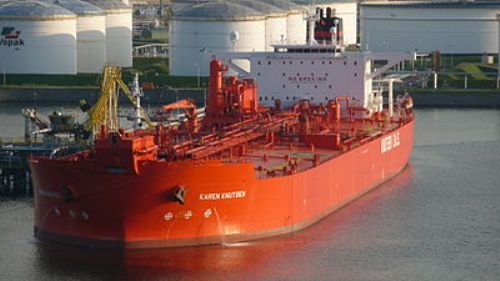
- Utilisation of Dynamic Positioning to maintain stability while being operated
- State-of-the-art propelling system and equipping of thrusters, both in the stern and bow to help better vessel manoeuvring
- Shuttle tanker vessels help in the better extraction of necessary crude oil and gases, without any unwanted commingling of oils
- Various methodologies to transfer the extracted components:
- Through the offshore lading system where Floating, Production, Storing and Offshore (FPSO) vessels are used
- Through SPM (Single Point Mooring) buoys, where multiple shuttle tanker vessels can lade the extracted oil
- Through TLS (Tandem Loading System) where the shuttle tanker is connected to an FPSO – bow to aft
- Through STL (Submerged Turret Loading) and SAL (Single Anchor Loading) systems which are used in the harshest and the calmest oceanic areas respectively
Need for DP Systems
Dynamic positioning systems are perhaps the most important feature of these types of ships. Through dynamic positioning, the entire maneuvering of the vessel is able to be controlled electronically – through computers. In terms of climatic estimations, tidal movements and the overall weather conditions, the statistical figures are accurate which helps in the better controlling and mobilizing of the vessel.

In terms of equipping this type of tanker vessels with dynamic positioning, there are three distinct kinds of DP systems that need to be considered. Each variance has its own uniqueness and depending upon the operator’ suitability, a particular DP system can be successfully equipped.
There are various tanker shipping companies that incorporate shuttle tanker vessels. In the coming years, the usage of shuttle tanker vessels is expected to reach extraction areas in the Latin American waters. Looking at these expected trends, it can be very well speculated that the demand for these types of ships will further even more in the coming decades.
You may also like to read – What Are Coaster Vessels?


Disclaimer :
The information on this website is for general purposes only. While efforts are made to ensure accuracy, we make no warranties of any kind regarding completeness, reliability, or suitability. Any reliance you place on such information is at your own risk. We are not liable for any loss or damage arising from the use of this website.
Related Articles
Disclaimer :
The information on this website is for general purposes only. While efforts are made to ensure accuracy, we make no warranties of any kind regarding completeness, reliability, or suitability. Any reliance you place on such information is at your own risk. We are not liable for any loss or damage arising from the use of this website.
⚓️ Enhance Your Knowledge. Prevent Accidents. Stay Safe at Sea.
1. eBooks for Engine Department
Master machinery operations, troubleshooting, and safety procedures with expertly written guides tailored for marine engineers. Prevent costly breakdowns and onboard accidents through practical knowledge.
👉 Explore Engine Department eBooks
2. eBooks for Deck Department
Sharpen your seamanship, navigation, and cargo-handling skills with real-world case studies and practical insights designed for deck officers and cadets.
👉Discover Deck Department eBooks
3. eBooks on Electrical Fundamentals & Issues
Understand marine electrical systems, identify potential faults, and prevent onboard electrical failures with step-by-step explanations from industry experts.
4. Pocket Guides for Quick Reference
Compact, handy, and loaded with essential checklists—perfect for on-the-go reference during operations and emergencies at sea.
5. Combo Packs to Save Big
Access multiple expert eBooks at discounted prices. Ideal for professionals seeking complete safety and operational knowledge across various ship departments.
6. Digital Maritime Courses – Learn at Your Own Pace
Upgrade your competence with Marine Insight Academy’s online courses. Learn from industry professionals anytime, anywhere, and become a safer, smarter seafarer.

About Author
Sharda is a freelance writer with a post graduation in journalism and mass communication. Working as a senior writer with Marine Insight, she likes to explore and write about maritime history and incidences of life at the sea. In her free time she likes reading and browsing sports channels.
Subscribe To Our Daily Newsletter
By subscribing, you agree to our Privacy Policy and may receive occasional deal communications; you can unsubscribe anytime.
Great….!!!!
The E&P operations are strongly backed by shipping technologies , We appreciate this approach of information sharing , Congratulations to Marine Insight Team , they are actually Doing awesome ..