
Duties Of A Maritime Insurance Broker
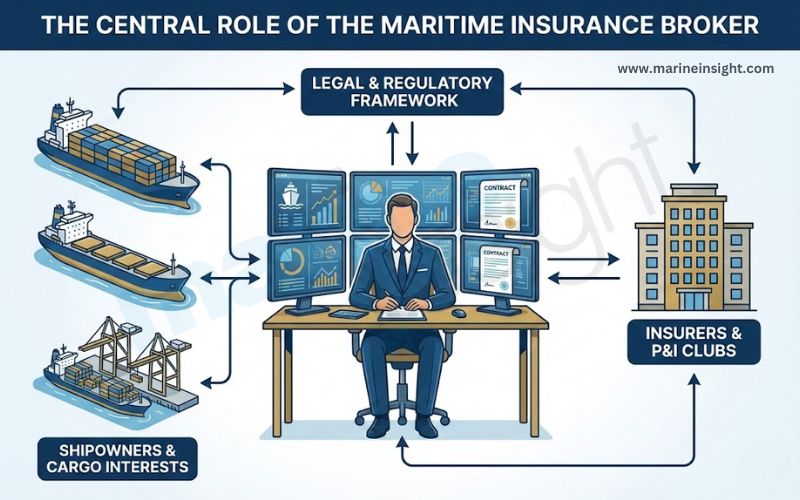
Maritime insurance operates within a complex legal and commercial framework, where even small gaps in coverage can expose shipowners, cargo interests, and charterers to significant financial risk. At the centre of this framework sits the maritime insurance broker—a professional whose role extends far beyond simply arranging policies. Brokers act as intermediaries, advisers, and problem-solvers throughout the life of an insurance contract.
Outlined below are the key duties of a maritime insurance broker, explained in a practical, industry-focused manner.
1. Assessing the client’s risk profile
One of the broker’s primary responsibilities is to understand the client’s operations in detail. This includes the type of vessel, trading routes, cargo carried, management standards, claims history, and regulatory exposure.
By analysing these factors, the broker identifies the specific risks faced by the assured. This risk assessment forms the foundation for selecting appropriate insurance cover and avoiding both underinsurance and unnecessary premium costs.
2. Advising on suitable insurance cover
Maritime insurance is not a single product but a combination of specialised covers, such as Hull and Machinery, Protection and Indemnity, War Risks, and Loss of Hire. A broker’s duty is to advise which policies are necessary and how they should interact.
This advisory role requires sound knowledge of maritime law, standard policy wordings, and exclusions. Brokers must ensure that the client understands the scope and limitations of cover, particularly in areas where liabilities may overlap or be excluded under standard clauses.
3. Placing insurance with appropriate underwriters
Once suitable cover is identified, the broker approaches insurers or P&I Clubs to place the risk on the best available terms. This involves negotiating premiums, deductibles, warranties, and special conditions on behalf of the client.
The broker’s market knowledge and professional relationships are critical at this stage. Effective placement can significantly influence not only cost but also the quality of claims handling and legal support available when an incident occurs.

4. Ensuring compliance with disclosure obligations
Maritime insurance contracts are governed by the principle of utmost good faith, requiring full and accurate disclosure of all material facts. Brokers play a vital role in guiding clients through this process.
They must ensure that relevant information is properly presented to insurers and that any changes in risk—such as new trading areas or vessel modifications—are promptly disclosed. Failure at this stage can lead to policy avoidance, making this duty particularly significant.

5. Assisting with claims and loss management
A broker’s involvement does not end once a policy is placed. In the event of an incident, brokers assist clients in notifying insurers, compiling documentation, appointing surveyors, and coordinating with legal advisers where necessary.
By managing communication between the assured and insurers, brokers help ensure that claims are handled efficiently and in line with policy terms. Their experience often proves valuable in resolving disputes over coverage or quantum.
6. Providing ongoing policy review and support
Maritime operations evolve, and insurance arrangements must evolve with them. Brokers are expected to review policies periodically, advise on renewals, and recommend adjustments to cover in response to operational or regulatory changes.
This ongoing support helps clients remain adequately protected in a dynamic risk environment, rather than relying on static insurance arrangements.
Conclusion
The maritime insurance broker performs a multifaceted role that combines legal awareness, commercial judgment, and practical risk management. From assessing risks and arranging cover to supporting claims and ensuring compliance, brokers play a critical part in protecting maritime interests against uncertainty.
Beyond the duties discussed above, there are several other important aspects—such as broker liability, regulatory obligations, and professional standards—that shape this role in practice. These concepts, along with detailed explanations and legal context, are explored further in the ebook Maritime Insurance – Beginners Guide to Maritime Law Series.
You might also like to read-
- 5 Types Of Maritime Insurance
- Largest Maritime Insurance Payouts
- How To Become A Shipbroker – Everything You Wanted To Know
Disclaimer :
The information on this website is for general purposes only. While efforts are made to ensure accuracy, we make no warranties of any kind regarding completeness, reliability, or suitability. Any reliance you place on such information is at your own risk. We are not liable for any loss or damage arising from the use of this website.
Related Posts


Disclaimer :
The information on this website is for general purposes only. While efforts are made to ensure accuracy, we make no warranties of any kind regarding completeness, reliability, or suitability. Any reliance you place on such information is at your own risk. We are not liable for any loss or damage arising from the use of this website.
Related Articles

About Author
Rishabh Srivastava is a Maritime lawyer dealing in Ship arrests, maritime claims and arbitration in India.
Subscribe To Our Daily Newsletter
By subscribing, you agree to our Privacy Policy you can unsubscribe anytime.


BE THE FIRST TO COMMENT