
China’s 339 Metre Nuclear Carrier Could Launch 90 Aircraft, Outsizing U.S. Navy’s Largest Supercarrier
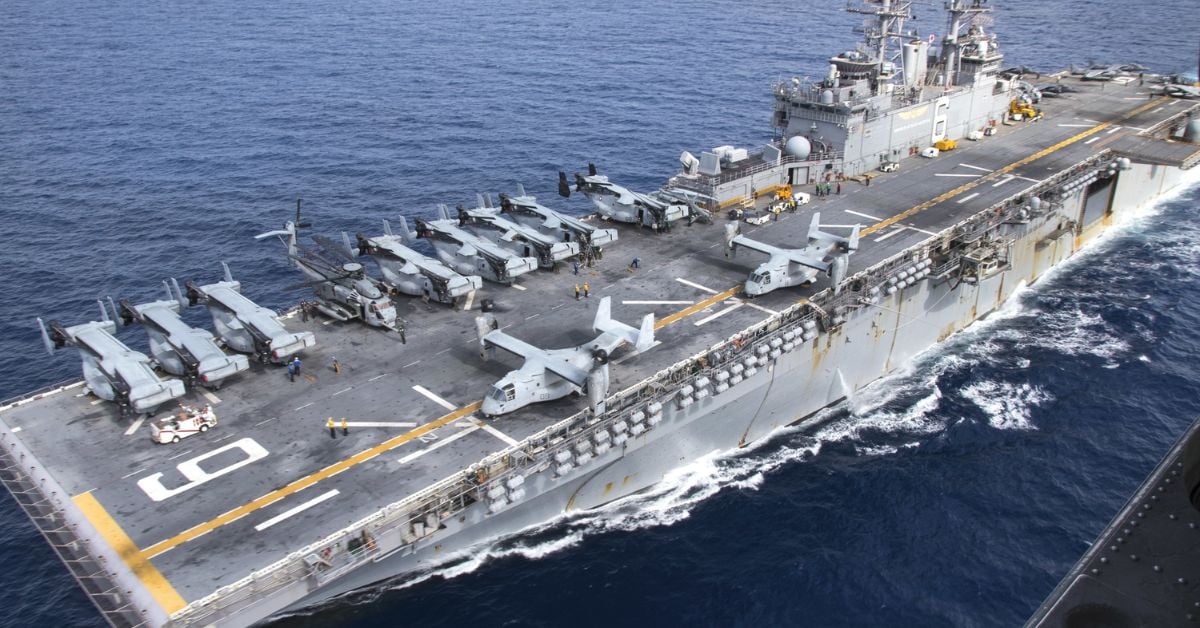
Satellite imagery suggests that China is constructing an aircraft carrier at its Dalian Shipyard, which would outsize the U.S. Navy’s largest warship, the USS Ford-class nuclear-powered carriers, by atleast 6 metres.
The new Chinese carrier would support around 70 to 90 aircraft compared to just 50-60 on the Fujian.
China is also rapidly increasing its naval logistics fleet, which would keep the carriers well-supplied in international waters away from home. According to experts, the aircraft carrier could measure between 336 and 339 metres, exceeding China’s Fujian carrier by 20 m.
Though China has not revealed any information regarding its technical specifications or designation, naval analysts call it Type 004. The increased length means more internal space for machinery, launching aircraft or storing aviation fuel for longer missions.
The carrier could be powered by nuclear energy, which means it could overpower U.S. carriers in terms of operations, deployment length and ammunition.
There are also reports of a new support ship being built at the Comec Longxue yard close to Guangzhou, which is 271 m long and 37 m wide. It seems to be a bigger version of the Type 901 fast replenishment vessel.
Satellite images show another large support vessel with the same design being built at the facility. Support ships are crucial for the Chinese aircraft carrier fleet operating away from Chinese waters. Beijing has fewer overseas bases, which makes replenishment important to conduct longer deployments without returning to port mid-operation.
China has steadily expanded its replenishment fleet over the years, along with regular drills to train personnel in resupply missions under challenging conditions. This training could come in handy in the Indo-Pacific to resupply future aircraft carriers.
RELATED POSTS


Disclaimer :
The information on this website is for general purposes only. While efforts are made to ensure accuracy, we make no warranties of any kind regarding completeness, reliability, or suitability. Any reliance you place on such information is at your own risk. We are not liable for any loss or damage arising from the use of this website.

About Author
Zahra is a maritime writer with 6 years of technical writing experience spanning port operations, offshore wind, oil and gas, and maritime policy. Her analytical edge...Read More ->
Disclaimer :
The information on this website is for general purposes only. While efforts are made to ensure accuracy, we make no warranties of any kind regarding completeness, reliability, or suitability. Any reliance you place on such information is at your own risk. We are not liable for any loss or damage arising from the use of this website.
Related Articles
Subscribe To Our Daily Newsletter
By subscribing, you agree to our Privacy Policy you can unsubscribe anytime.


