
UK’s First High Voltage Shore Power System Opens At Portsmouth Port But May Cost Ships More
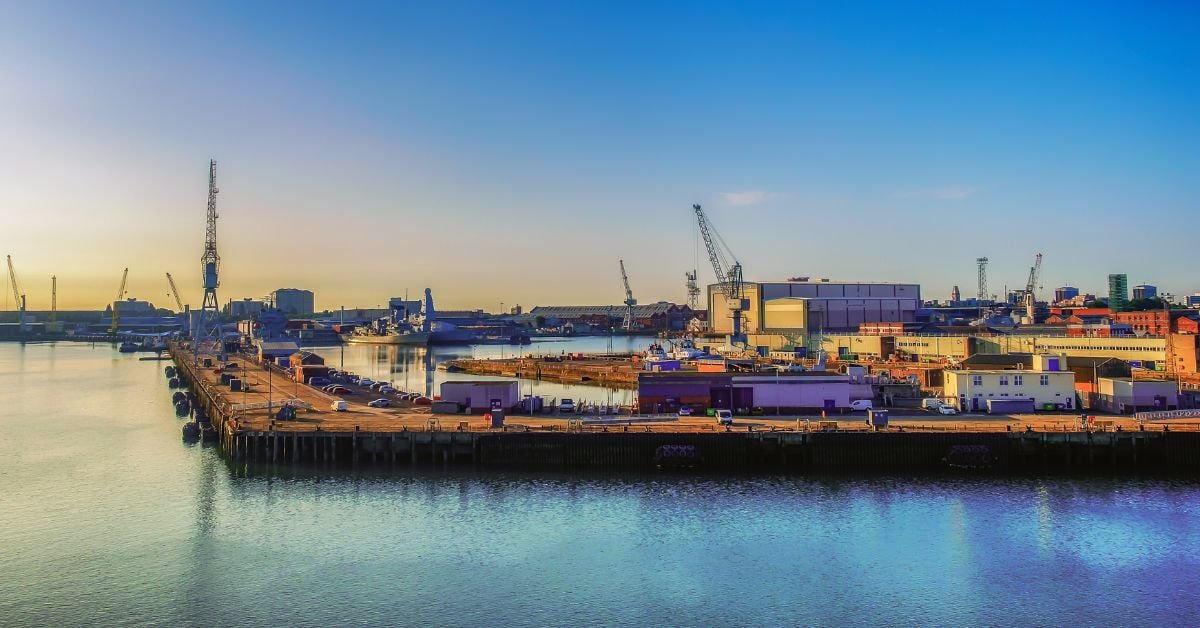
The U.K. has launched its first shore power system for multiple berths at Portsmouth Port, enabling cargo vessels docked at the facility to connect to the local grid rather than using onboard generators.
However, an increase in electricity prices has complicated matters, as the system has not meant savings for operators; grid-related charges have risen, adding to costs.
Portsmouth is following in the footsteps of the ports of Long Beach, New York, and New Jersey to make shipping operations clean and tackle air pollution; however, the shore power system has raised financial concerns.
Though the port offers electric equipment such as cranes, trucks, locomotives, and material handlers at lower costs, electricity prices account for 80-85% of the total cost paid by a ship using shore power at Portsmouth, with port charges accounting for the remaining 15-20%.
Some sources suggest that this could be cheaper for hybrid-electric vessels; however, it does not promise the same outcome for shore power at the port.
The shore power system comes under the ‘Sea Change’ Project of the port, which was a part of the Government-funded Zero Emissions Vessels and Infrastructure competition that was delivered along with Innovative U.K.
The initiative included a plan for shore power to support charging two new hybrid-LNG ferries which could enter and depart the facility using 100% renewable electric power.
As the biggest shore power system installed in the U.K. to date, the system’s impact on ship emissions is discernible and measurable.
The system has been built to connect vessels at 11 kV 50 hertz, 11 kV 60 hertz, and also at 6.6 kV 50 hertz and 6.6 kV 60 hertz.
Portsmouth is the U.K’s most successful municipal port, which is owned and operated by the City Council. It lies on England’s southern coast and functions as a critical gateway for passenger ferries, international cruise lines and global cargo logistics.
Disclaimer :
The information on this website is for general purposes only. While efforts are made to ensure accuracy, we make no warranties of any kind regarding completeness, reliability, or suitability. Any reliance you place on such information is at your own risk. We are not liable for any loss or damage arising from the use of this website.
RELATED POSTS


About Author
Zahra is a maritime writer with 6 years of technical writing experience spanning port operations, offshore wind, oil and gas, and maritime policy. Her analytical edge...Read More ->
Disclaimer :
The information on this website is for general purposes only. While efforts are made to ensure accuracy, we make no warranties of any kind regarding completeness, reliability, or suitability. Any reliance you place on such information is at your own risk. We are not liable for any loss or damage arising from the use of this website.
Related Articles
Subscribe To Our Daily Newsletter
By subscribing, you agree to our Privacy Policy you can unsubscribe anytime.


BE THE FIRST TO COMMENT