
Japan Considers India For Testing Type-25 Anti-Ship Missile With 1,000-Km Range
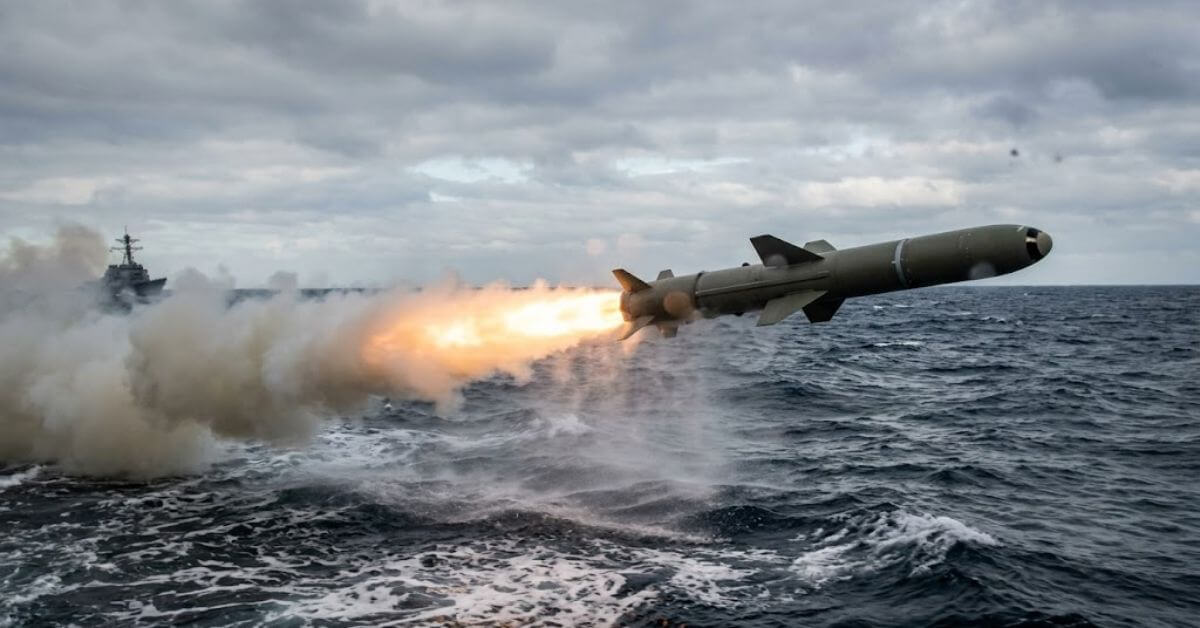
Japan is exploring the use of Indian military ranges for anti-ship missile training and small attack drone tests as it develops longer-range weapons and a new coastal defence system.
Japanese defence officials visited India in mid-May to inspect testing facilities and live-firing ranges, according to Japan’s public broadcaster NHK. The visit included discussions on training with the Type-25 anti-ship missile, which has a reported range of about 1,000 km, as well as testing small attack drones.
Japan Ground Self-Defence Force Chief of Staff General Masayoshi Arai said the officials were examining options for training that would allow Japan to make full use of the missile’s range. No decision has been announced on which weapons could be tested in India or when such training might take place.
Japan is expanding its military capabilities amid concerns about China’s activities in the region and North Korea’s increasingly advanced missile arsenal. Access to overseas ranges could give Japan additional options for testing weapons that are difficult to train with within the country
Arai said Japan was considering how to secure suitable training environments at home and abroad.
NHK reported that Japanese officials visited India earlier in May and inspected several sites over about a week. The specific ranges under consideration have not been identified in the reports.
India has live-firing facilities for military training, including a major range at Chandipur in Odisha. The Indian Navy also operates gunnery simulators and training facilities in Kochi.
India has previously allowed friendly foreign countries to use its training facilities. Singapore, for example, has used Indian ground firing ranges for troop training. India and Japan have also increased military training activities in the naval and air domains.
The discussions also covered the possibility of testing small attack drones at Indian ranges, Arai said.
Japan is developing a coastal defence system called Synchronized, Hybrid, Integrated and Enhanced Littoral Defense (SHIELD). The system is intended to combine large numbers of relatively inexpensive unmanned aerial, surface and underwater vehicles for reconnaissance and attack with standoff missiles that can strike targets from outside an adversary’s range.
Training the drones within Japan presents several challenges. Arai cited issues involving radio frequencies and drone communications, which officials have said could interfere with civilian televisions and smartphones. Safety concerns and the need to coordinate with local governments are also obstacles.
Japan is examining ways to establish suitable training environments domestically while considering overseas facilities when necessary.
Japan is also seeking improved access to missile testing ranges in Australia.
In August, Japanese Defence Minister Shinjiro Koizumi and Australian Defence Minister Richard Marles said the two countries were working towards giving Japan better access to Australian facilities.
Marles said the discussions concerned an enhanced arrangement that could cover the use of the ranges over the next decade for different missile capabilities.
Japan first test-fired an anti-ship missile during military exercises in Australia in 2023. It conducted another launch during the Talisman Sabre exercises in 2025.
Koizumi said in August that allowing Japan’s Self-Defence Forces to test standoff missiles, including hypersonic missiles, in Australia would be a significant development. He said the two sides planned to accelerate discussions.
RELATED POSTS


Disclaimer :
The information on this website is for general purposes only. While efforts are made to ensure accuracy, we make no warranties of any kind regarding completeness, reliability, or suitability. Any reliance you place on such information is at your own risk. We are not liable for any loss or damage arising from the use of this website.

About Author
Aakriti is a journalist and news writer at Marine Insight, with over three years of experience covering the global shipping and maritime …Read More ->
Disclaimer :
The information on this website is for general purposes only. While efforts are made to ensure accuracy, we make no warranties of any kind regarding completeness, reliability, or suitability. Any reliance you place on such information is at your own risk. We are not liable for any loss or damage arising from the use of this website.
Subscribe To Our Daily Newsletter
By subscribing, you agree to our Privacy Policy you can unsubscribe anytime.


