
U.S. Navy To Equip 5 Arleigh-Burke Class Destroyers With AI Vessel Detection System
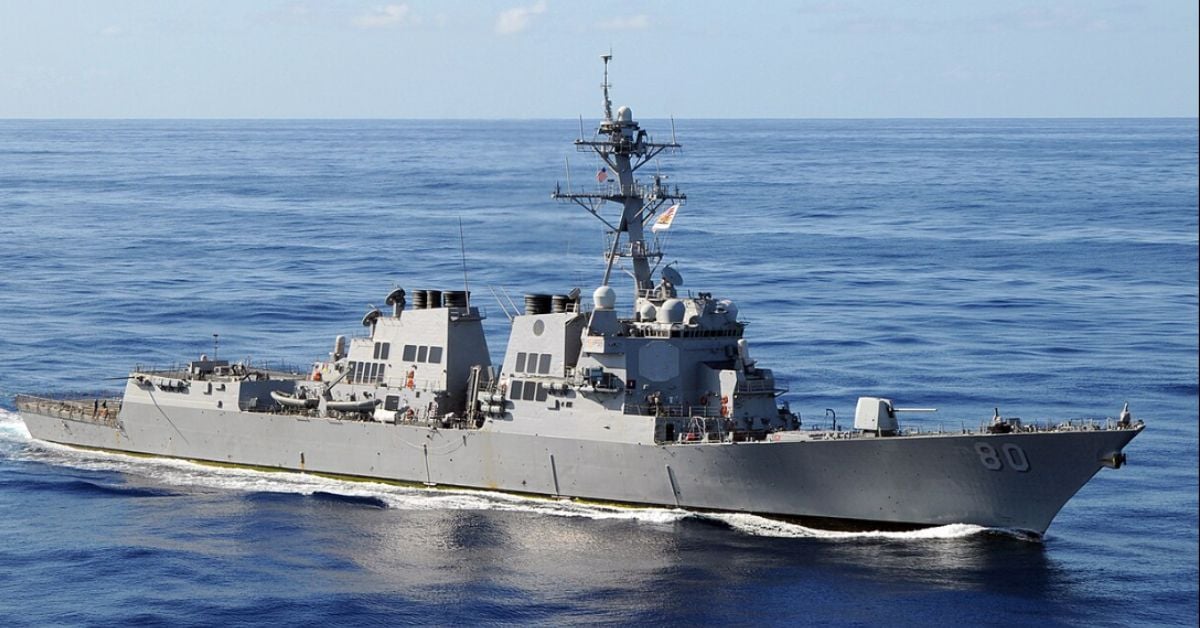
The U.S. Navy has awarded Applied Intuition a $25 million contract to deploy an artificial intelligence vision and sensor-fusion system across the 5 Arleigh Burke-class destroyers.
The Intelligent Perception System, or IPS, program marks a shift from testing to real-world deployment of AI systems on U.S. warships.
DPRM Robotic and Autonomous Systems and PAE Mission Systems are overseeing its rollout while working on how to scale the software across the manned and unmanned ships of the Navy.
IPS works much like the driver-assistance systems found in modern vehicles. For naval warships, Applied Intuition uses its indigenously developed Acuity Perception Platform, which links the IPS with the ship’s infrared sensors, onboard navigation feeds, and cameras to automatically identify and track maritime ships in real time.
It converges the data received from different sources into a single software to produce visual overlays and predict trajectory paths, preventing the ships from going off course as well.
For instance, if a nearby ship moves into a dangerous course that could result in a collision, then the system immediately alerts the watch officer on the navigation bridge and the other crew members.
This system is expected to prevent human errors due to negligence, fatigue, or blind spots that have, in the past, led to many catastrophes such as the 2017 collisions involving the USS Fitzgerald and USS John S. McCain.
By offering a holistic picture of the surroundings, IPS takes the burden off sailors who earlier had to cross-check every individual system, like the radar projections, the camera feeds, and record sightings by hand in bridge logs.
The IPS logs vessel sightings in a digital, easy-to-read format, which makes it quicker to analyse ship traffic and share maritime intelligence across the fleet.
The program also aims to create a maritime data pipeline, which has stemmed from the Navy’s Data Edge Collection Kit (DECK) trial that gathered thousands of hours of ship videos to train computer vision models.
On the other end, IPS uses operational edge computing, which means that it processes data and makes real-time decisions onboard the vessel. The system’s hardware, such as cameras, sensors, and computer stacks, along with the software suite, will be provided by Applied Intuition. The suite can be easily integrated on older destroyers without needing structural overhauls.
The main feature of the system is an onboard Data Engine that controls the satellite bandwidth. When conditions and speed limits allow, it transfers the data gathered from the sensors, cameras, etc to shore stations for the purpose of training and refining the newer machine learning models.
The models can then be integrated into warships through software updates, enabling the navy to adapt quickly to newly emerging threats.
RELATED POSTS


Disclaimer :
The information on this website is for general purposes only. While efforts are made to ensure accuracy, we make no warranties of any kind regarding completeness, reliability, or suitability. Any reliance you place on such information is at your own risk. We are not liable for any loss or damage arising from the use of this website.

About Author
Zahra is a maritime writer with 6 years of technical writing experience spanning port operations, offshore wind, oil and gas, and maritime policy. Her analytical edge...Read More ->
Disclaimer :
The information on this website is for general purposes only. While efforts are made to ensure accuracy, we make no warranties of any kind regarding completeness, reliability, or suitability. Any reliance you place on such information is at your own risk. We are not liable for any loss or damage arising from the use of this website.
Subscribe To Our Daily Newsletter
By subscribing, you agree to our Privacy Policy you can unsubscribe anytime.


