
U.S. Navy To Acquire 30 MUSV Drone Ships From 3 Louisiana Shipbuilders For $ 1.2 Billion
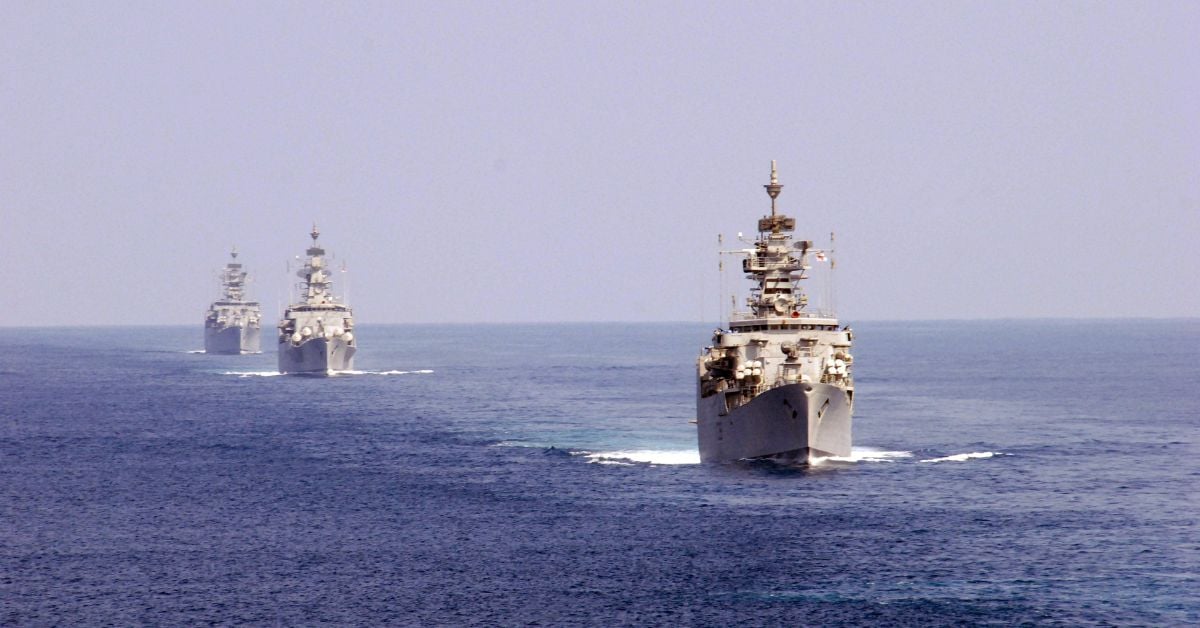
The U.S. Navy awarded contracts worth $1.2 billion to procure 30 medium unmanned surface vessels (MUSVs) from three companies.
Galliano Marine Services, Saronic, and Huntington Ingalls Industries will build 10 MUSVs each, at a cost of $40 million per hull. According to sources, the companies will begin deliveries before the end of 2027.
The announcement comes as part of the Navy’s Medium Unmanned Surface Vessel Family of Systems program, and the companies selected for this project were chosen after at-sea tests.
Other companies, such as Birdon, PacMar Technologies, and Sea Machines, also participated in the phase I trials; however, they did not win the bid to build vessels for this program. However, they received $15 million for completing the testing.
They will also be featured on the drone marketplace of the Defense Department, enabling them to get additional contracts. The Navy is planning to get more unmanned surface ships from 4 to 30 by 2030 to expand its influence in the Indo-Pacific region.
In the first phase, the Navy tested the ability of the MUSVs to scan the surroundings for threats, sail without assistance from an operator, and their ability to remain deployed for longer periods of time.
A marketplace for the MUSVs was announced in March, replacing the Modular Attack Surface Craft initiative. Many companies competed for a contract under the latter; however, bids were closed.
The MUSV marketplace asked for vessels that could cover 2500 nautical miles at 25 knots while being loaded with 25 tons on the payload deck under normal conditions.
Secretary of the Navy Hung Cao said that these developments signal the service’s priority to rapidly modernise the fleet with advanced autonomous naval systems.
Other companies that were not selected under the MUSV program have sued the naval service, alleging they were excluded in an unfair manner. Top officials said they would accept the decision of the court in the case.
The push for investing in autonomous naval systems and research in this direction comes after a report from the Accountability Office in June that said that the service had to upgrade itself quickly to counter emerging threats in several theatres, one of them being the Indo-Pacific, where China continues to exert its maritime dominance.
China is also building a mothership to launch underwater drones and monitor the entire Indo-Pacific waters, a concern for its neighbours, especially the Philippines.
RELATED POSTS


Disclaimer :
The information on this website is for general purposes only. While efforts are made to ensure accuracy, we make no warranties of any kind regarding completeness, reliability, or suitability. Any reliance you place on such information is at your own risk. We are not liable for any loss or damage arising from the use of this website.

About Author
Zahra is a maritime writer with 6 years of technical writing experience spanning port operations, offshore wind, oil and gas, and maritime policy. Her analytical edge...Read More ->
Disclaimer :
The information on this website is for general purposes only. While efforts are made to ensure accuracy, we make no warranties of any kind regarding completeness, reliability, or suitability. Any reliance you place on such information is at your own risk. We are not liable for any loss or damage arising from the use of this website.
Related Articles
Subscribe To Our Daily Newsletter
By subscribing, you agree to our Privacy Policy you can unsubscribe anytime.


BE THE FIRST TO COMMENT