
U.S. Navy Takes Preliminary Acceptance Of Ford-Class Aircraft Carrier John F. Kennedy
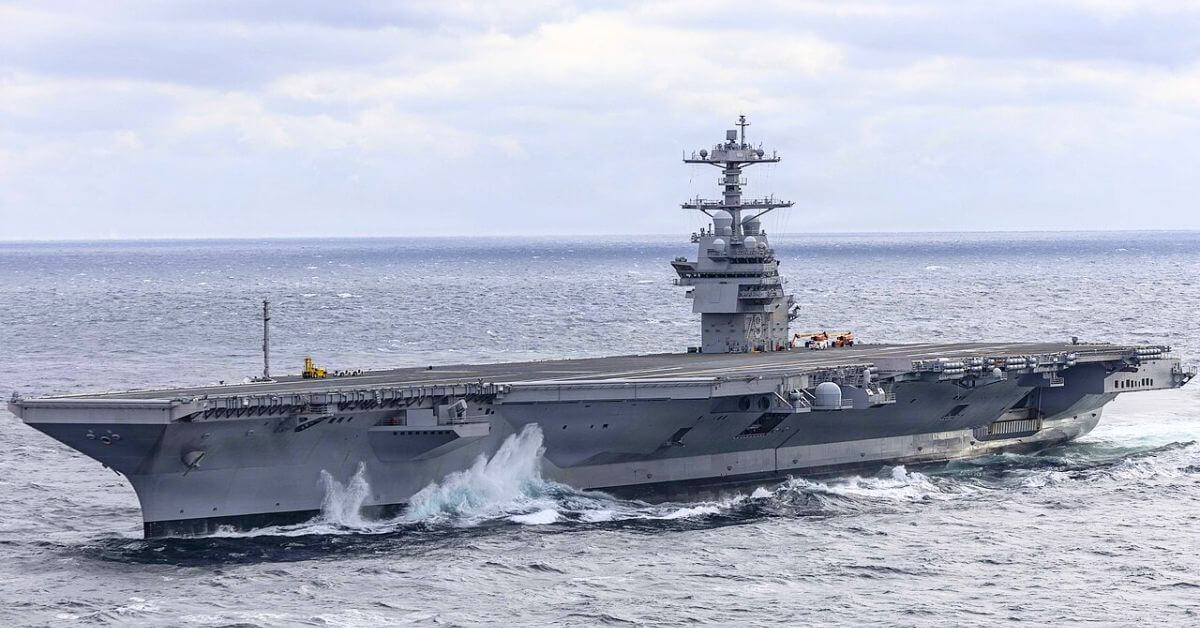
The U.S. Navy has taken preliminary acceptance of the future USS John F. Kennedy (CVN 79), allowing the aircraft carrier and its crew to carry out more testing and training at sea.
The milestone was reached on September 29, following the completion of John F. Kennedy’s Acceptance Trials in August.
The carrier is now about 99% complete, and all major systems are finished. The Navy plans to formally receive the ship in spring 2027.
Preliminary acceptance does not mean the carrier has entered Navy service. It simply allows the ship and its crew to continue working at sea while the shipbuilder finishes the remaining work.
John F. Kennedy is being built by Newport News Shipbuilding, a division of HII. The shipyard is now focused on final ship systems testing. This includes testing the remaining four Advanced Weapons Elevators.
These elevators are used to move weapons and other ordnance between the carrier’s magazines and the flight deck. Testing them is one of the remaining jobs before the carrier can be formally delivered.
The Navy said preliminary acceptance allows CVN 79 to continue testing and crew training without waiting for all of the shipbuilder’s work to be finished. This means the Navy crew can spend more time operating the ship while Newport News Shipbuilding completes its remaining tasks.
John F. Kennedy is the second aircraft carrier in the Gerald R. Ford class. The first is USS Gerald R. Ford (CVN 78).
The Ford-class carriers have new systems and design changes aimed at improving aircraft launch and recovery, weapons handling and other carrier operations.
The crew will use the additional time at sea to become more familiar with John F. Kennedy. The Navy and shipbuilder can also find and fix problems that come up during testing at sea before the carrier is formally delivered.
John F. Kennedy completed its Acceptance Trials in August. During these trials, the Navy checks the carrier’s major systems and capabilities to see whether they meet the required standards.
The preliminary acceptance allows the carrier to move into more at-sea testing and training while the shipyard continues its final work.
The Navy said this is the fastest available path towards delivering the carrier and eventually making it combat-ready.
The Navy’s Portfolio Acquisition Executive for Maritime is responsible for delivering surface ships for the U.S. Navy. The organisation is designed to give its leaders broader responsibility and authority to speed up the delivery of combat capability and keep acquisition work focused on what the Navy needs.
References: Interesting Engineering, US Navy
RELATED POSTS


RELATED POSTS
Disclaimer :
The information on this website is for general purposes only. While efforts are made to ensure accuracy, we make no warranties of any kind regarding completeness, reliability, or suitability. Any reliance you place on such information is at your own risk. We are not liable for any loss or damage arising from the use of this website.

About Author
Aakriti is a journalist and news writer at Marine Insight, with over three years of experience covering the global shipping and maritime …Read More ->
Disclaimer :
The information on this website is for general purposes only. While efforts are made to ensure accuracy, we make no warranties of any kind regarding completeness, reliability, or suitability. Any reliance you place on such information is at your own risk. We are not liable for any loss or damage arising from the use of this website.
Related Articles
Subscribe To Our Daily Newsletter
By subscribing, you agree to our Privacy Policy you can unsubscribe anytime.


