
U.S. Navy Records Highest Number Of Serious Mishaps In A Decade In FY2026
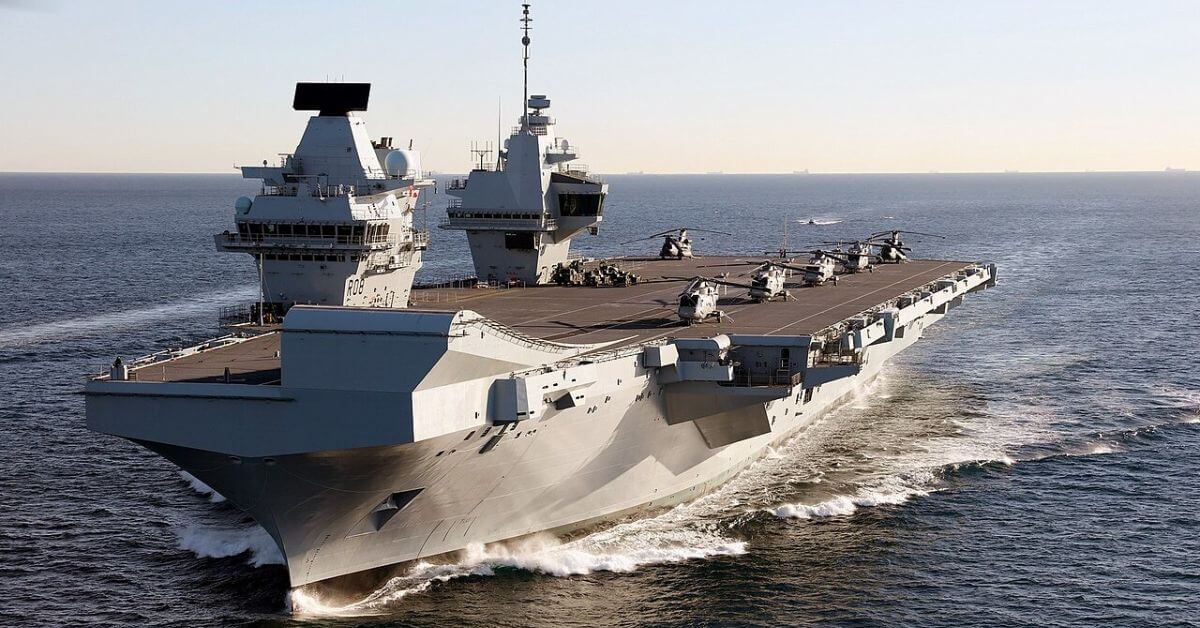
The US Navy recorded 27 serious aviation and ship-related mishaps in Fiscal Year 2026, its highest combined total in at least a decade. The year included aircraft crashes, a mid-air collision between two fighter jets, helicopter losses, a destroyer collision and fires aboard naval vessels.
According to data released by the Naval Safety Command on October 26, the Navy recorded 16 Class A aviation mishaps and 11 Class A afloat mishaps between October 1, 2025, and September 30, 2026.
The combined total was the highest since at least FY2014, when the Navy reported 17 aviation mishaps and four afloat mishaps.
Some of the incidents involved aircraft operating in the South China Sea and the Arabian Sea. Others included two EA-18G Growlers colliding during an air show in Idaho and a fire aboard the aircraft carrier USS Gerald R. Ford.
The Navy’s aviation mishap rate also increased to about 2.23 per 100,000 flight hours in FY2026. It stood at 1.60 in the previous fiscal year, while the 10-year average was about 1.31.
Class A mishaps are the most serious category of accidents recorded by the Naval Safety Command. They include incidents causing at least $2.5 million in damage, the destruction of an aircraft, a fatality or permanent total disability.
The 16 Class A aviation mishaps recorded in FY2026 were the highest since FY2014, when the Navy reported 17.
The figures include incidents involving manned and unmanned aircraft, as well as ground aviation accidents. Two of the 16 mishaps involved unmanned aircraft. Of the remaining 14 involving manned aircraft, 11 were flight mishaps and three were ground mishaps.
On October 26, 2025, an F/A-18F Super Hornet and an MH-60R Sea Hawk helicopter crashed into the South China Sea in two separate incidents within about 30 minutes of each other.
Both aircraft were assigned to the aircraft carrier USS Nimitz (CVN-68). Their wreckage was recovered in December 2025 from a depth of about 400 feet.
Another incident occurred on May 17, 2026, when two EA-18G Growlers collided during the Gunfighter Skies Air Show at Mountain Home Air Force Base in Idaho.
All four pilots ejected safely before the aircraft crashed.
On September 28, an EA-18G Growler assigned to Electronic Attack Squadron 130 suffered an arresting-gear failure while landing aboard the USS Dwight D. Eisenhower (CVN-69) off the Virginia coast.
The two crew members ejected and were safely recovered. Four sailors were reported injured in the incident.
The Navy also lost an MH-60S Sea Hawk helicopter assigned to the USS George H.W. Bush (CVN-77) in the Arabian Sea on July 1. One crew member went missing and was later presumed dead.
The Navy said the crash was not caused by hostile action, although it happened in a conflict-affected region.
The Navy also lost an MQ-4C Triton unmanned aircraft over the Persian Gulf near the Strait of Hormuz.
The drone disappeared on April 9 while carrying out a maritime surveillance mission. The Navy confirmed on April 14 that it had crashed.
The MQ-4C Triton is a high-altitude, long-endurance surveillance aircraft. Each unit costs slightly more than $238 million, and the loss was classified as a Class A aviation mishap.
The Navy’s figures also included two separate engine fires involving F/A-18 Super Hornets.
On July 1, a two-seat F/A-18F assigned to Strike Fighter Squadron 22 at Naval Air Station Lemoore in California suffered a left-engine fire during a routine training mission.
In another incident, an F/A-18E Super Hornet experienced an engine fire during a training flight but landed safely at Naval Air Station Oceana. The exact date of this incident was not specified in the reports.
The Navy reported 11 Class A afloat mishaps in FY2026, the highest number since at least 2014.
One of these incidents was the February 11 collision between guided-missile destroyer USS Truxtun (DDG-103) and fast combat support ship USNS Supply (AOE-6).
Two personnel reportedly suffered minor injuries. Both ships were able to continue sailing safely, according to a Navy statement cited by USNI News. The incident was under investigation.
Two fires also contributed to the afloat mishap total.
On March 12, a fire broke out in the laundry room aboard the aircraft carrier USS Gerald R. Ford (CVN-78). At least two sailors were injured and received medical treatment.
The Navy said the fire was contained and was not related to combat. It also confirmed that the ship’s propulsion plant was not damaged and that the carrier remained operational.
Another fire occurred aboard the guided-missile destroyer USS Zumwalt (DDG-1000) on April 19 at HII Ingalls Shipbuilding. Three people were injured.
The figures also included two incidents in which Marines went missing at sea.
Lance Cpl. Chukwuemeka Oforah went overboard from the amphibious assault ship USS Iwo Jima (LHD-7) on February 7.
Lance Cpl. Armando Ortiz Canseco, who was attached to the amphibious transport dock USS Anchorage (LPD-23), went missing at sea on June 25. Both Marines were reported lost at sea.
Although aviation and afloat mishaps reached their highest combined level in at least a decade, the Navy did not record its highest total of on-duty Class A mishaps in FY2026.
The service reported 30 on-duty Class A mishaps, the highest since FY2022, when it also recorded 30.
Between FY2024 and FY2026, the Navy generally recorded between 20 and 29 on-duty Class A mishaps. Only FY2014, FY2022 and FY2026 saw totals of at least 30.
Two other on-duty fatalities involved a 46-year-old lieutenant commander who died in a motorcycle crash during a military motorcycle safety group ride and another person who died during physical training.
The Navy also recorded 48 off-duty mishaps, resulting in 45 deaths. This was lower than FY2025, when it reported 54 off-duty mishaps and 53 fatalities.
The Marine Corps recorded six aviation mishaps in FY2026, one more than in the previous fiscal year. Five were flight mishaps and one was a ground mishap.
One of the incidents was the October 16, 2025, crash of an AH-1Z Viper attack helicopter in Southern California. The accident killed Major Tyler Braconi and left another person injured.
The Marine Corps also recorded five ground on-duty mishaps, including one involving a tactical vehicle.
Overall, the service reported 12 on-duty mishaps that resulted in seven deaths. Four of the fatalities occurred during or as a result of physical training.
Physical training deaths increased to five in FY2026, compared with four in FY2025.
The Marine Corps also recorded 24 off-duty Class A mishaps and 24 fatalities. This was down from 36 mishaps and 34 deaths in FY2025.
The Naval Safety Command data cover the period from October 1, 2025, to September 30, 2026. They show that the Navy recorded its highest combined number of aviation and afloat mishaps in at least a decade, while its overall on-duty Class A mishap total remained below the levels recorded in some earlier years.
RELATED POSTS


Disclaimer :
The information on this website is for general purposes only. While efforts are made to ensure accuracy, we make no warranties of any kind regarding completeness, reliability, or suitability. Any reliance you place on such information is at your own risk. We are not liable for any loss or damage arising from the use of this website.

About Author
Aakriti is a journalist and news writer at Marine Insight, with over three years of experience covering the global shipping and maritime …Read More ->
Disclaimer :
The information on this website is for general purposes only. While efforts are made to ensure accuracy, we make no warranties of any kind regarding completeness, reliability, or suitability. Any reliance you place on such information is at your own risk. We are not liable for any loss or damage arising from the use of this website.
Subscribe To Our Daily Newsletter
By subscribing, you agree to our Privacy Policy you can unsubscribe anytime.


