U.S. Navy Progresses Nuclear Cruise Missile Integration On Virginia-Class Attack Submarines
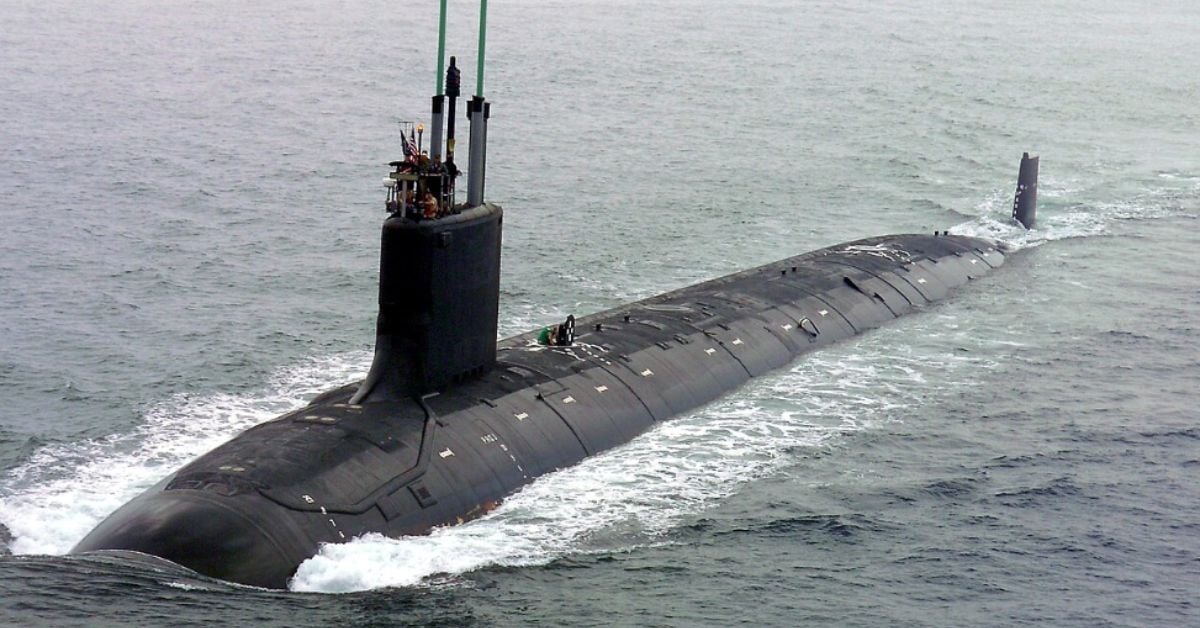
The U.S. Navy is planning to integrate cruise missiles that can be launched from the sea into Virginia-class nuclear attack submarines to enhance its warfighting capabilities.
General Dynamics Mission Systems has received extra funding of 194 million dollars in a contract modification to continue development of the fire control subsystem for the missiles to strengthen the Navy’s deterrence in the high seas.
75% of the work has been designated to the company’s Pittsfield facility, and the remaining 25% has been given to Manassas.
According to sources, the work would take around two years to complete as the Navy moves ahead with the SLCM-N Program, which involves equipping the submarines with the new missiles and testing their fire control abilities. It also includes technical and engineering services with respect to the subsystem.
The fire control subsystem is a vital part of the structure between the submarine and the actual missile that it carries.
Usually, such systems help in launching the weapon by processing the information fed into the computer, preparing launch-related data, and coordinating the functions that enable the missile to get it its target without missing it.
The missile’s hardware, the software, or the functions it would perform have not been revealed to the public as of now, and a specific schedule to complete the integration has also not been announced by the Navy.
Nonetheless, the contract modification and additional funding would help General Dynamics Mission Systems to create more jobs, at least 200 more, especially in engineering and manufacturing at its facilities in Virginia, Pittsfield, Massachusetts, and Manassas.
The company is investing 1.3 million dollars to upgrade two facilities, especially to meet the requirements of the SLCM-N Program, to support the technical work needed to develop and test the subsystem as it moves towards the integration phase.
General Dynamics Mission Systems also worked on the integration of the Trident II Fire Control System that supports the Navy’s ballistic missiles launched from the submarines at sea.
This experience would aid the team in building a weapons control system, mission planning, and system testing schedule for the Virginia-class submarines.
Virginia-class submarines are nuclear-powered platforms designed for anti-submarine warfare, intelligence gathering, surveillance, and land attacks.
The U.S. Navy plans to construct 45 Virginia-class submarines. Of these, 26 are completed, 8 are under construction, and about 11 to 19 remain to be built or delivered.
RELATED POSTS


Disclaimer :
The information on this website is for general purposes only. While efforts are made to ensure accuracy, we make no warranties of any kind regarding completeness, reliability, or suitability. Any reliance you place on such information is at your own risk. We are not liable for any loss or damage arising from the use of this website.

About Author
Zahra is a maritime writer with 6 years of technical writing experience spanning port operations, offshore wind, oil and gas, and maritime policy. Her analytical edge...Read More ->
Disclaimer :
The information on this website is for general purposes only. While efforts are made to ensure accuracy, we make no warranties of any kind regarding completeness, reliability, or suitability. Any reliance you place on such information is at your own risk. We are not liable for any loss or damage arising from the use of this website.
Related Articles
Subscribe To Our Daily Newsletter
By subscribing, you agree to our Privacy Policy you can unsubscribe anytime.