
U.S. Navy & NATO Partners Mark Delivery Of 1,000th ESSM Block 2 Ship-Launched Missile
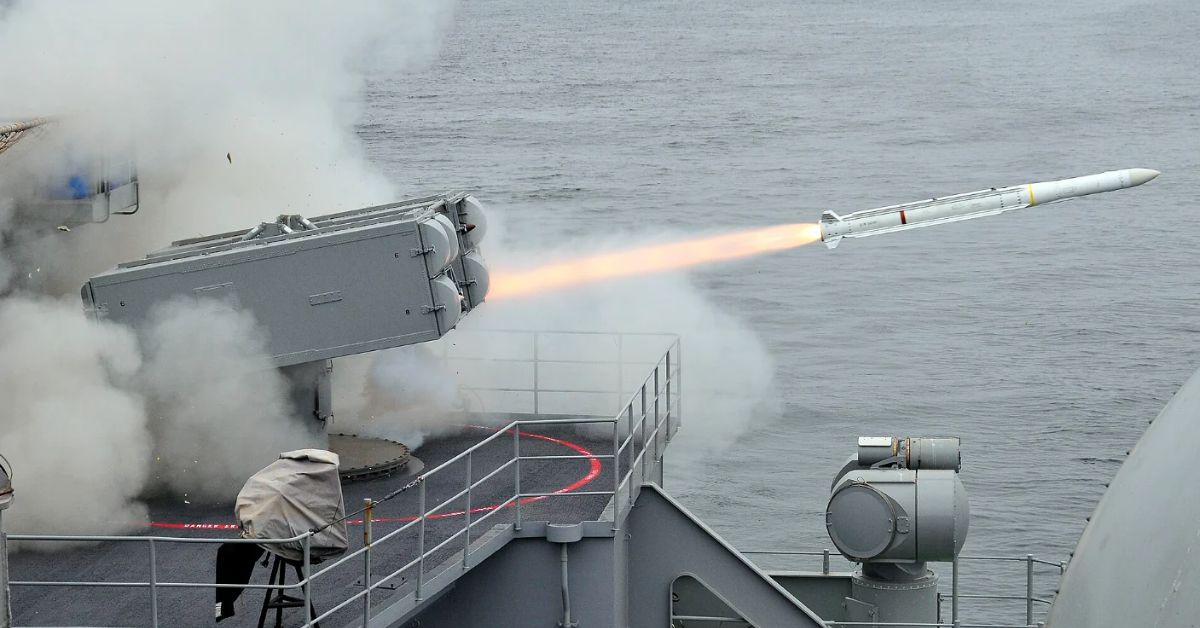
The U.S. Navy has received the 1,000th Evolved SeaSparrow Missile (ESSM) Block 2, a significant achievement for NATO SEASPARROW, a multinational naval defense program.
The announcement regarding the same was made on November 2, 2026 by the NATO SEASPARROW Program Office (PMX-312).
The program saw acceleration in production since the delivery of the 500th missile last year by the prime contractor Raytheon which built the interceptor for the NATO SEASPARROW Consortium comprising 12 countries.
Though the number of missiles is revealed to the public, the navy has not said how the 1000 missiles would be distributed among the partner countries or how many are presently in service.
The ESSM is a weapon that can be launched from a ship. It is designed to protect naval assets against enemy aircraft, anti-ship cruise missiles and other aerial threats.
It would function as a medium-range defense interceptor that would complement other long-range air defense systems.
A prominent characteristic of the ESSM is that it can be ‘quad-packed’ into the Mk 41 Vertical Launching System (VLS). This means warships can fit 4 ESSMs into one launcher cell, thus increasing magazine capacity.
The Block 2 variant of the weapon has many technical upgrades over its predecessor. It has a dual-mode guidance system with active and semi-active radar seekers.
Older variants of the missile depend on the host ship’s radar to illuminate the target through the final phase of flight.
On the other hand, Block 2 has an active target seeker to lock it independently during the last engagement stage, thus reducing pressure on the ship’s illumination radar and freeing combat systems to counter multiple threats simultaneously.
The delivery of the enhanced missile variant comes as the U.S Navy faces continuous naval pressures in the Gulf where U.S Navy and allied nations have spent months countering drone and missile attacks launched by Houthis against ships in the Red Sea and Gulf of Aden.
These operations have brought many weaknesses or limitations to the forefront such as limited magazine capacity on warships and that of reloading vertical launch cells while the ship remains at sea or getting resupplies without making a port call.
Vice Adm. Brendan McLane, then commander of U.S. Naval Surface Forces said that the service burned over 400 weapons across 15 months of Red Sea operations. Continuous production is important to replenish the depleting inventory of these weapons.
Established in 1968, the NATO SEASPARROW Project is one of the alliance’s longest operating joint weapons program which has 12 members including Australia, Belgium, Canada, Denmark, Germany, Greece, the Netherlands, Norway, Portugal, Spain, Türkiye, and the United States.
These countries share the responsibility of developing, manufacturing, and supporting advanced missile weapons.
It is overseen by the Navy’s PMX-312 office and the effort brings together naval leaders and authorities from partner nations with an extensive naval industrial base.
RELATED POSTS


Disclaimer :
The information on this website is for general purposes only. While efforts are made to ensure accuracy, we make no warranties of any kind regarding completeness, reliability, or suitability. Any reliance you place on such information is at your own risk. We are not liable for any loss or damage arising from the use of this website.

About Author
Zahra is a maritime writer with 6 years of technical writing experience spanning port operations, offshore wind, oil and gas, and maritime policy. Her analytical edge...Read More ->
Disclaimer :
The information on this website is for general purposes only. While efforts are made to ensure accuracy, we make no warranties of any kind regarding completeness, reliability, or suitability. Any reliance you place on such information is at your own risk. We are not liable for any loss or damage arising from the use of this website.
Subscribe To Our Daily Newsletter
By subscribing, you agree to our Privacy Policy you can unsubscribe anytime.


