
U.S. Navy Moves To Integrate Army’s PAC-3 MSE Interceptor Onto Warships By 2029
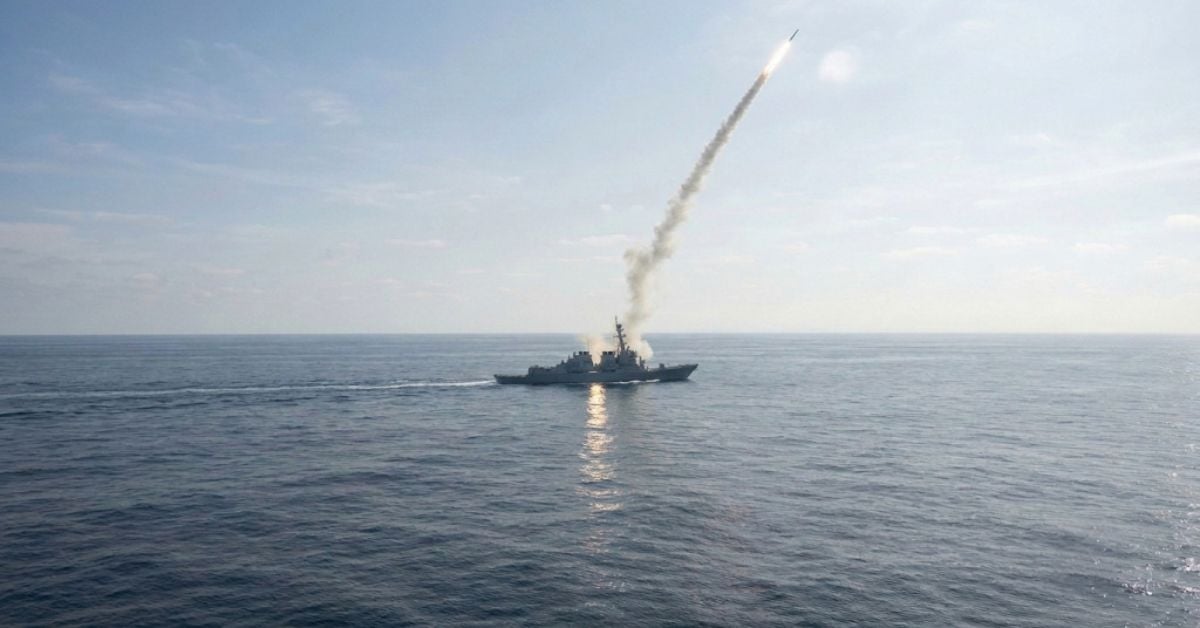
The U.S Navy is preparing to accommodate the PAC-3 MSE interceptor, used by the Army, on its warships to expand combat capabilities against enemy missiles and aerial weapons.
Lockheed Martin was awarded a 2nd stage contract in September to integrate the interceptor into the Aegis Combat System. The development comes after PAC-3 MSE was designated an official program of the service with an initial contract of $93 million.
Lockheed Martin also invested $120 million to prepare the interceptor for maritime missions. The company plans to conduct land-based flight tests next year and trials onboard warships in 2028, with integration planned in 2029.
This would enable the launch of the Patriot Advanced Capability-3 Missile Segment Enhancement (PAC-3 MSE) from the Mk 41 Vertical Launching System (VLS).
However, the system would have to be reconfigured to transition from land-based launchers used by the army to ship-based ones.
It has to be integrated into the warships’ launch system and combat management suite. To achieve this, new communications software with S and X band capabilities is being developed in order to support future upgrades, too.
The launch timing software will also require modification along with the containerised fire-control software, and the canister would be redesigned so it is compatible with both Mk 41 VLS and PAC-3 MSE.
The Mk 41 presents a greater challenge in terms of accommodating the interceptor’s canisters without compromising the missile during the launch.
The company recently conducted a trial to check whether the PAC-3 MSE would pass through the Mk 41 canister without any damage.
They also used the interceptor with a virtual Aegis Weapon System, marking the first launch of PAC-3 MSE with the Aegis configuration.
In 2024, the U.S. Department of War Offices and Lockheed Martin launched PAC-3 MSE vertically from an Mk 70 VLS launcher, thus reaching an early milestone which paved the way for further development on the project.
PAC-3 MSE destroys targets upon direct contact with them, and currently it can handle ballistic missiles, cruise missiles and aircraft. The company claims it can also counter hypersonic missiles.
The Navy has decided to bring in the new weapon as the Army expands the production of the PAC-3 MSE interceptor.
In July, the company was awarded a $58 billion contract by the Army to accelerate manufacturing by three times the current capacity due to increased demand from international clients, the Navy’s new program, and to meet the needs of the Army.
The interceptor’s naval variant is also being built at the same production lines as the Army version at Lockheed Martin’s All-Up Round III facility in Camden, Arkansas.
RELATED POSTS


Disclaimer :
The information on this website is for general purposes only. While efforts are made to ensure accuracy, we make no warranties of any kind regarding completeness, reliability, or suitability. Any reliance you place on such information is at your own risk. We are not liable for any loss or damage arising from the use of this website.

About Author
Zahra is a maritime writer with 6 years of technical writing experience spanning port operations, offshore wind, oil and gas, and maritime policy. Her analytical edge...Read More ->
Disclaimer :
The information on this website is for general purposes only. While efforts are made to ensure accuracy, we make no warranties of any kind regarding completeness, reliability, or suitability. Any reliance you place on such information is at your own risk. We are not liable for any loss or damage arising from the use of this website.
Subscribe To Our Daily Newsletter
By subscribing, you agree to our Privacy Policy you can unsubscribe anytime.


