
U.S Navy Invests $53.9 Million In Robotic Mine Hunting Systems To Tackle Undersea Mines
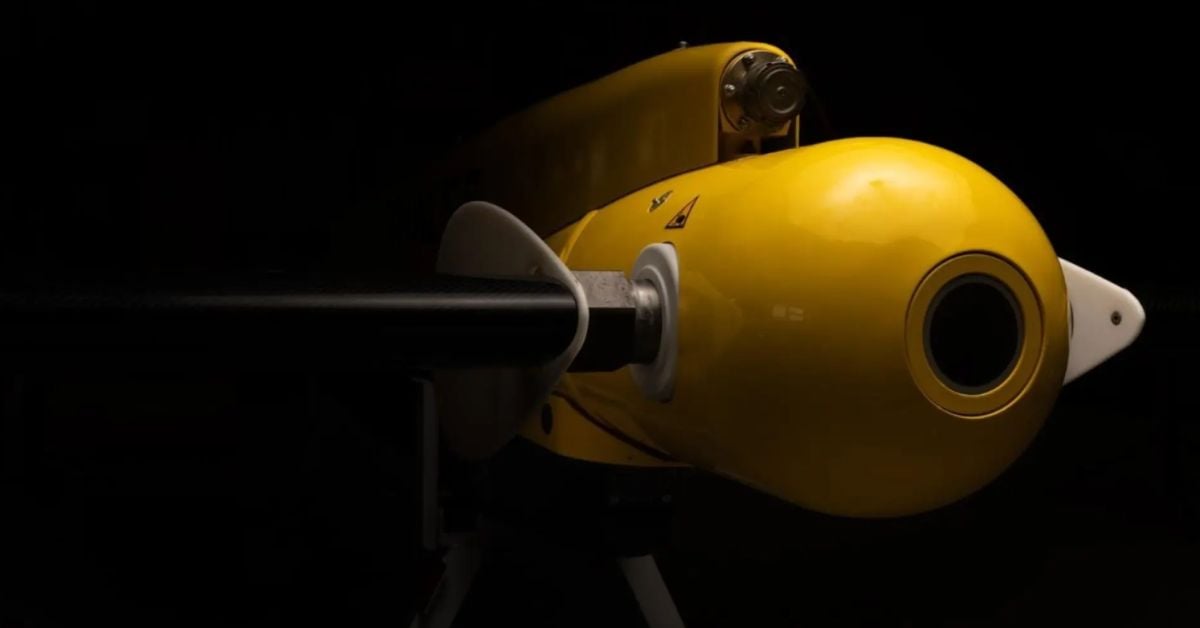
The U.S Navy has invested $53.9 million in robotic mine hunting systems to handle underwater explosive devices that pose a threat to the surface fleet and submarines alike.
For this, a contract has been given to the Thales subsidiary, Advanced Acoustic Concepts or AAC. The company would deliver two undersea Remote Mine Hunting (RMH) Modules and also provide engineering support. As per the contract’s procurement options, its total value could reach around $196.2 million.
The modules would improve the uncrewed mine countermeasure operations by offering remote detection and categorisation of mines while reducing the risk for naval ships and sailors, thus helping the Navy respond more effectively to underwater maritime threats, especially in contested waters.
The system can be operated remotely from safe distances. It has an inbuilt sonar, AI powered target recognition and management software.
The most important feature is its Synthetic Aperture Sonar or SAS. It is designed to produce HD images of objects underwater, enabling operators to find potential mines across the seafloor.
Unlike the traditional sonar, which are dependent on low-resolution acoustic images, the SAS includes several acoustic measurements gathered as the sensor moves through the waters, which ultimately builds a bigger sonar aperture.
This not only enhances the quality of images captured but also differentiates them from the flora and fauna. It also offers multiple perspectives of the objects so operators can carefully examine it from different angles and decide how to tackle it.
The system is precise and reduces fault-target identification by a large margin, claims Thales, limiting the time used on analyzing the objects that are not mines or other explosives.
This is critical in mine countermeasure missions as scanning the designated area for mines could be time consuming.
The Remote Mine Hunting System also has AI-powered target recognition software which can help sailors in processing, mapping, categorising and even managing massive data produced during lengthy missions. It aids operators in making decisions based on the information collected.
Thales is working on the integration of the sonar with the target classification and neutralisation suite to make it a single operational unit making it more powerful. This is expected to shorten the process of detecting a mine and taking action against it.
It will be built to support missions that involve both manned and unmanned surface ship platforms. This tech supports the service’s ‘Find, Fix and Finish’ Approach to mine warfare at the high seas which involves the detection of mines and engaging all assets to eliminate them at the earliest.
Navy officials expect the system to strengthen its mine warfare capabilities and boost fleet readiness.
RELATED POSTS


Disclaimer :
The information on this website is for general purposes only. While efforts are made to ensure accuracy, we make no warranties of any kind regarding completeness, reliability, or suitability. Any reliance you place on such information is at your own risk. We are not liable for any loss or damage arising from the use of this website.

About Author
Zahra is a maritime writer with 6 years of technical writing experience spanning port operations, offshore wind, oil and gas, and maritime policy. Her analytical edge...Read More ->
Disclaimer :
The information on this website is for general purposes only. While efforts are made to ensure accuracy, we make no warranties of any kind regarding completeness, reliability, or suitability. Any reliance you place on such information is at your own risk. We are not liable for any loss or damage arising from the use of this website.
Subscribe To Our Daily Newsletter
By subscribing, you agree to our Privacy Policy you can unsubscribe anytime.


