
Russia Nearly Doubles LNG Carrier Fleet Serving Sanctioned Arctic LNG 2 Project
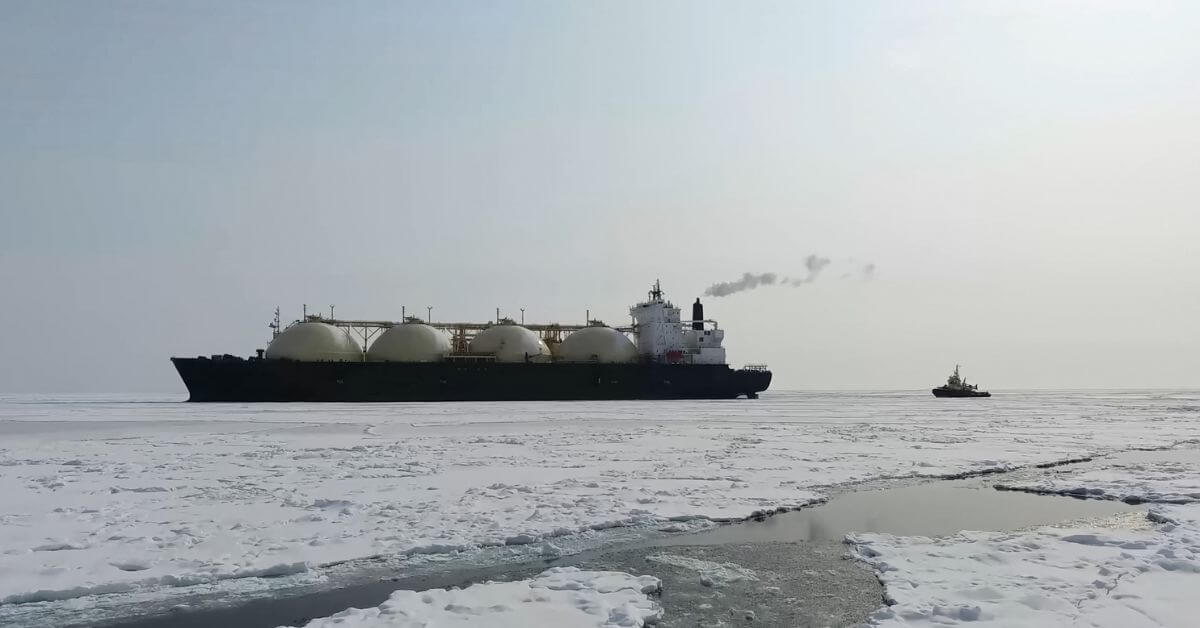
Russia has nearly doubled the number of LNG carriers serving its sanctioned Arctic LNG 2 project in less than a year.
At least 20 vessels have now served the Arctic LNG 2 facility and related infrastructure, according to a Bloomberg analysis of ship-tracking data, compared with 11 at the end of December 2025.
A Russian-built advanced ice-class LNG carrier that can operate in Arctic waters throughout the year has been added to the fleet recently.
It was tracked picking up a cargo from Arctic LNG 2 over the weekend.
The European Union is phasing out Russian LNG imports by the end of 2026, while EU restrictions on Russia’s LNG sector are due to take effect on January 1, 2027.
Russia Builds More Ships for Arctic LNG 2
The United States, European Union and United Kingdom sanctioned Arctic LNG 2 in 2024.
The sanctions forced Moscow to delay its plan to triple LNG production by 2030. Russia has since been building a fleet that can move LNG without relying on Western shipping networks.
Russia has been buying older LNG carriers for this fleet for months, maritime intelligence firm Windward said in a June report.
Windward said the upcoming EU sanctions will restrict which vessels can call at LNG terminals in EU jurisdictions. This means Russia needs another carrier base to maintain LNG exports outside Western frameworks.
Russia used an ice-class LNG tanker, the sanctioned Christophe de Margerie, to keep Arctic LNG 2 cargoes moving to China during the past winter.
The new Russian-built ice-class vessel is the second advanced vessel of its type designed to travel through Arctic waters throughout the year.
China Remains the Only Buyer
China is currently the only buyer willing to take Arctic LNG 2 cargoes. This limits Russia’s options for selling the sanctioned LNG and could give China more influence over pricing.
Energy exports by sea and pipeline are also part of the close economic relationship between Moscow and Beijing.
Russian President Vladimir Putin and Chinese President Xi Jinping met on Monday on the sidelines of the Shanghai Cooperation Organization summit in Kyrgyzstan. They discussed bilateral relations, including gas, according to the Russian side.
U.S. President Donald Trump’s administration has not threatened or imposed restrictions on China’s purchases of the blacklisted Arctic LNG 2 fuel. Chinese purchases began last year and increased in 2026.
Unlike the Biden administration, which sanctioned Arctic LNG 2, ships and storage facilities linked to the project.
Arctic Shipping Limits LNG Exports
Russia’s larger fleet does not solve the difficult shipping conditions around Arctic LNG 2.
The project is in a remote part of western Siberia, where ice makes navigation difficult for much of the year.
The LNG is first carried by special icebreaking tankers. It is then transferred to storage facilities in Russia’s Far East and western Russia before being loaded onto regular LNG carriers for delivery to buyers.
“Shipping capacity remains the principal constraint,” said Daria Melnik, vice president of oil and gas research at Rystad Energy.
Rystad has raised its 2026 production estimate for Arctic LNG 2 by about 9% to 5 million tonnes from its July forecast.
With the current fleet, the project could export between 5.2 million and 5.4 million tonnes of LNG a year, Rystad said.
That is still well below the combined annual capacity of 13.2 million tonnes from the project’s two operating production trains.
A third production train is also being assembled.
Russia Needs More Ice-Class LNG Carriers
Three Arc7 ice-class LNG carriers are now operating. More are being built, and Moscow expects another one to be delivered by the end of the year.
“In principle, four Arc7 ice-class vessels could enable two trains to operate at near-full capacity, but only if transshipment can scale up efficiently in Russian waters,” said Ashley Sherman, a senior LNG analyst at Vortexa.
Russia has Arc4 vessels, which can operate in lighter ice conditions. It also has 12 conventional LNG carriers for winter trips to China, when the northern route is too icy.
Rystad estimates that Arctic LNG 2 could need up to 30 such ships to reach full capacity. This means Russia will need more LNG carriers to increase exports from Arctic LNG 2.
References: OilPrice, Bloomberg
Disclaimer :
The information on this website is for general purposes only. While efforts are made to ensure accuracy, we make no warranties of any kind regarding completeness, reliability, or suitability. Any reliance you place on such information is at your own risk. We are not liable for any loss or damage arising from the use of this website.
RELATED POSTS


Disclaimer :
The information on this website is for general purposes only. While efforts are made to ensure accuracy, we make no warranties of any kind regarding completeness, reliability, or suitability. Any reliance you place on such information is at your own risk. We are not liable for any loss or damage arising from the use of this website.
Related Articles
Subscribe To Our Daily Newsletter
By subscribing, you agree to our Privacy Policy you can unsubscribe anytime.


BE THE FIRST TO COMMENT