
Royal Navy To Award £6 Billion Contract For 3 Floating Submarine Dry Docks
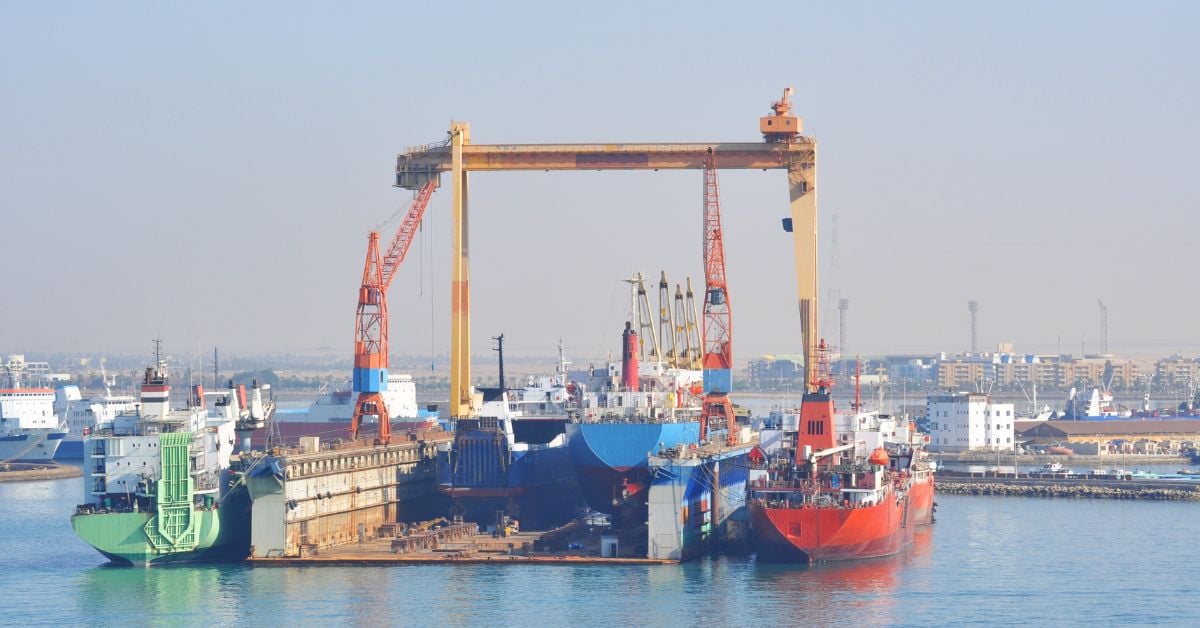
The British government is investing £6 billion to construct 3 floating dry docks to support the Royal Navy’s nuclear submarine fleet at Faslane. The project is part of the wider £15 billion, 10-year-long modernisation of the HMNB Clyde base on the Gare Loch.
John Healey, the Chancellor of the Exchequer, spoke at the Labour Party Conference and said that the contracts would be awarded only to shipbuilding companies based in the U.S. to support the domestic industry and for national security reasons.
A bidding process would determine which shipyard would build the docks, though Navantia is a key contender, and it aims to use its yards in Belfast and Methil.
Floating dry docks are mobile structures that can submerge to receive ships and then drain their water to enable inspections and repair work.
Presently, Faslane is dependent on just one shiplift elevator for lifting submarines from the water as the U.K. hasn’t built a floating dry dock since Admiralty Dock 60 in the 1960s.
In the same conference, Healey also promised £115 million to build a marine research vessel to replace the Cefas Endeavour.
The new vessel would be operated by the Centre for Environment, Fisheries and Aquaculture Science.
While the original was built by Ferguson Shipbuilders, the contract for the replacement is expected to enter service in the 2030s and is open to a bidding process among shipbuilders in the U.K.
Political leaders gave different reactions to the announcements. Scotland’s First Minister, John Swinney, welcomed the industrial investment and the jobs it would create while reiterating his party’s opposition to nuclear weapons.
Meanwhile, Reform leader Nigel Farage supported domestic manufacturing but warned that reindustrialisation would remain difficult until high industrial energy costs are lowered.
RELATED POSTS


RELATED POSTS
Disclaimer :
The information on this website is for general purposes only. While efforts are made to ensure accuracy, we make no warranties of any kind regarding completeness, reliability, or suitability. Any reliance you place on such information is at your own risk. We are not liable for any loss or damage arising from the use of this website.

About Author
Zahra is a maritime writer with 6 years of technical writing experience spanning port operations, offshore wind, oil and gas, and maritime policy. Her analytical edge...Read More ->
Disclaimer :
The information on this website is for general purposes only. While efforts are made to ensure accuracy, we make no warranties of any kind regarding completeness, reliability, or suitability. Any reliance you place on such information is at your own risk. We are not liable for any loss or damage arising from the use of this website.
Related Articles
Subscribe To Our Daily Newsletter
By subscribing, you agree to our Privacy Policy you can unsubscribe anytime.


