
India’s West Coast Emerges As New Hub For Oil Transfers As Waters Outside Hormuz Become Congested
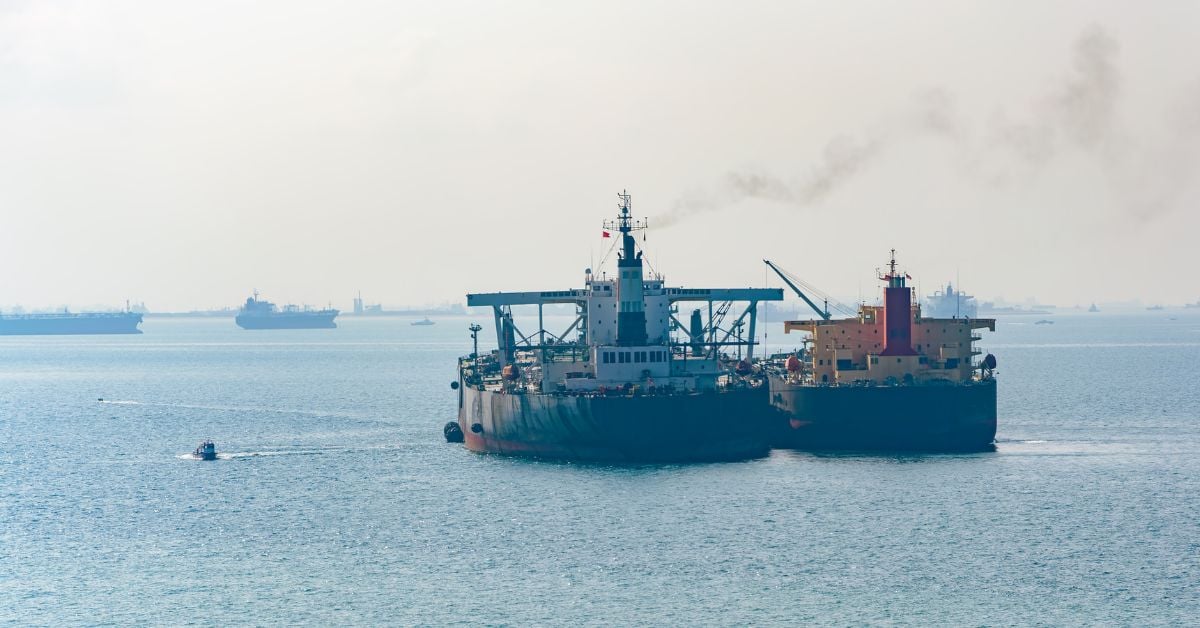
Oil producers in the Gulf are conducting ship-to-ship transfers outside Hormuz waters, stretching to India’s west coast as the regional waters have become too congested with ships.
The move aims to ensure the oil flows out of the Persian Gulf and the Middle East towards Asia at reasonable prices. According to sources, STS transfers along the Gulf of Kutch, India, touched 82 in September, equal to 680,000 barrels a day, with refined products accounting for 65% of the volume. The Gulf of Kutch opens towards the Arabian Sea and faces the Gulf of Oman.
Reports suggest that the closest ship-to-ship transfer zones off the UAE’s Fujairah and Oman’s Sohar were reaching operational limits; hence, the activity has spilled over towards India’s western coast.
This shows that ship-to-ship transfers might not be a reasonable solution for shipping oil out of the region in the long run, and an agreement to reopen Hormuz should be made soon.
Transfers of crude onto very large crude carriers or VLCCs have held five to seven million barrels a day since September, accounting for 60-70% of the total flow of oil through theStraiti of Hormuz. The entire process, from loading to transfer and the final delivery at the destination port, takes more than 10 days.
Crude transfers have started to take place in the Arabian Sea, though the quantities remain small and some tankers earlier operating in the Gulf are now unloading directly off India’s west coast.
A recent attack on a tanker off Fujairah has also led to the dispersal of ship-to-ship transfers. Additionally, Saudi Arabia’s East-West Pipeline was targeted in the past, which has shown the vulnerability of other export options along with their operational limits.
India, China and South Korea are the top three destinations, which took 70% of the crude that was transported via these ship-to-ship transfers.
Gulf producers are taking the transit and transfer risks to retain customers in Asia. Adnoc, Aramco, Iraq and Qatar are provding STS oil deliveries outside the Strait of Hormuz, and Kuwait is also shifting to a similar strategy for its oil cargoes.
This allows buyers to receive the shipments without sending their own tankers into the danger zone. The increase in STS transfers would not alter tanker demand; rather, the trips to the transfer points would become longer, meaning more ships could be needed to keep up with the rising demand.
Disclaimer :
The information on this website is for general purposes only. While efforts are made to ensure accuracy, we make no warranties of any kind regarding completeness, reliability, or suitability. Any reliance you place on such information is at your own risk. We are not liable for any loss or damage arising from the use of this website.
RELATED POSTS


About Author
Zahra is a maritime writer with 6 years of technical writing experience spanning port operations, offshore wind, oil and gas, and maritime policy. Her analytical edge...Read More ->
Disclaimer :
The information on this website is for general purposes only. While efforts are made to ensure accuracy, we make no warranties of any kind regarding completeness, reliability, or suitability. Any reliance you place on such information is at your own risk. We are not liable for any loss or damage arising from the use of this website.
Related Articles
Subscribe To Our Daily Newsletter
By subscribing, you agree to our Privacy Policy you can unsubscribe anytime.


