
India’s First Military-Grade Underwater Robot Is Delivered To The Indian Navy
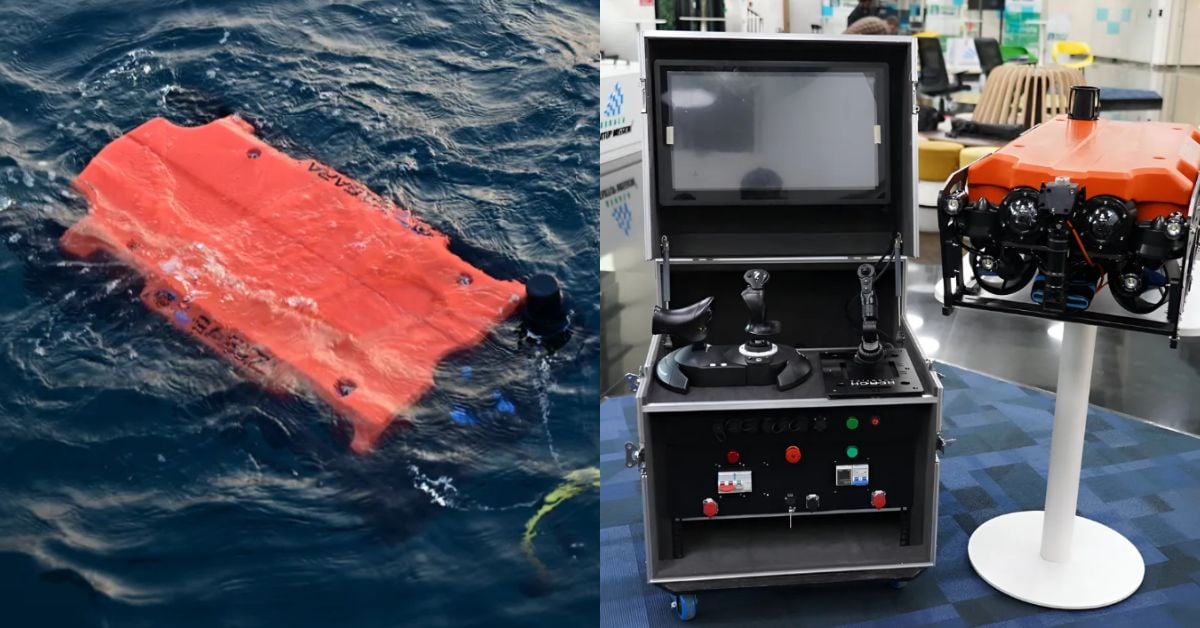
Indian Navy received two underwater remotely operated vehicles, or ROVs, built by a maritime robotics and AI company, EyeROV, based in Kerala.
Named TROUT, the first military-grade ROV built in the country was designed, developed, and tested according to international standards for naval missions.
The Navy has placed an order for five such ROVs, which marks the system’s transition from a defense innovation platform to a navy-authorised system developed through the Innovations for Defense Excellence ecosystem.
It is a mission-ready platform built for naval and subsea operations such as inspections, reconnaissance, search and recovery, target identification, etc.
It underwent several trials and validation tests to check its maneuverability, drive capabilities, performance in strong underwater currents, detection, endurance, operator control, and navigation.
Johns T. Mathai, the CEO of EyeROV, said that the initiative began as an engineering project but has now transformed into a mission-ready robot system for the Indian Navy, which is a proud moment for the entire team as it can contribute to the country’s maritime security.
The ROV was developed under the iDEX DISC 7 SPRINT Challenge, which was brought forward by the Armed Forces, calling companies and individuals to build indigenous tech for the nation.
The Naval Directorate of Quality Assurance tested the TROUT ROV, and it passed all benchmarks, along with the Environmental Screening and acceptable military standards covering operational resilience.
The ROV is built to operate in the harshest underwater environments, with poor visibility, powerful currents, and limited accessibility.
Underwater robotics is becoming vital for Indian Navy operations, maritime security, protecting infrastructure, port and harbour security, maritime domain awareness, and much more.
The launch of the indigenously built ROVs supports India’s Atmanirbhar or Make in India vision, while helping advance engineering capabilities in the country.
Disclaimer :
The information on this website is for general purposes only. While efforts are made to ensure accuracy, we make no warranties of any kind regarding completeness, reliability, or suitability. Any reliance you place on such information is at your own risk. We are not liable for any loss or damage arising from the use of this website.
RELATED POSTS


About Author
Zahra is a maritime writer with 6 years of technical writing experience spanning port operations, offshore wind, oil and gas, and maritime policy. Her analytical edge...Read More ->
Disclaimer :
The information on this website is for general purposes only. While efforts are made to ensure accuracy, we make no warranties of any kind regarding completeness, reliability, or suitability. Any reliance you place on such information is at your own risk. We are not liable for any loss or damage arising from the use of this website.
Related Articles
Subscribe To Our Daily Newsletter
By subscribing, you agree to our Privacy Policy you can unsubscribe anytime.


BE THE FIRST TO COMMENT