
How Deep Can Military Submarines Go?

Submarines are pressure vessels that can operate at submerged depths underwater. They are mechanically balanced by uniform hydrostatic pressure distribution acting on their surface. Most military submarines, for instance, the U.S. Navy’s attack submarines, can operate at a depth of 1600 to 2400 feet, depending on the type.
Any submarine design should always consider the theory of linearly incremental hydrostatic pressure and depth. Thus, when we choose a particular submarine design, its survivability is only at a certain depth, beyond which it collapses due to pressure loads beyond limit states.
Oxygen storage is a significant problem for submarines carrying crew. All submarines are designed to carry onboard breathable oxygen depending on the number of crew and the vessel’s range, that is, the time it is expected to be underwater. This capacity is limited.
Moreover, at very high depths, the oxygen density increases due to climbing pressure gradients; hence, the exhaustion rate is also greater. Furthermore, various factors like propulsion, machinery, communication, ammunition, and power are fit to survive till some limiting conditions. Thus, for all practical purposes, submarines are designed to operate only to a certain depth.
Now, how much is this depth? The answer to this is highly relative and variable. It depends on various factors, like the vessel’s service, design, material properties, and the conditions in which it is expected to operate.
Conversely, based on the vessel’s requirements, the material and structural design metrics are also chosen so that, under the desired operating conditions of operations, even at the upper end of the margin-of-safety limits, the vessel remains intact and serves its purpose.
The diving depth of a submarine, which defines the submarine’s ability to operate and travel underwater, is the most critical parameter taken into consideration right from the early stages of the design.
This depth is not a single quantity and has various ratings or definitions.
Normal Depth or test depth
This is the depth at which the submarine operates under normal conditions. Normal conditions can mean various aspects, ranging from the absence of a war or conflict to congenial weather conditions and sea states.
Under these circumstances, the submarine is marked to operate at a range of depths and travels from one place to another within this range. This is also referred to as the test depth, as the submarine is made to be run at such levels during sea trials. Test Depth has the lowest depth value of a submarine’s diving depth margins.
Maximum operating depth
This is the deepest permissible limit at which the submarine can operate under any circumstances to ensure intactness and functionality. During exigent conditions like wartime or very severe weather conditions, the submarine can dive much deeper than normal conditions based on requirement.
This rating marks the highest depth value the submarine can dive into without impairing its structural integrity, operability, and any aspect of its crew’s proper survival and sustenance. For all practical purposes, the maximum operating depth range is not absolute and can vary widely, as designers specify this limit with an adequate margin of safety.
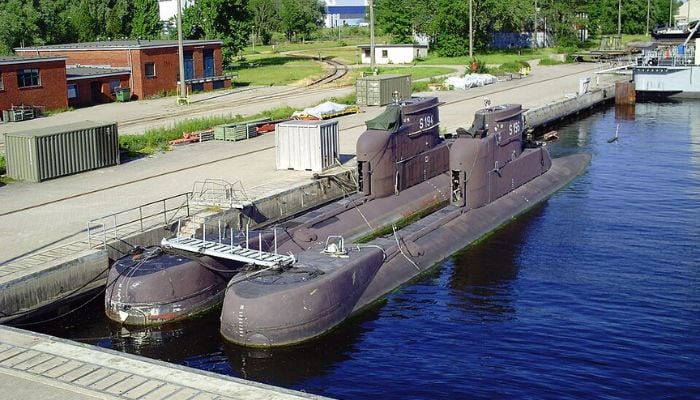
Design Depth
This is the critical point for a submarine that should not be exceeded even under the worst-case scenario. This is the maximum limit beyond which the chances of structural collapse and overall damage, in technical terms, including machinery failure, equipment malfunction, and loss in all communications, etc., are also very high.
For all practical purposes, this can be considered the upper limit of the margin of the maximum operating depth.
Crushing Depth
This is the upper limit of the design depth and can be said to be the breaking point at which the submarine structure implodes due to high-pressure loads. It is taken at a margin greater than the design depth to ensure the safety margin.
Thus, these depth ratings can be arranged for a submarine design as Normal depth> Maximum operating depth> Design depth>Crushing depth.
Submersibles vs Submarines
Furthermore, this brings us to another contentious point: Submersibles and submarines, which are also pressure vessels similar to submarines (but smaller and with different design characteristics), have attained greater depths.
The submersibles Trieste and Deepsea Challenger have marked their records in the history of mankind as having reached the Challenger Deep, the deepest point on Earth at the bottom of the Mariana Trench in the Pacific Ocean, boasting a titanic depth of about 11000 m below mean sea level!
However, as submarines have different design configurations to cater to defence purposes, they operate at much shallower depths with a considerable margin of safety for defence purposes like stealth and climatic vagaries.
Design of Military Submarines
Military submarines are designed robustly with high-grade material, a double hull construction, and an adequate amount of stiffening, like ribs and frames.
As the technical specifications of any defence asset are highly classified for security reasons, there is no absolute confirmation of how deep military submarines are designed to go.
All available information about their capabilities is based on speculation, data leaks, limited government or high-level press reports, and technical estimations based on available design data, operating environments, and observed test depth performance.
Depending on the capability, defence vessels can dive a wide range of depths, most of the available values or figures within the design depth spectrum. Military submarines have been recorded to go as deep as 1500 m.
Depth of Military Submarines
Russia’s Oscar-Class Submarines
These are the deepest subs in active service in the world. Capable of carrying cruise missiles, they were originally designed for the Soviet Navy but are now a part of the Russian submarine fleet. Oscar-class subs have a test depth of 830 m and can be modernised to extend their service life and combat abilities.
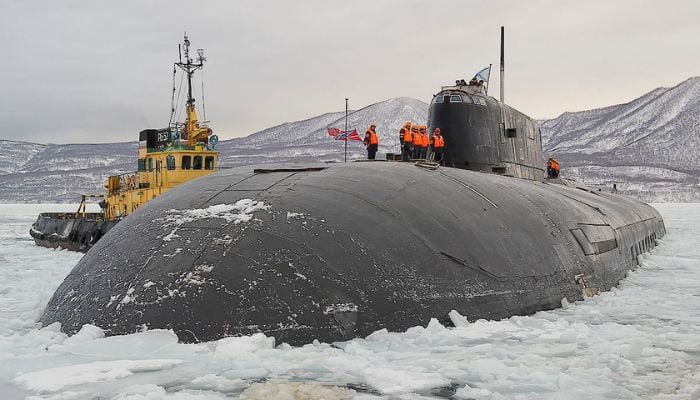
Akula-class
These are some of the largest submarines ever built, and were thought to reach maximum depths of 1200-1300 m below sea level. The last sub of the class was decommissioned in early 2023.
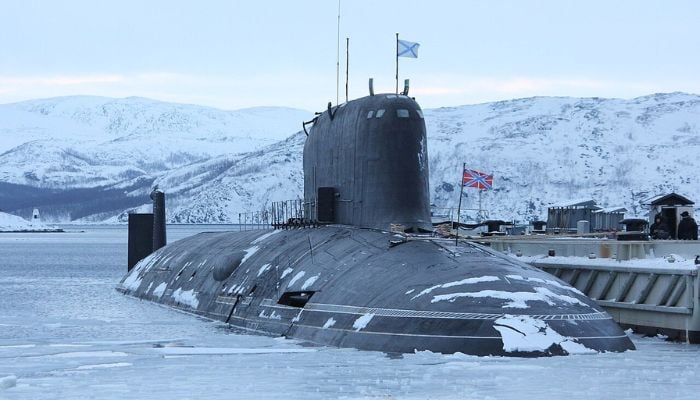
Yasen-class submarines
Attack submarines belonging to the Yasen class are estimated to reach depths of about 600 m. In contrast, ballistic missile nuclear submarines like the Borei class of Russia can reach depths of about 500 m.
U.S Naval Submarines
Los-Angeles Class
US Navy also has an impressive fleet of powerful deep-dive submarines, with the Los Angeles class capable of plying at depths of up to 600-700 m. Their unclassified test depth remains at about 250 m.
Ohio-Class
Ohio-class nuclear submarines are also believed to be capable of diving beyond 500 m, though their operational depth remains at 300m.
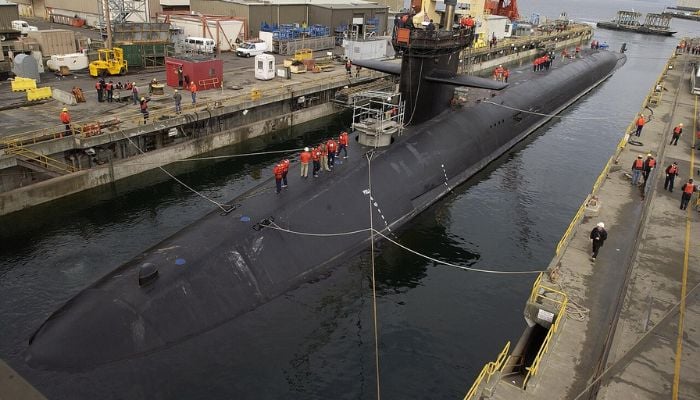
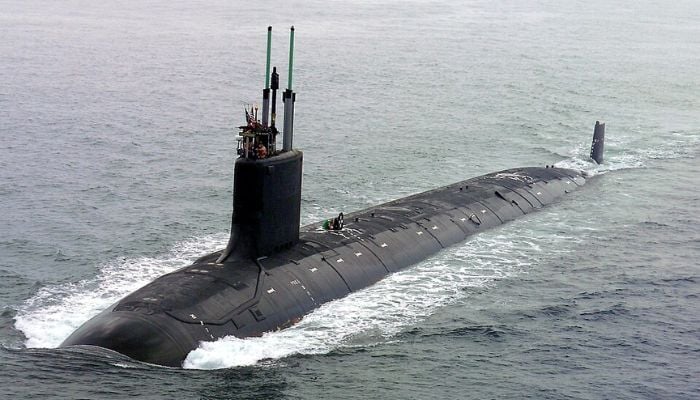
Virginia-class submarines
They are believed to be the successors of the LA-class and have high technical capabilities. With test depths of about 500m, they are believed to be designed to tread even greater depths, 800 to 900m.
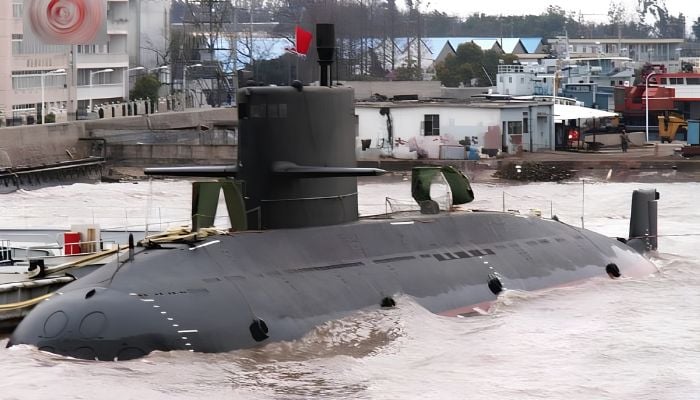
China’s 039A-Class Submarines
Also referred to as the Yuan-class of submarines, these diesel-electric subs are China’s first air-independently powered subs and one of the quietest of their kind in current service. They can reach depths of 550 metres.
They were built to carry anti-ship cruise missiles and can remain submerged for long periods in shallow littoral regions that can be difficult to reach for conventional submarines.
India’s Arihant-class submarines can also clock test depths of 300 m and are believed to be capable of diving deeper under demanding circumstances.
How did naval submarines evolve?
The earliest submersibles essentially operated on the surface and could go underwater for brief periods only to attack or evade an enemy vessel, given oxygen and propulsion constraints.
Dual propulsion systems gradually developed in the 20th century, and throughout WWI and WWII, submarines were limited in what they could do. They had a wedge-shaped hull and limited endurance underwater until the introduction of the snorkel, which allowed diesel engines to run while being shallowly submerged.
Nuclear propulsion came in the 1950s, and this is what made the submarine a true underwater vessel. The USS Nautilus, which was launched in 1954, severed the link to atmospheric oxygen, enabling submarines to remain submerged for months at a time.
This led to a change in submarine design, with the hull becoming the teardrop shape which we see today, optimised for maximum speed and manoeuvrability.
Conclusion
Modern submarines are multi-purpose undersea vessels that can strike enemy ships, infrastructure and even inland targets. They can undertake national security missions, surveillance, reconnaissance, etc which make them a valuable naval asset and a powerful deterrent against adversaries.
Submarines are usually nuclear-powered fast attack (SSN) and ballistic missile (SSBN) vessels. There are non-nuclear designs as well, which use Air-independent propulsion like fuel cells or Stirling engines.
The most important feature is stealth, which makes the submarine difficult to detect or track. For this, submarines are built with systems that reduce vibration or noise, along with advanced sonars and radars, which make them lethal platforms.
You might also like to read-
- The Biggest Nuclear Submarine in the World – Typhoon Class Submarines
- Peral Submarine – The World’s First Electric Battery-Powered Submarine
- Top 10 Books On Submarines
- Different Systems on a Naval Submarine
- Top 10 Biggest Submarines in the World
- Understanding Structure Design of a Submarine
Disclaimer :
The information on this website is for general purposes only. While efforts are made to ensure accuracy, we make no warranties of any kind regarding completeness, reliability, or suitability. Any reliance you place on such information is at your own risk. We are not liable for any loss or damage arising from the use of this website.


About Author
Zahra is a maritime writer with 6 years of technical writing experience spanning port operations, offshore wind, oil and gas, and maritime policy. Her analytical edge...Read More ->
Disclaimer :
The information on this website is for general purposes only. While efforts are made to ensure accuracy, we make no warranties of any kind regarding completeness, reliability, or suitability. Any reliance you place on such information is at your own risk. We are not liable for any loss or damage arising from the use of this website.
Related Articles


Subscribe To Our Daily Newsletter
By subscribing, you agree to our Privacy Policy you can unsubscribe anytime.


BE THE FIRST TO COMMENT