
China Navy’s Largest Warship Fujian Features 3 Electromagnetic Aircraft Catapults
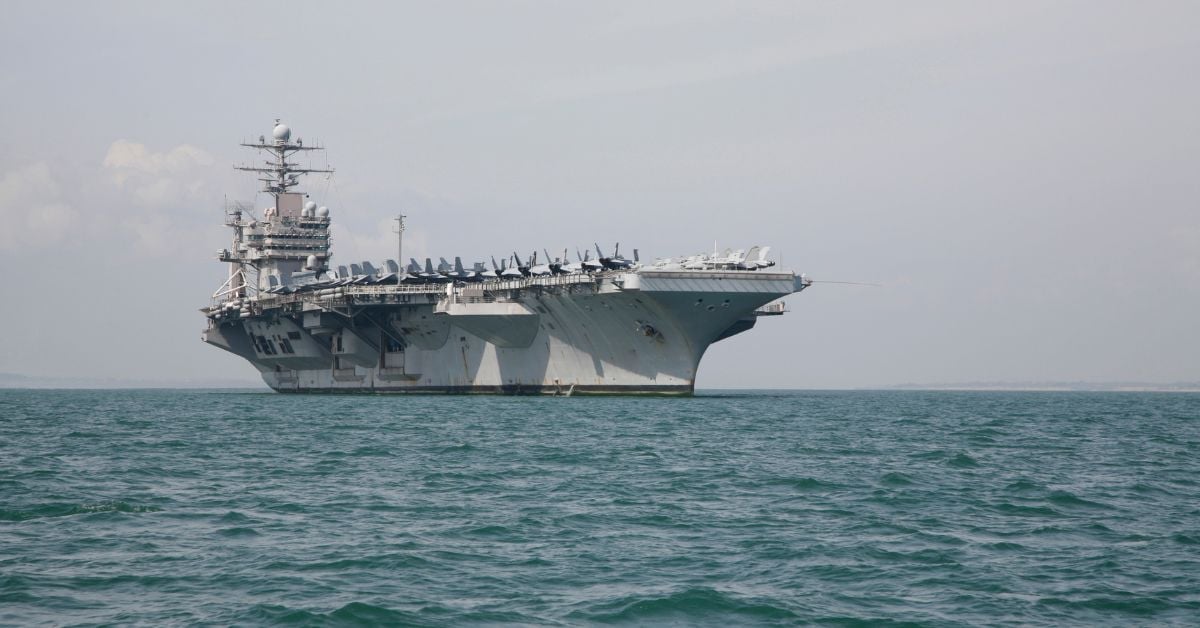
The People’s Liberation Army Navy has achieved a milestone with the deployment of its largest warship, the Type 003 aircraft carrier, Fujian. With a length of 316 metres and a displacement between 80,000 and 85,000 tonnes, the carrier features three electromagnetic catapults on its flight deck.
For decades, China did not have any aircraft carriers, and when its navy began to modernise in the 1990s, it bought a half-completed Soviet Ship from Ukraine and rebuilt it into its first carrier, the Liaoning.
China then went on to build a second carrier, the Shandong, which was also based on the Soviet design. However, while these ships helped the Chinese sailors to learn how to operate a carrier and launch aircraft from its decks, both had a limitation, i.e a ski-jump ramp at the bow which helped launch the jets.
Since planes launch using their engines, they have to take off very light, reducing the number of weapons and fuel they could carry, which restricted the time they could spend in the air, as they had to come back to refuel and equip themselves with ammunition when needed.
To assert its maritime dominance, China had to build a ship that could support heavily armed planes, and this effort culminated in the construction of the third aircraft carrier of the Chinese Navy, the Fujian.
It features a catapult-assisted takeoff but arrested recovery (CATOBAR) configuration, which allows for the launch of the Xi’an KJ-600 plane, which provides over-the-horizon radar coverage, battle management, and long-range targeting that cannot be done by shipboard sensors.
Unlike American aircraft carriers, Fujian depends on steam turbine propulsion and diesel generators rather than nuclear reactors.
Powering the catapults without nuclear energy required Chinese engineers to implement the Medium-Voltage Direct Current power system, which stores and distributes high-voltage energy bursts efficiently. It enables Fujian to recharge and fire its catapults without exhausting its boilers.
When compared to U.S. Navy carriers, Fujian sits between the Nimitz-class and the Gerald R.Ford class of carriers. The Nimitz class uses steam catapults, whereas the USS Gerald R. Ford utilizes the Electromagnetic Aircraft Launch System (EMALS).
American carriers operate on nuclear reactors, which means they are not bound by an operational range. On the other hand, Fujian has an endurance of 8000 to 10,000 nautical miles.
RELATED POSTS


Disclaimer :
The information on this website is for general purposes only. While efforts are made to ensure accuracy, we make no warranties of any kind regarding completeness, reliability, or suitability. Any reliance you place on such information is at your own risk. We are not liable for any loss or damage arising from the use of this website.

About Author
Zahra is a maritime writer with 6 years of technical writing experience spanning port operations, offshore wind, oil and gas, and maritime policy. Her analytical edge...Read More ->
Disclaimer :
The information on this website is for general purposes only. While efforts are made to ensure accuracy, we make no warranties of any kind regarding completeness, reliability, or suitability. Any reliance you place on such information is at your own risk. We are not liable for any loss or damage arising from the use of this website.
Subscribe To Our Daily Newsletter
By subscribing, you agree to our Privacy Policy you can unsubscribe anytime.


