
China Develops Uncrewed Trimaran Submarine Designed To Carry Up To 18 Missiles
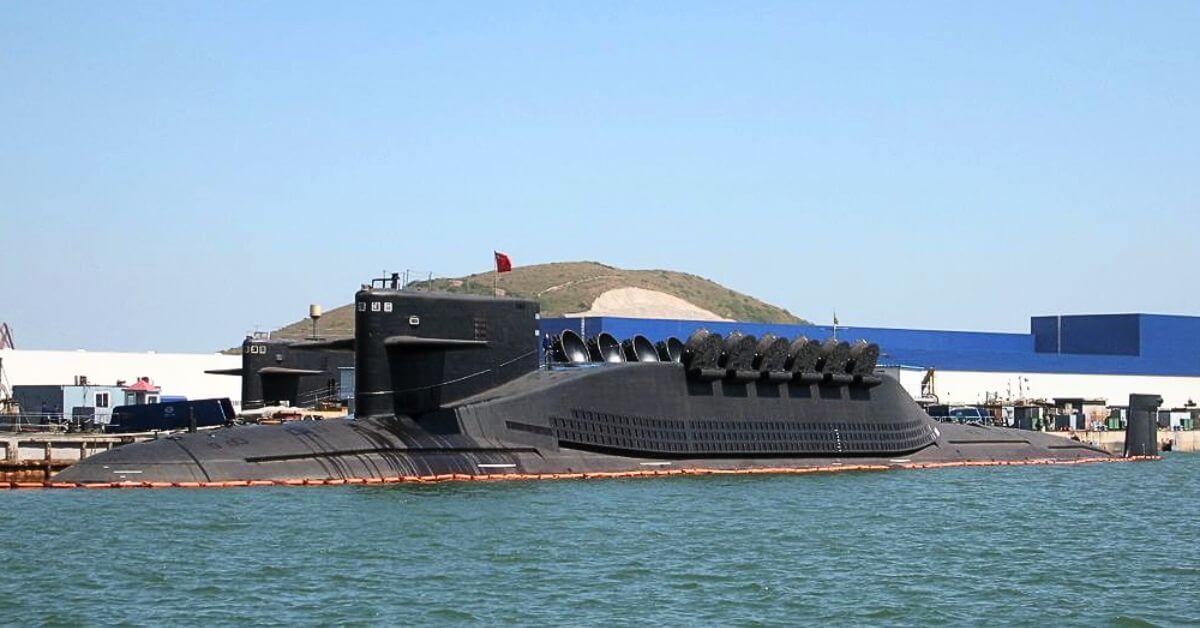
China has developed a new semi-submersible warship designed to carry multiple missiles and potentially operate without a crew, according to open-source analysis of the vessel. It has a unique trimaran hull design and is expected to emerge from the water before deploying its missile tubes.
The vessel is now undergoing trials in Huludao, on the Bohai Sea. It was built in Guangzhou, southern China, before being transported north via Dalian earlier this year.
Satellite imagery and technical assessments indicate that the vessel could have between 16 and 18 missile tubes. However, China has not officially confirmed the number of tubes or the weapons the vessel is designed to carry.
The vessel is approximately 65 meters long, and it was initially constructed at the Huangpu Shipyard in Guangzhou. Satellite images revealed that the vessel was at Dalian on May 12, 2026, while recent images reveal that the vessel is currently undergoing trials in Huludao.
The submarine has a central hull, which has two smaller hulls attached, called outriggers, positioned towards the stern. The use of the trimaran hull design seems to be for added stability while the vessel is on the surface, particularly when its missile tubes are raised for launch.
The central hull comprises two large weapons compartments that appear to store missile tubes horizontally in circular arrangements. According to the open-source analysis, there are at least eight tubes, with an estimated number of 16 to 18 for both compartments to have similar setups.
To launch its weapons, the vessel would have to surface, open the door to the compartments and bring the tubes to a vertical or near-vertical position. The arrangement indicates that the missiles are intended to be launched from the surface rather than fired while the vessel remains submerged.
The vessel can be armed with either anti-ship missiles or land-attack cruise missiles. Among the potential armaments is the Chinese YJ-20 hypersonic missile, linked to Type 055 cruisers, as well as Type 052D destroyers. However, the use of the missile on the new vessel has not been confirmed yet.
Even though the vessel can submerge and operate underwater, it uses diesel propulsion. The snorkel mast enables the engines to receive air even when the vessel is just below the surface.
The central hull is likely to feature the main propulsion system, which may consist of either propellers or waterjets. The ducted propellers mounted on the outriggers are thought to be pumpjets, while separate electric propellers are believed to provide propulsion on the side hulls.
Dr Rachel Pawling, who specialises in ship design and serves as a principal consultant at K39 Consulting, evaluates the submerged displacement of the vessel to be about 900 tonnes.
According to Pawling’s estimate, the weapons compartments take up most of the internal volume of the vessel, leaving little space for a crew. Therefore, it is considered that the vessel was designed to operate without a crew during its operations.
Nevertheless, the vessel has an open navigation bridge installed on top of its sail. One of the assumptions is that the bridge is intended for a human pilot who will control the vessel during entry into and exit from the port as well as manoeuvring in confined waters.
Its uncrewed status and the proposed role of the bridge have not been officially confirmed.
The YJ-20 is one of several potential weapons identified in open-source assessments of the vessel. The missile is associated with China’s Type 055 cruisers, while reports have also linked it to launches from Type 052D destroyers.
According to open-source assessments, the YJ-20 has a range of 1,000 to 1,500 km (620 to 930 miles). It is meant to attack both naval and ground-based targets.
The design differs from conventional submarines that can launch weapons while submerged. Instead, the vessel appears to combine submersible movement with a requirement to surface before deploying its missiles.
RELATED POSTS


Disclaimer :
The information on this website is for general purposes only. While efforts are made to ensure accuracy, we make no warranties of any kind regarding completeness, reliability, or suitability. Any reliance you place on such information is at your own risk. We are not liable for any loss or damage arising from the use of this website.

About Author
Aakriti is a journalist and news writer at Marine Insight, with over three years of experience covering the global shipping and maritime …Read More ->
Disclaimer :
The information on this website is for general purposes only. While efforts are made to ensure accuracy, we make no warranties of any kind regarding completeness, reliability, or suitability. Any reliance you place on such information is at your own risk. We are not liable for any loss or damage arising from the use of this website.
Subscribe To Our Daily Newsletter
By subscribing, you agree to our Privacy Policy you can unsubscribe anytime.


