China Deepens Maritime Foothold In Africa With 50-Ship Sierra Leone Venture
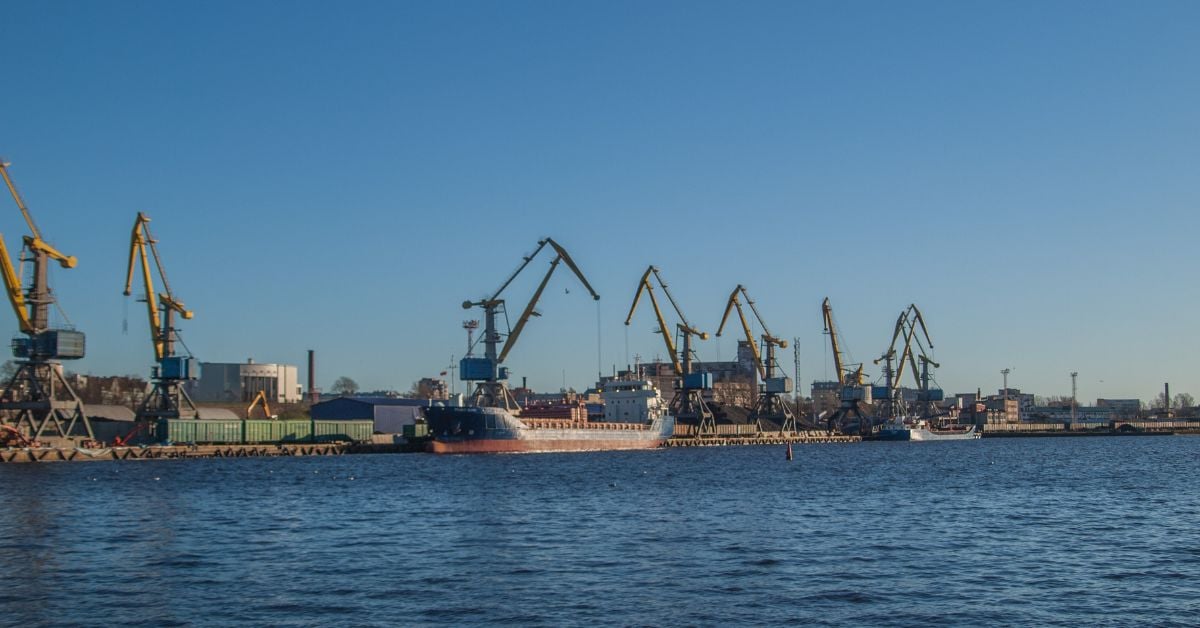
The West African Country of Sierra Leone has launched a national shipping company named SLOSCO in partnership with China’s Zhejiang Xiehai Group. China would have a 70% and Sierra Leone a 30% share in the joint venture.
According to sources, the company plans to deploy a fleet of 30 ships initially and then expand it to a total of 50, based on the design of its partner’s existing vessels.
SLOSCO would use the ships to transport petroleum products, agricultural goods and minerals through the ports of Sierra Leone, with operations expected to include both regional and international markets.
The President of Sierra Leone, Julius Maada Bio, said that the decision comes to prevent the country’s reliance on foreign shipping operators and to support the venture, the Chinese partner company will offer access to its fleet of 37 ships, mainly bulkers.
The partnership comes as the U.S. is taking steps to revive its shipbuilding sector with more investments in infrastructure and ships, especially autonomous technology.
Sierra Leone is now Africa’s third-largest merchant ship registry with 584 ship registrations, and 32nd in the world.
It lags behind Liberia and Nigeria with ship registrations of 4821 vessels and 928 vessels, respectively. The fourth and fifth ranks are held by Egypt and Tanzania with 441 and 381 ships.
China’s shipbuilding output was 56.1% last year, which highlights its growing maritime dominance. Chinese companies also bagged almost 80% of new build orders in the first 9 months of 2026. Compared to this, the growth and output achieved by the U.S. are negligible.
The website of the company SLOSCO shows 54 vessels under active service, including container vessels, bulk carriers, and chemical tankers; however, it does not individually list vessels, which means some might have been chartered and not owned.
Recently, the U.S. has also forged maritime partnerships with China’s competitors, South Korea and Japan, to fasten the pace of shipbuilding.
However, China is adopting a different approach to infiltrate global markets. It is building partnerships, including a reported $ 100 million investment in Indonesia last year, and has also proposed a similar project in Pakistan.
RELATED POSTS


Disclaimer :
The information on this website is for general purposes only. While efforts are made to ensure accuracy, we make no warranties of any kind regarding completeness, reliability, or suitability. Any reliance you place on such information is at your own risk. We are not liable for any loss or damage arising from the use of this website.

About Author
Zahra is a maritime writer with 6 years of technical writing experience spanning port operations, offshore wind, oil and gas, and maritime policy. Her analytical edge...Read More ->
Disclaimer :
The information on this website is for general purposes only. While efforts are made to ensure accuracy, we make no warranties of any kind regarding completeness, reliability, or suitability. Any reliance you place on such information is at your own risk. We are not liable for any loss or damage arising from the use of this website.
Subscribe To Our Daily Newsletter
By subscribing, you agree to our Privacy Policy you can unsubscribe anytime.