
Real Life Incident: Broken Procedure On Bulk Carrier Leads To Crew Member’s Death
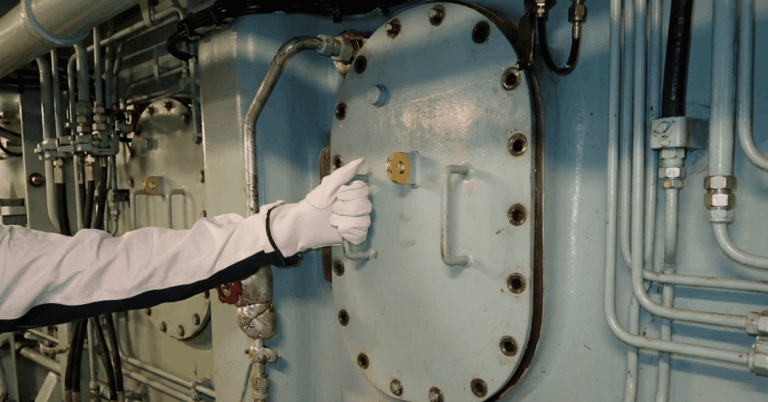
A bulk vessel was underway when the main engine’s alarm panel sounded; the exhaust gas temperature on one cylinder was not normal. The engine crew went to investigate and it was determined that the fuel oil injection valve (FOIV) of number 4 cylinder needed replacement. The job was estimated to take about 1-2 hours. The chief engineer and the Master were informed.
The main engine control was transferred to the Engine Control Room (ECR) and the second engineer (2E) briefed the engine crew on the plan for the FOIV replacement. The engine crew began to prepare the necessary tools and the OOW on the bridge was informed that the main engine would have to be stopped. Meanwhile, the 2E instructed the engine personnel to close the main start air valve and then remove the fuel oil high-pressure pipe of the cylinder.
Two engine crew removed the fuel oil high-pressure pipe. The pipe outlet to the engine was covered with rags and a general cleaning of the area was carried out. One crew left the engine repair area to fetch another FOIV, leaving the other crew at the repair location. A few minutes later a loud bang was heard and the crew that had remained at the repair site was seen lying on the deck.

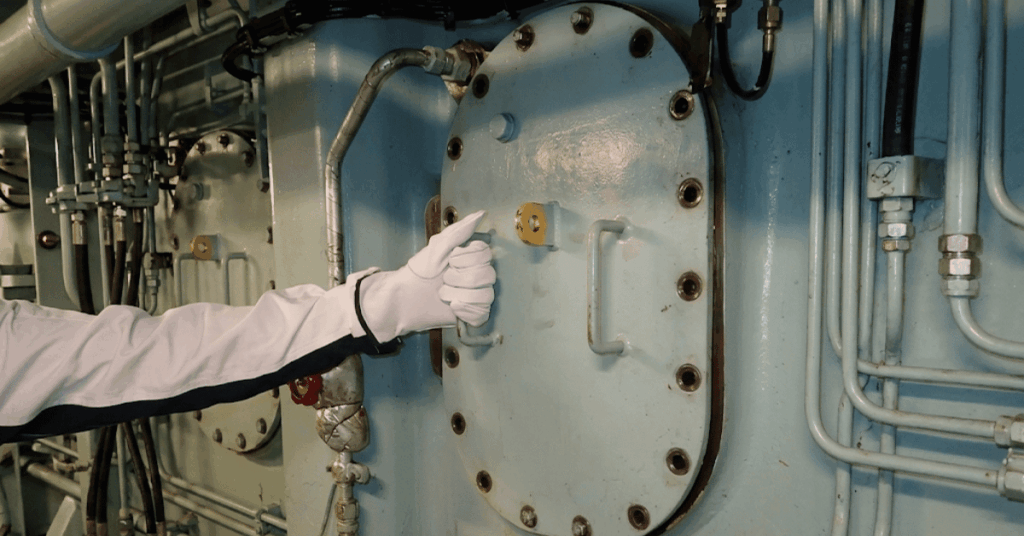
The crew in the vicinity rushed to help; they found the victim’s face badly injured near the right temple with profuse bleeding. The FOIV from the cylinder was on the deck beside the victim. This valve is fitted to the cylinder cover by two securing nuts with a spring housing for each nut. The securing nuts had been removed and residual pressure within the main engine had ejected it with force.
Three hours after the accident the victim’s vital signs ceased and the victim was declared deceased.
The investigation found that the victim had probably prematurely removed the securing nuts of the defective FOIV, as several steps to prevent injury had been missed prior to removing these nuts. Apparently, the engine RPM had not yet reached zero. It is also probable that the engine start air valve was not closed nor was the engine turning gear engaged. These lock-out measures, as prescribed in the engine maintenance manual, would have prevented the tragedy. There was no system in place to ensure that all the safety precautions stipulated in the engine manual had been performed prior to the replacement of the FOIV.
Also of note, the investigation found that there was a general understanding on board that the Company might penalise the ship’s crew for undue delays or taking too much time in repair work.
Lessons learned
- Any system that has stored energy needs a lock-out/tag-out (LOTO) safety procedure and strict compliance.
- Senior vessel officers must ensure safety compliance and procedural integrity, but so too must each and every crew member.
- Time pressures are usually self-imposed. Even if time pressures are overt the proper mindset should be ‘Safety First’.
Related Posts

Disclaimer :
The information on this website is for general purposes only. While efforts are made to ensure accuracy, we make no warranties of any kind regarding completeness, reliability, or suitability. Any reliance you place on such information is at your own risk. We are not liable for any loss or damage arising from the use of this website.
Disclaimer :
The information on this website is for general purposes only. While efforts are made to ensure accuracy, we make no warranties of any kind regarding completeness, reliability, or suitability. Any reliance you place on such information is at your own risk. We are not liable for any loss or damage arising from the use of this website.
Related Articles
Subscribe To Our Daily Newsletter
By subscribing, you agree to our Privacy Policy you can unsubscribe anytime.



BE THE FIRST TO COMMENT