
World’s First Artificial Energy Island Worth $4.2 Billion To Double Belgium’s Offshore Wind Capacity
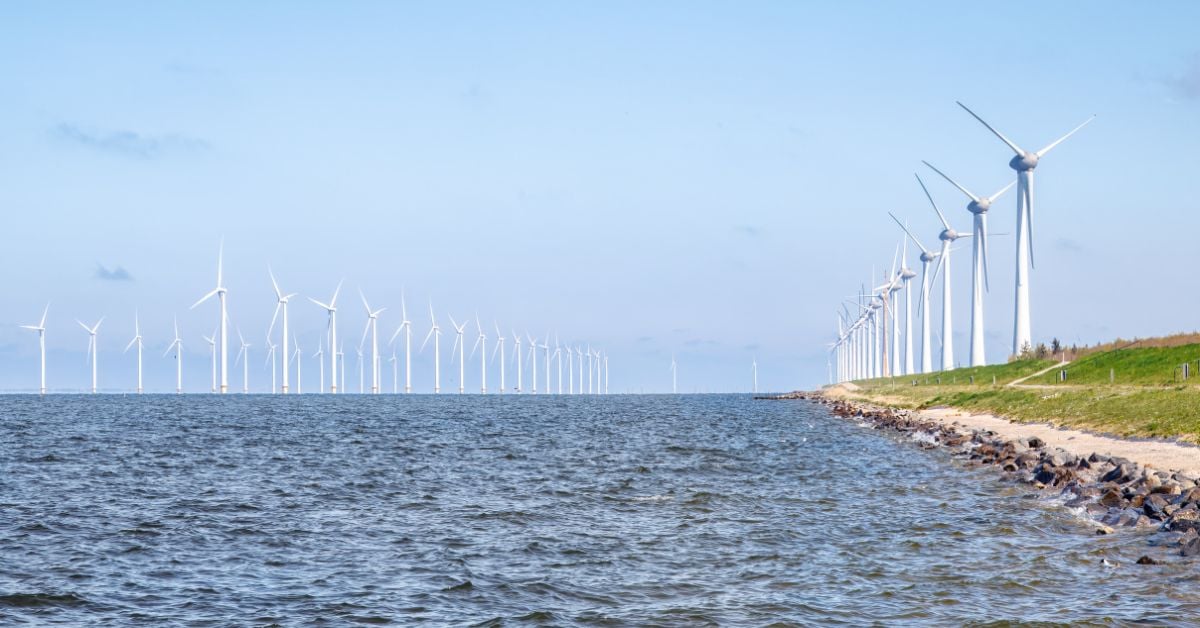
As electricity requirements continue to rise across the world, many projects are being undertaken to fulfil this enormous demand, and one such initiative is the ‘Energy Islands’, which are gradually coming up in Europe.
According to International Energy Agency data, Europe has a total wind energy capacity of over 218 GW, but offshore wind is a tiny part of the renewable energy growth through the 2030s.
Supporters of the energy islands claim that these structures can open new markets for offshore wind development further out to sea than is practical at the moment.
Energy Islands are supposed to be offshore electricity supply centres which would sell high-voltage renewable power generated from wind farms to several countries.
The man-made islands would include equipment for both direct and alternating current and act as a connection point to the mainland for offshore wind farms in the North Sea and the others that are currently under construction.
Princess Elisabeth Island Project
One such project is the 4.2 billion-dollar Princess Elisabeth Island by Hub Jan de Nul and DEME Group, situated 30 miles off the North Sea shores of Belgium.
Spread across a 15-acre artificial island, the world’s first artificial energy island promises to double Belgium’s installed offshore wind capacity, which is currently 2.3 GW.
High-voltage cables, each with a 220-kV capacity, would be installed in 2027 and 2028 to connect to shore. At least two or three wind farms would be built close to the island with a total capacity of 3.5 GW.
A milestone was achieved in August after the last concrete caisson, which formed the island’s perimeter, was successfully installed, marking the completion of one of the most complex phases of the project. The island’s interior was built with two million cubic metres of sand, and the land would be compacted using vibroflotation.
Enhancing Biodiversity
Once the island takes shape, the second phase would involve the installation of high-voltage lines and other infrastructure for storing and distributing power.
The highest offshore engineering benchmarks are being used to design and build the electrical network on the island to ensure safety and optimum power production in a challenging environment at sea.
Not only is the idea intelligent, but it is also sustainable as the island’s design aims to enhance biodiversity in the surrounding waters.
The caissons have been built with ledges to support bird nesting, while relief panels below can shelter marine life such as small fish or crabs. The rock bottom would protect the island and house oysters and prevent erosion, creating a new base over the years for a new oyster reef.
Additionally, the developers said that the island can be dismantled once it comes to the end of its service life; however, it could also be converted into a marine habitat, like an artificial reef.
Danish Energy Islands
Another energy island will be built off Denmark’s Baltic Sea Coast, becoming the first such project proposed in the country.
The approximately 8 billion-dollar island would be constructed on the Danish Island of Bornholm with 3 GW of offshore wind capacity. The European Union has offered over 700 million dollars for the project, which would link Danish and German electricity grids, making it a cross-border initiative with joint funding.
The island would span 30 acres, and a tender is yet to be issued for the offshore wind development by the Danish Energy Agency, and a timeline for its construction has also not been finalised. A second proposed energy island in the North Sea would add 10 GW of offshore wind capacity to Denmark’s existing infrastructure.
The Energy Island North Sea could also connect to Belgium through the planned Triton Link Interconnector, though it has been postponed due to financial constraints. Though costs have delayed a few energy island projects in Europe, officials and governments see long-term monetary and environmental returns they can offer. Recently, the European Investment Bank agreed to provide a $1.2 billion loan for the Princess Elisabeth Project.
Watch the video here-
Video Credits: Elia
Disclaimer :
The information on this website is for general purposes only. While efforts are made to ensure accuracy, we make no warranties of any kind regarding completeness, reliability, or suitability. Any reliance you place on such information is at your own risk. We are not liable for any loss or damage arising from the use of this website.
RELATED POSTS


About Author
Zahra is a maritime writer with 6 years of technical writing experience spanning port operations, offshore wind, oil and gas, and maritime policy. Her analytical edge...Read More ->
Disclaimer :
The information on this website is for general purposes only. While efforts are made to ensure accuracy, we make no warranties of any kind regarding completeness, reliability, or suitability. Any reliance you place on such information is at your own risk. We are not liable for any loss or damage arising from the use of this website.
Related Articles
Subscribe To Our Daily Newsletter
By subscribing, you agree to our Privacy Policy you can unsubscribe anytime.


BE THE FIRST TO COMMENT