
5 Important Responsibilities Of A Shipper In Maritime Trade
In the global shipping chain, the shipper is often the starting point of the entire transport process. While much attention is placed on shipowners, carriers, and charterers, the role of the shipper carries its own set of responsibilities that directly influence safety, efficiency, and legal compliance. A clear understanding of these responsibilities is essential, as shortcomings at the shipping stage can lead to delays, disputes, or liability later in the voyage.
Outlined below are five important responsibilities of a shipper in maritime transport.
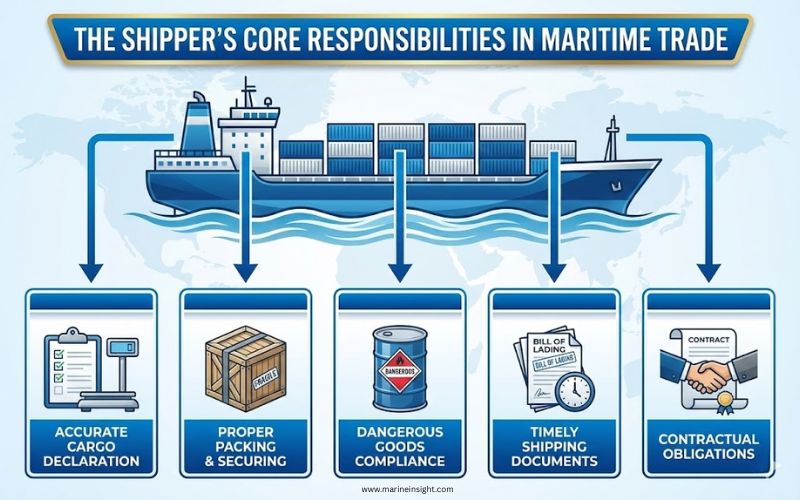
1. Providing Accurate Cargo Information
One of the shipper’s most fundamental responsibilities is to declare cargo details accurately. This includes the correct description, weight, quantity, and nature of the goods. Any misdeclaration—whether intentional or accidental—can affect vessel stability, stowage planning, and regulatory compliance. Inaccurate information has been a contributing factor in several cargo damage incidents and operational disruptions, particularly where hazardous or special cargoes are involved.
2. Proper Packing, Marking, and Labelling of Cargo
Shippers are responsible for ensuring that cargo is suitably packed for sea transport. Packaging must withstand handling, stacking, and exposure to environmental conditions during the voyage. In addition, proper marking and labelling are essential so that cargo can be identified, handled correctly, and stowed safely. Inadequate packing or unclear markings increase the risk of cargo damage and may shift liability back to the shipper.
3. Compliance with Dangerous Goods Regulations
When shipping dangerous or regulated cargo, the shipper bears heightened responsibilities. This includes compliance with the International Maritime Dangerous Goods (IMDG) Code and other applicable regulations. Shippers must ensure that such cargo is correctly classified, packaged, labelled, and documented. Failure to meet these obligations can endanger crew safety and expose multiple parties to serious legal consequences.
4. Timely Provision of Shipping Documents
Shipping documentation forms the backbone of maritime trade, and the shipper plays a central role in its preparation. Documents such as shipping instructions, commercial invoices, and packing lists must be provided accurately and on time. Delays or errors can result in customs issues, loading delays, or disputes over contractual performance. Efficient documentation supports smoother cargo flow and reduces administrative risk for all parties involved.
5. Meeting Contractual Obligations Under the Carriage Agreement
Shippers are bound by the terms of the contract of carriage, whether evidenced by a bill of lading or another transport document. This includes obligations related to cargo readiness, delivery timelines, and compliance with agreed conditions. Breach of these obligations may give rise to claims for delay, additional costs, or losses incurred by carriers or receivers.
Conclusion
The responsibilities of a shipper extend far beyond simply handing cargo over for transport. From accurate declarations and proper packing to regulatory compliance and contractual performance, the shipper’s actions have a direct impact on the safety and efficiency of maritime operations. A sound understanding of these responsibilities helps reduce disputes and contributes to a more reliable shipping chain.
Beyond these key duties, shippers operate within broader legal frameworks, liability regimes, and exceptions that shape their position in maritime law. These aspects, along with practical illustrations and deeper legal context, are examined in greater detail in the ebook Responsibilities of Individual Parties in Shipping.
You might also like to read-
- Advantages And Disadvantages Of Bigger Vessels For Exporters, Shippers & Cargo Owners
- Understanding the SOC or Shipper-Owned Container
- Who is a Shipper?
- What Can Shippers Do Against Pirate Attacks At Sea?
Disclaimer :
The information on this website is for general purposes only. While efforts are made to ensure accuracy, we make no warranties of any kind regarding completeness, reliability, or suitability. Any reliance you place on such information is at your own risk. We are not liable for any loss or damage arising from the use of this website.
Related Posts


Disclaimer :
The information on this website is for general purposes only. While efforts are made to ensure accuracy, we make no warranties of any kind regarding completeness, reliability, or suitability. Any reliance you place on such information is at your own risk. We are not liable for any loss or damage arising from the use of this website.
Related Articles

About Author
Rishabh Srivastava is a Maritime lawyer dealing in Ship arrests, maritime claims and arbitration in India.
Subscribe To Our Daily Newsletter
By subscribing, you agree to our Privacy Policy you can unsubscribe anytime.


BE THE FIRST TO COMMENT