10,300-Ton Warship USS Pinckney Is The First US Navy Destroyer To Receive Advanced SPY-6 Radar Upgrade
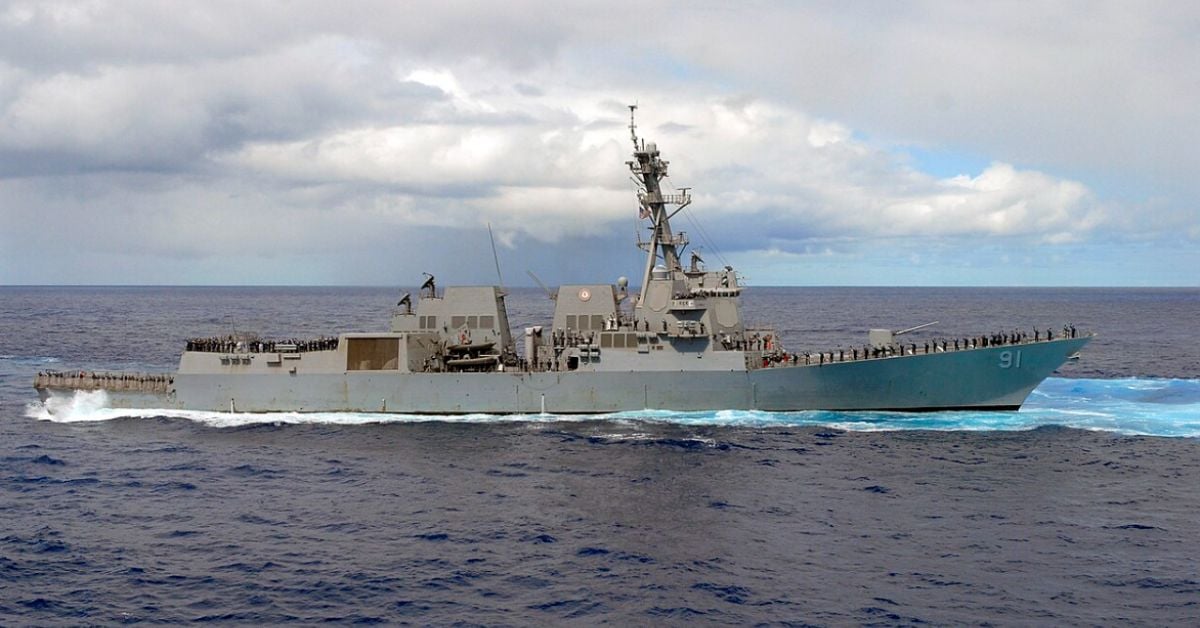
Arleigh-burke class destroyer USS Pinckney has become the first navy warship to get an upgraded SPY-6(V) 4 radar system as part of the Destroyer Modernization 2.0 Program’s second phase that focuses on boosting the combat capabilities of the destroyers.
Capt. Tim Moore, the program manager said that the collective effort of the stakeholders brought them to the execution stage and upon its completion, the destroyer will rejoin the fleet with an advanced sensor suite to maintain superiority for decades to come.
The warship entered the San Diego yard of General Dynamics NASSCO for getting the upgraded sensor and cooling systems. The radar system will be integrated with the Aegis Combat System Baseline 10, to handle air and ballistic missile defense simultaneously.
The upgraded radar would help Pinckney to respond to advanced weapon attacks including drones and missiles. The destroyer will also get a super-capacity air conditioning system to absorb the additional electrical and heat requirements from the newly upgraded system.
USS Pinckney displaces around 9300 tonnes and the warship completed its first upgrade period in 2024. During that time, it was the first ship to receive the SLQ-32(V)7 Surface Electronic Warfare Improvement Program Block III system.
The system enables a ship to identify and respond to electronic threats quickly. The service installed the system in steps so partners could get experience with each upgrade before going ahead with the installation of the radar.
After the first upgrades, the destroyer was in the Pacific and the Middle East for almost eight and a half months.
The navy has plans to complete modernisation of future ships as well, such as the USS Sterett which will be the first to get both the upgrades in a single shipyard visit.
By upgrading both the electronic and radar systems during a single shipyard visit, the navy could reduce the time they spend out of service.
Modernising destroyers is critical for the Navy as they protect carrier strike groups and other ships from missile and drone attacks.
RELATED POSTS


RELATED POSTS
Disclaimer :
The information on this website is for general purposes only. While efforts are made to ensure accuracy, we make no warranties of any kind regarding completeness, reliability, or suitability. Any reliance you place on such information is at your own risk. We are not liable for any loss or damage arising from the use of this website.

About Author
Zahra is a maritime writer with 6 years of technical writing experience spanning port operations, offshore wind, oil and gas, and maritime policy. Her analytical edge...Read More ->
Disclaimer :
The information on this website is for general purposes only. While efforts are made to ensure accuracy, we make no warranties of any kind regarding completeness, reliability, or suitability. Any reliance you place on such information is at your own risk. We are not liable for any loss or damage arising from the use of this website.
Subscribe To Our Daily Newsletter
By subscribing, you agree to our Privacy Policy you can unsubscribe anytime.