
US Navy Carrier Remotely Controls MQ-25A Stingray Drone Over 2100 Miles Away
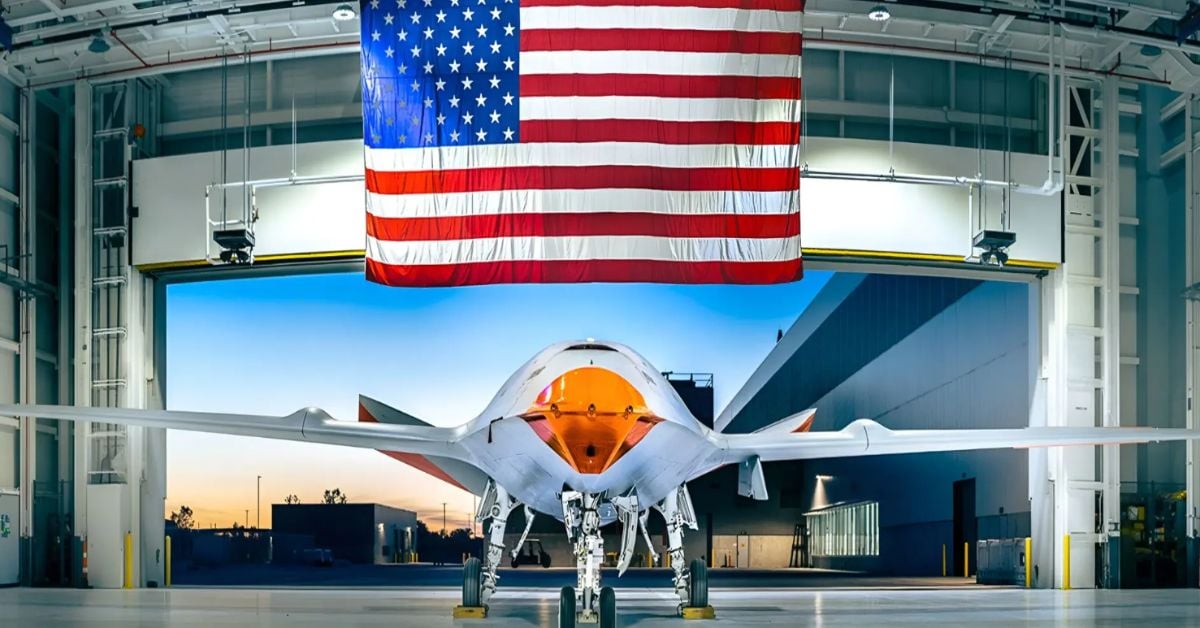
In a historic first, the U.S. Navy connected to and successfully established control over an MQ-25A Stingray unmanned refueling aircraft from an aircraft carrier sailing more than 2,100 miles away.
This milestone was achieved onboard Nimitz-class carrier USS Ronald Reagan, which was sailing in the Pacific while the aircraft was stationed at Boeing’s facility in Mascoutah, Illinois. It is the first time remotely operated drones have been used in carrier operations.
During trials, operators on Reagan used its Unmanned Air Warfare Center (UAWC) to establish a connection with the aircraft via a satellite network through the MD-5C Ground Control Station, which established the link.
The demonstration used communication and command systems required for future drone operations from aircraft carriers and was part of a series of trials intended to integrate and validate the processes, interfaces, and networks needed to operate the aircraft from the Navy ship.
Tests and trials for the same were conducted when the ship was docked with the support of the Navy’s Unmanned Carrier Aviation Program Office and a test team with personnel from the Navy, Boeing and Lockheed Martin.
Capt. Daniel Fucito, program manager for the Unmanned Carrier Aviation Program Office, said that this operation is evidence that the Carrier Air Wing of tomorrow is a reality today.
The Navy also plans to use Boeing’s MQ-25A Stingray for refuelling aircraft such as F/A-18E/F Super Hornets.
This would enable the aircraft to remain in the air longer and operate at farther distances from the carrier. Using drones to fuel the aircraft would free Super Hornets for combat operations rather than carrying additional fuel for other military planes.
With this, MQ-25A is set to become the US Navy’s first unmanned refuelling aircraft and lay the foundation for the inclusion of more unmanned systems into future carrier air wings.
More tests would be conducted to establish how the system would perform during routine flight operations and missions.
RELATED POSTS


Disclaimer :
The information on this website is for general purposes only. While efforts are made to ensure accuracy, we make no warranties of any kind regarding completeness, reliability, or suitability. Any reliance you place on such information is at your own risk. We are not liable for any loss or damage arising from the use of this website.

About Author
Zahra is a maritime writer with 6 years of technical writing experience spanning port operations, offshore wind, oil and gas, and maritime policy. Her analytical edge...Read More ->
Disclaimer :
The information on this website is for general purposes only. While efforts are made to ensure accuracy, we make no warranties of any kind regarding completeness, reliability, or suitability. Any reliance you place on such information is at your own risk. We are not liable for any loss or damage arising from the use of this website.
Related Articles
Subscribe To Our Daily Newsletter
By subscribing, you agree to our Privacy Policy you can unsubscribe anytime.


