
US And Denmark Sign Maritime Pact Aimed At Faster And Cheaper Shipbuilding In American Yards
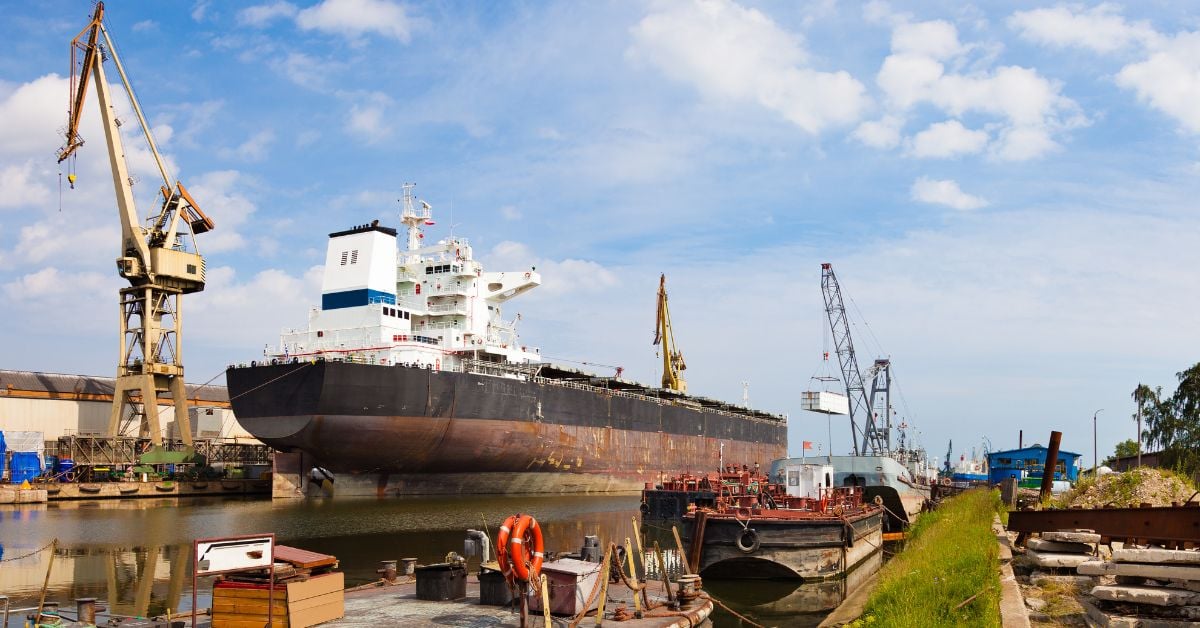
Denmark and the United States have signed a memorandum of understanding to boost cooperation in the maritime sector.
Signed by the U.S. Under Secretary of State for Economic Affairs Jacob Helberg and Danish Foreign Minister Lars Løkke Rasmussen, the agreement is part of U.S. President Donald Trump’s Maritime Action Plan to reinstate America’s maritime dominance.
The initiative would enable U.S. shipyards to secure Danish investment, get adequate training for workers, secure a skilled pool of port workers, and get access to Danish maritime technologies and expertise in ship design, construction, and repairs.
It would also help attract foreign investment into the American shipbuilding industry and generate thousands of jobs.
Helberg posted about the agreement on social media platform X, where he mentioned that what American shipping needs at the moment is skilled labour, capital and speed.
He added that the MOU signed with Denmark promises all three: quicker training, Danish funding, and cheaper newbuilds and faster ship repairs at lower costs. He mentioned that the agreement was meant to strengthen the American maritime industrial base and domestic supply chains.
The implementation will be overseen jointly by the U.S. Department of State and the Danish Ministry of Foreign Affairs, according to sources. Denmark is a maritime superpower with some of the world’s largest commercial shipping fleets and pioneering green ship technologies.
The U.S. and Denmark have had cordial diplomatic relations since 1801. One of their most prominent maritime transactions was recorded in 1917 when Denmark sold its territories in the Caribbean Sea, the Danish West Indies, to the U.S. Today, they are known as the U.S. Virgin Islands.
Denmark joined the U.S. as a charter founding member of NATO, agreeing to the mandate of securing transatlantic sea lines of communication.
Despite strict U.S. domestic protection laws, such as the Jones Act, which states that commodities shipped between US ports must be carried on American-built and crewed vessels, Denmark has supplied core maritime components such as energy-efficient ship engines, and propulsion systems.
On a local level, regions like Washington State have direct maritime pacts with the Royal Danish Embassy on ferry electrification and zero-emissions port development.
RELATED POSTS


Disclaimer :
The information on this website is for general purposes only. While efforts are made to ensure accuracy, we make no warranties of any kind regarding completeness, reliability, or suitability. Any reliance you place on such information is at your own risk. We are not liable for any loss or damage arising from the use of this website.

About Author
Zahra is a maritime writer with 6 years of technical writing experience spanning port operations, offshore wind, oil and gas, and maritime policy. Her analytical edge...Read More ->
Disclaimer :
The information on this website is for general purposes only. While efforts are made to ensure accuracy, we make no warranties of any kind regarding completeness, reliability, or suitability. Any reliance you place on such information is at your own risk. We are not liable for any loss or damage arising from the use of this website.
Subscribe To Our Daily Newsletter
By subscribing, you agree to our Privacy Policy you can unsubscribe anytime.


