
Oman’s Sohar Port Becomes Gateway For Indian Exporters Shipping Cargo To GCC Nations
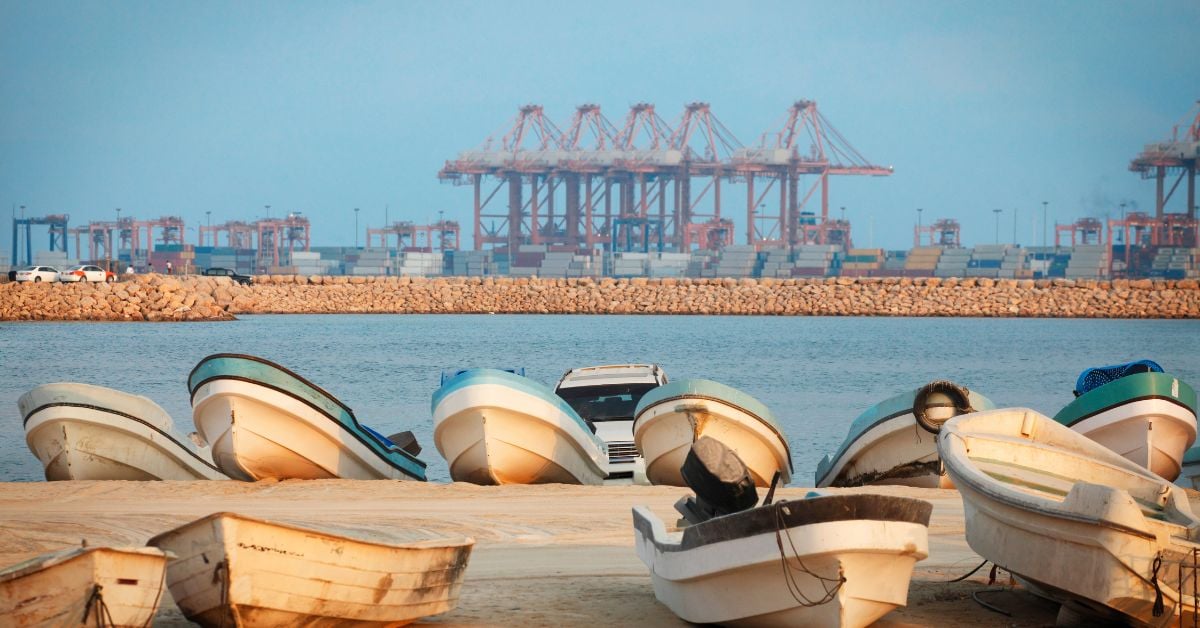
Oman’s Sohar Port has become a major gateway for India to export its cargo to the Gulf Cooperation Council (GCC) countries, which include Oman, Saudi Arabia, Bahrain, UAE, Kuwait, and Qatar.
The number of feeder ship services between Indian ports and Sohar has increased by four times since the U.S-Iran war disrupted shipping through the strategic Strait of Hormuz.
This shows a reshaping of trade routes due to geopolitical conflict, with many shipping companies rerouting services to ports East of Hormuz, such as Jeddah, Khorfakkan, Salalah and Sohar.
The Deputy CEO of the port, Raid Al Rubaiey, said that Sohar has seen a tremendous increase in cargo from India, especially packaged food and consumer goods such as rice.
He added that many products which were earlier shipped directly to GCC nations through Hormuz are now arriving at Sohar.
As cargo volume is increasing, the Port of Sohar in Oman is also widening its capacity to become a gateway for New Delhi to GCC Nations.
Authorities in Sohar Port are in contact with a few Indian terminal operating companies which have shown interest in opening facilities at the Port, in a bid to strengthen logistics with India.
Sohar is a strategic port located on the northern coast of Oman. It is a deepwater facility and a major industrial centre which deals with containers, bulk, petrochemicals and is connected to Oman’s roadways and the broader logistics network of the region.
Unlike the facilities located in the Persian Gulf, ships arriving at Sohar do not have to cross Hormuz, which has prompted Muscat to pitch the facility as an alternative gateway to conduct maritime trade with West Asia.
A prolonged disruption in the Strait of Hormuz, without an alternative, could impact LNG, fertilisers, crude oil, petrochemicals and other imports reaching Asian markets.
However, Sohar cannot replace Hormuz in terms of capacity but can only serve as an alternative since the cargo will be moved via Oman and transported overland or by waterways, making it expensive in the long run.
Saudi Arabia has also switched to ship-to-ship transfers off the Sohar Port after the Houthi blockade of its ports in the Red Sea.
Disclaimer :
The information on this website is for general purposes only. While efforts are made to ensure accuracy, we make no warranties of any kind regarding completeness, reliability, or suitability. Any reliance you place on such information is at your own risk. We are not liable for any loss or damage arising from the use of this website.
RELATED POSTS


About Author
Zahra is a maritime writer with 6 years of technical writing experience spanning port operations, offshore wind, oil and gas, and maritime policy. Her analytical edge...Read More ->
Disclaimer :
The information on this website is for general purposes only. While efforts are made to ensure accuracy, we make no warranties of any kind regarding completeness, reliability, or suitability. Any reliance you place on such information is at your own risk. We are not liable for any loss or damage arising from the use of this website.
Related Articles
Subscribe To Our Daily Newsletter
By subscribing, you agree to our Privacy Policy you can unsubscribe anytime.


BE THE FIRST TO COMMENT