
Download 18 FREE Maritime eBooks
What are Gas Carrier Ships?
Gas carrier ships are especially designed ocean-going vessels that are dedicated for transporting all types of liquefied natural gases (LNG) and liquefied petroleum gases (LPG) to their destinations. These ships are inbuilt with tankers of plain surface, spherical or cylindrical shape to carry the gas. Capacity of a gas carriers depends on the trade for which it was constructed and ranges from 3,500 –1, 50,000 m3.
Natural gases, according to their physical and chemical properties, are normally carried in liquid state thus gas carrier ships can be classified under below mentioned categories:-
1. Fully Pressurized
2. Semi-pressurized and refrigerated
3. Fully refrigerated
Fully Pressurized Ships are the ships with the capability of carrying gases up to 3,500 m3. These ships carry the gas in spherical or cylindrical steel tanks regardless of temperature or pressure control. These are designed for a maximum working pressure of 17.5 kg/cm2 and a minimum working temperature at -45oC. They are built with ordinary grades of thick steel wall as the gas is carried at ambient temperature and no insulation is needed. Because of the thick steel wall used in the tank the weight of the ship increases, thus making it uneconomical for long voyage.
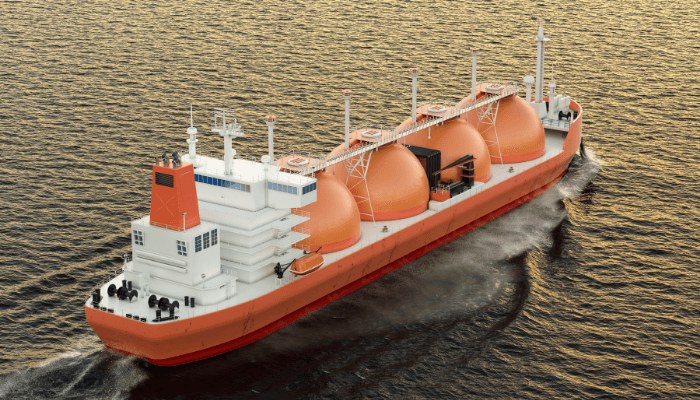
Semi-pressurized and semi refrigerated ships consist of semi refrigerated plant with a high design pressure for the tanks capable of transporting up to 5,000 m3 gas. The tanks use in these ships are cylindrical in shape and are designed for a maximum working pressure of 8.5 kg/cm² and a minimum working temperature of -10°C. These ships are mainly used to carry propane gas while on the other hand semi-pressurized and fully-refrigerated ships are capable of transporting the gas up to 15,000 m3 in cylindrical or spherical tanks which are designed for a maximum working pressure of 5 kg/cm² and a minimum working temperature of -48°C. Re-liquefaction plant fitted in these ships can cool or heat the gas during gas filling in or discharging from tanks respectively. These ships are light in weight than fully pressurized ships, thus ensuring a hassle free voyage.
Fully refrigerated ships are very large gas carriers capable of carrying 15,000 – 85,000 m3 gas and best suited for long voyages. Tanks used in these ships are capable of bearing a maximum working pressure of about 0.28 kg/cm2 and a minimum working temperature of – 50oC. Gases like LPG, ammonia, butane propane etc can be easily transported in bulk through these ships. Because of its prism like shape it provides more space than the above mentioned ships.
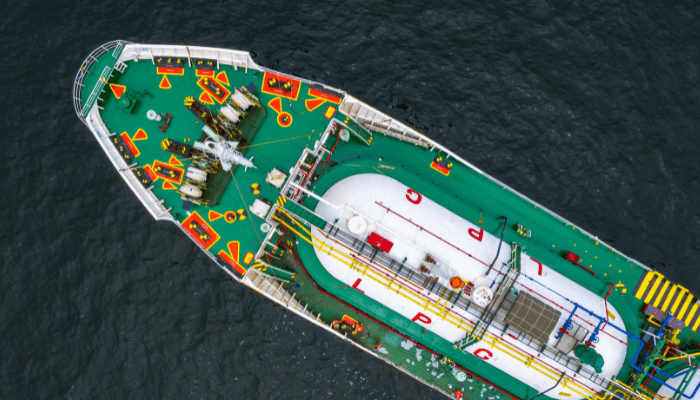
Natural gas is among the most important alternative sources of energy to meet world’s daily energy requirements. As the consumption of liquefied natural gas is increasing dramatically across the world, development of new gas projects in locations remote from importing countries also resulted in a high demand for newer, larger capacity gas carrier ships with the capability of carrying up to 2,30,000 m3 gas is the most sought after. With the increased sizes of the carriers currently under construction, ship-shore compatibility has become a major issue for many existing import terminals.
You may also like to read What is Cable laying ship.
References: witherbyseamanship, dnv


Disclaimer :
The information on this website is for general purposes only. While efforts are made to ensure accuracy, we make no warranties of any kind regarding completeness, reliability, or suitability. Any reliance you place on such information is at your own risk. We are not liable for any loss or damage arising from the use of this website.
Related Articles
Disclaimer :
The information on this website is for general purposes only. While efforts are made to ensure accuracy, we make no warranties of any kind regarding completeness, reliability, or suitability. Any reliance you place on such information is at your own risk. We are not liable for any loss or damage arising from the use of this website.
⚓️ Enhance Your Knowledge. Prevent Accidents. Stay Safe at Sea.
1. eBooks for Engine Department
Master machinery operations, troubleshooting, and safety procedures with expertly written guides tailored for marine engineers. Prevent costly breakdowns and onboard accidents through practical knowledge.
👉 Explore Engine Department eBooks
2. eBooks for Deck Department
Sharpen your seamanship, navigation, and cargo-handling skills with real-world case studies and practical insights designed for deck officers and cadets.
👉Discover Deck Department eBooks
3. eBooks on Electrical Fundamentals & Issues
Understand marine electrical systems, identify potential faults, and prevent onboard electrical failures with step-by-step explanations from industry experts.
4. Pocket Guides for Quick Reference
Compact, handy, and loaded with essential checklists—perfect for on-the-go reference during operations and emergencies at sea.
5. Combo Packs to Save Big
Access multiple expert eBooks at discounted prices. Ideal for professionals seeking complete safety and operational knowledge across various ship departments.
6. Digital Maritime Courses – Learn at Your Own Pace
Upgrade your competence with Marine Insight Academy’s online courses. Learn from industry professionals anytime, anywhere, and become a safer, smarter seafarer.
Subscribe To Our Daily Newsletter
By subscribing, you agree to our Privacy Policy and may receive occasional deal communications; you can unsubscribe anytime.

BE THE FIRST TO COMMENT