


Understanding Boiler Feed Water Contamination
The quality of boiler water plays an important role in deciding the overall marine boiler efficiency. Contamination of boiler water leads to several types of problems, including the main ones – corrosion and scale formation. To eradicate the problem from the roots, it is important to understand the boiler water chemistry and how contaminants enter boiler feed water.
Inside the boiler system, the boiler feed water passes through a series of pipelines, tanks, and equipment. The feed water is always chemically treated to reduce the effects of harmful minerals and gases. However, the boiler feed water is not the only one responsible for problems related to boiler water contamination and boiler efficiency. The boiler feed water is always clean and chemically treated and is mainly affected by the corrosion of the boiler system, which is mostly harmless.
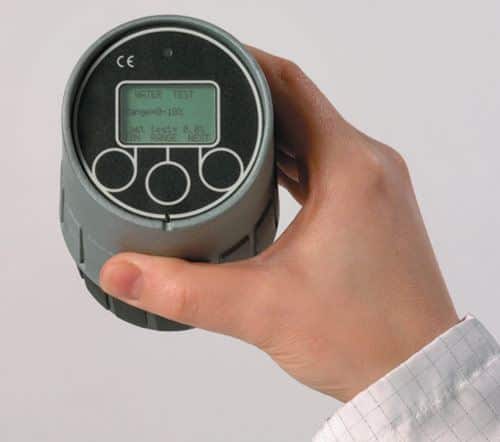
The main problem starts when a lot of this boiler feed water is lost through leakages and processes such as boiler blow down, soot blowing etc., and make-up water is needed to be introduced to compensate this loss. It is this make-up water that brings in a majority of the impurities into the boiler system.
How the make-up feed water is more contaminated?
The new feed water is taken into the boiler system by two ways
- From fresh water tanks whose water is meant for drinking purpose
- From sea water distillation plan or fresh water generator
Boiler feed water is mainly taken from the fresh water generator. The sea water contains a large amount of salts and other dissolved minerals and gasses. Moreover, the fresh water generated in the fresh water generator would often carry small droplets of salt water from the vapours. Salt droplets are also a result of salt water leaks in the distillate condenser. The feed water thus contains several dissolved minerals and salts.
Also, the dissolved gases in the seawater which are either absorbed from the air or are a result of decayed plant and animal bodies are also carried over with the vapour to the distilled water. Many of these gases and impurities are harmful, and which eventually lead to boiler problems.
Problems Due to Contaminated Boiler Feed Water
The problems arising due to contaminated boiler feed water can be classified into two main types:
1. Corrosion
2. Scale formation
Technically, both the above mentioned problems are interlinked. Both of them results in loss in boiler efficiency and can cause boiler tube failures and inability to produce steam.
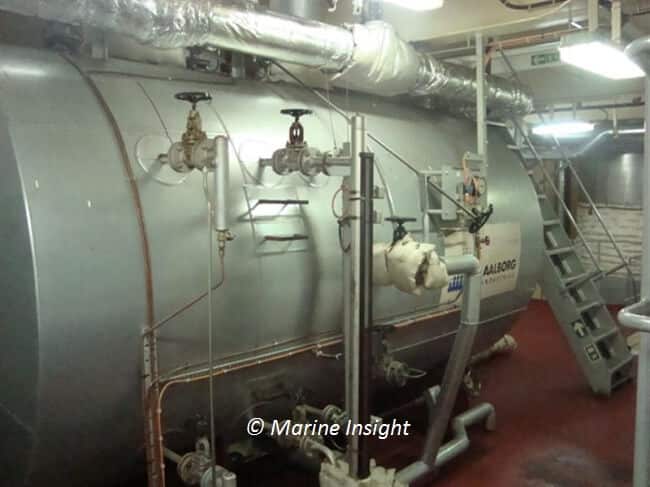
Corrosion
One of the most common reasons for boiler corrosion remains the action of dissolved oxygen in the make-up and feed water. Corrosion leads to failure of machinery from inside also reduces over all boiler efficiency.
Scale Formation
Scale formation or deposits in the boilers results from hardness contamination of feed water.
The primary minerals in the water that make the feed water “hard” are Calcium (Ca++) and Magnesium (Mg++).
These minerals form a scale over the surface of piping, water heaters, and on everything it comes in contact with. Hardness contamination of the feed water may also result from either deficient softener systems or raw water in leakage of the condensate.
This kind of scale/ deposits act as insulators and lower the heat transfer rate.
The insulating effect of deposits also causes the boiler metal temperature to rise and lead to tube-failure by overheating.
Large amounts of such deposits throughout the boiler would reduce the heat transfer enough to drop the overall boiler efficiency.
Additional read:
Important Points for Boiler Cleaning
Boiler Starting Failure – Trouble Shooting
Important Books on Marine Boilers
Do you have info to share with us ? Suggest a correction
Latest Marine Technology Articles You Would Like:

Related Posts
- Blow-Down Procedure for Marine Boilers

- 6 Practical Tips On Improving Boiler Efficiency for Professional Marine Engineers
- What To Do During Marine Auxiliary Boiler’s Flame Failure or Fuel Pump Tripping?
- Boiler Starting Failure – Troubleshooting
- Understanding Boiler Feed Water Contamination
- Understanding Boiler Refractory And Its Types
Subscribe To Our Newsletters
By subscribing, you agree to our Privacy Policy and may receive occasional deal communications; you can unsubscribe anytime.
what is shrinking or swelling of boiler?
What are the effects of sea water, fresh water and distilled water as boiler feed water?