


America’s Most Advanced Aircraft Carrier USS Gerald R. Ford Begins First Deployment
Almost two decades since the ceremonial and memorable first cut of steel and a decade since the christening in Newport News, the USS Gerald R. Ford has finally headed out to the sea on Tuesday, marking its first-ever official deployment.
Though there is the confidence that the Ford — a technological marvel much more advanced in multiple ways than all other famous and, of course, successful vessels that preceded it — will perform exceedingly well, each departure of the chosen service members seems to come with unforeseen risks and the Ford carries with it the region’s hope for a super successful deployment and a speedy and safe return.
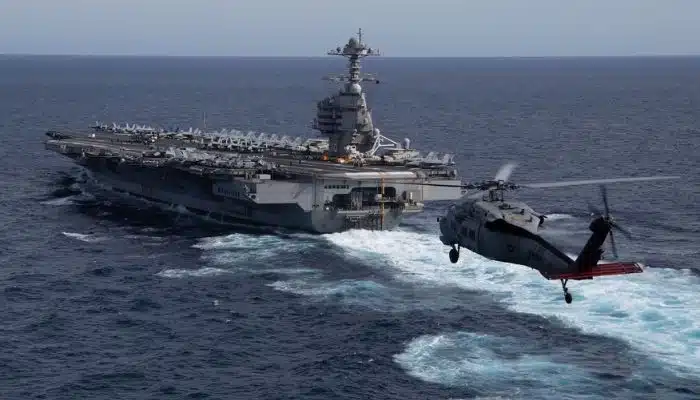
These vessels are floating cities — home to the thousands of personnel with power infrastructure, living quarters, sanitation, and food service to provide for them — and floating airports capable of launching almost 270 air missions daily. It takes a considerable amount of time and incredible skills to build this.
Everything about the Ford is staggering:
Size: It measures 1,106 feet in length; it is currently the largest aircraft carrier in service and the largest warship ever built.
Longevity: The Ford will be in service for 50 years before the need for refuelling and is expected to serve for 90 years.
Price: The Ford cost is $13.3 billion. Future carriers of the class are estimated to cost approximately $12 billion each.
The Ford boasts a dramatic design departure from the Nimitz-class vessels: Its Island is about 140 feet further aft, meaning more space for any aircraft to line up for a launch. But the critical difference is what lies under the hood.
The Ford design has successfully replaced steam-powered systems used by the Nimitz class carriers with electromagnetic launch systems, permitting it to facilitate the launch of more aircraft in a shorter timeframe. Its radar systems and weapons reflect leading-edge advancements. The nuclear reactor is known for generating more power than any other previous carrier. The Ford also boasts a comparatively larger flight deck than the predecessors and needs a smaller crew.
And, of course, it’s that crew that will make the difference at sea, conducting operations and undertaking the difficult work required for defending national security.
The region is under zero illusions regarding the dangers that abound worldwide, from China’s sabre-rattling against Taiwan as well as global ambitions to the Russian invasion of Ukraine and territorial aspirations to North Korea’s ongoing nuclear developments coupled with erratic activities to the rogue regimes and terrorist organizations that continue operating in far-off lands.
Having the ability to respond with force against the country’s enemies and with compassion toward those in dire need is critical for the US. The USS Ford now is the most impressive tool in the toolbox — from its ability to project American air power anytime and anywhere, all over the world, to its full potential to calm situations by its presence in turbulent zones, to its capability to extend relief and aid in the face of disaster.
About 6,000 service members are deployed on the Ford and with the strike group while their loved ones anticipate their speedy and safe return.
References: The Virginian Pilot, The Drive, The Aviation Geek Club
Disclaimer :
The information contained in this website is for general information purposes only. While we endeavour to keep the information up to date and correct, we make no representations or warranties of any kind, express or implied, about the completeness, accuracy, reliability, suitability or availability with respect to the website or the information, products, services, or related graphics contained on the website for any purpose. Any reliance you place on such information is therefore strictly at your own risk.
In no event will we be liable for any loss or damage including without limitation, indirect or consequential loss or damage, or any loss or damage whatsoever arising from loss of data or profits arising out of, or in connection with, the use of this website.
Disclaimer :
The information contained in this website is for general information purposes only. While we endeavour to keep the information up to date and correct, we make no representations or warranties of any kind, express or implied, about the completeness, accuracy, reliability, suitability or availability with respect to the website or the information, products, services, or related graphics contained on the website for any purpose. Any reliance you place on such information is therefore strictly at your own risk.
Do you have info to share with us ? Suggest a correction
About Author
Marine Insight News Network is a premier source for up-to-date, comprehensive, and insightful coverage of the maritime industry. Dedicated to offering the latest news, trends, and analyses in shipping, marine technology, regulations, and global maritime affairs, Marine Insight News Network prides itself on delivering accurate, engaging, and relevant information.

About Author
Marine Insight News Network is a premier source for up-to-date, comprehensive, and insightful coverage of the maritime industry. Dedicated to offering the latest news, trends, and analyses in shipping, marine technology, regulations, and global maritime affairs, Marine Insight News Network prides itself on delivering accurate, engaging, and relevant information.

Latest Shipping News Articles You Would Like:

Subscribe To Our Newsletters
By subscribing, you agree to our Privacy Policy and may receive occasional deal communications; you can unsubscribe anytime.