


What is an Air Lock on Gas Carriers?
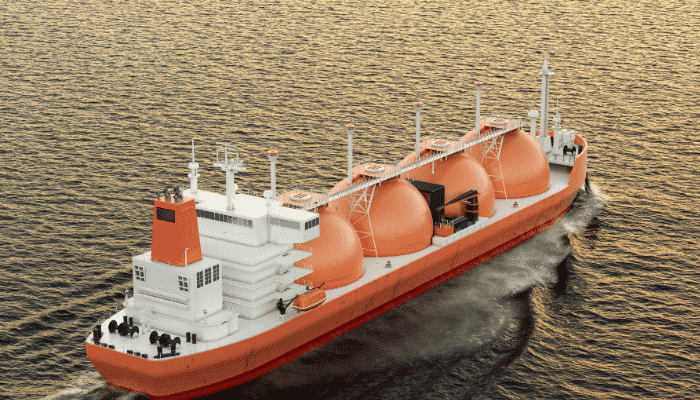
Ships carrying bulk liquefied gases are considered one of the most dangerous cargo carrying ships because of the hazardous and flammable properties cargo. In such ships, highest safety standards are maintained to avoid any kind of accidents from taking place, explosions being the most common of them.
One such safety feature that is provided on Gas carrier ships is Air Lock, a simple yet effective feature.
What is an Air Lock?
Air Lock is a protected space or room between dangerous gas areas/zones and weather deck. It is a type of gas safe space. Perfect example of such place is the protected entrance space of the cargo compressor motor room, which can be isolated from rest of the spaces.
The driving motor of the cargo compressor in a gas carrier ship is installed in a room different from the compressor room. Moreover, the shaft connecting them passes through a gas tight bulkhead.
The electric motor room is accessible only after crossing the Air lock as a safety measure.
Requirements for Air locks:
- The air lock room is a gas tight space with two doors spaced minimum 1.5 m and maximum 2.5 m. I t is made up of steel
- Doors of Air locks must have self closing and no-holding back attachments
- Air lock space are fitted with sensors to monitor ingress of cargo vapors
- The height of the door sill must be minimum 300 mm
- Space must be mechanically ventilated and maintained at pressure higher than that of the surrounding space
- Audio and visual alarm to be provided if both doors are opened simultaneously
- Cut out of electric cargo compressor motor has to be provided if pressure of the air lock space falls below the set limit.
Do you have info to share with us ? Suggest a correction
Latest Ship Safety Articles You Would Like:


Latest Maritime law Articles You Would Like:





Latest News
- What are Logistics Risks?

- How Port and Terminal Operators Can Control Emissions?
- Minimum Quantity Commitment (MQC) and Liquidated Damages in Container Shipping: Concept and Relevance
- MARPOL (The International Convention for Prevention of Marine Pollution For Ships): The Ultimate Guide
- The Ultimate Shipping Container Dimensions Guide
- A Comprehensive Overview of IMDG Code for Shipping Dangerous Goods









Subscribe To Our Newsletters
By subscribing, you agree to our Privacy Policy and may receive occasional deal communications; you can unsubscribe anytime.



Respected Sir/madam,
I am Chirag harkhani. i am pursuing my master in university Rostock, germany.
I need Rules and Regulation for LNG -Propulsion ship.
So can you help me?
Thank in advance,
Regards,
Chirag
Hi Chirag,
Please check this article:
https://www.marineinsight.com/maritime-law/specifications-and-requirements-for-lpg-and-lng-ships-to-sail-in-international-waters/
For any further queries, please use our forums: https://forums.marineinsight.com