

Measures Taken During Shipboard Operation for the Safety of Ship’s Crew, Cargo, and Marine Environment
In every shipboard operation, the three prime factors that should be focused on by the onboard personnel are – safety of the crew, safety of the ship and cargo, and protection of marine environment.
The ship’s crew should always remember that whatever they do, the bottom line in all circumstances must be – ‘Safety First’.
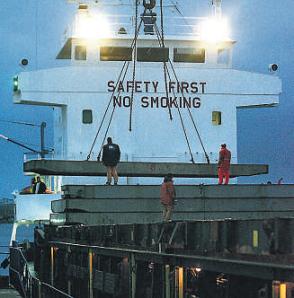
During cargo operation in a container ship, following points are to be remembered to ensure safety of the crew, cargo, and marine environment:
- When it comes to the crew, personal protective equipment must be worn during cargo operation which includes the safety shoes, safety helmet, overall, gloves, etc.

- While handling the ongoing cargo operation, be careful not to come in the way or stand under any heavy load.
- Safety of the cargo involves the correct lashings & securing of the cargo.
- Safety of the personnel involves correct lashing procedure to avoid back injuries and sprains.

- Onboard refrigerated cargo is to be monitored and should be maintained at their required temperatures.
- Dangerous goods of different categories have to be packaged and segregated as per the IMDG code.
- No source of ignition should be allowed into or near to a place where dangerous goods containers or IMDG containers are stowed.
- The lashing bridge and catwalks must be in a safe condition to work.
- All the lashing bars and lashing equipments must be in place and not left lying on the lashing bridge floor.
- One must never stand or walk under a working spreader. The consequences could be fatal if an accident occurs.
- Mooring ropes of the ship should be kept tight all the time.
- Safety signs should be posted at appropriate places. (For example ‘No Smoking’ signs).
- Security level to be displayed and ISPS duties to be performed properly.
- The deck and even the cargo holds should be free of oil or greasy material. If the deck is found in such a condition it must be cleaned up immediately.
- Cargo holds containing dangerous cargo or fumigated containers should be well ventilated. Entry into such a hold with inadequate ventilation must not be allowed.
- Dangerous cargoes must be stowed on deck or in the holds as per the Ship’s stowage plan for dangerous cargoes and should be well away from living quarters.
- Any kind of oil spill or leak must be prevented so as to avoid pollution of the seas.
- When an incident takes place involving the loss or likely loss overboard of packaged dangerous goods into the sea, the Master shall report the particulars of such an incident without delay to the nearest coastal State.
- The report shall be based on the Supplement to the IMDG-Code “Reporting Procedures”. When the ship is within or near an area for which a ship reporting system has been established, reports shall be transmitted to the designated shore station of that system.
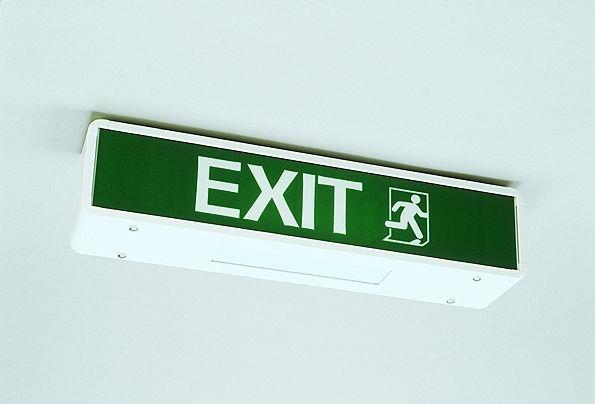
- Emergency exits and escape routes must be clear of all obstructions at all time.
- All crew should be aware of the dangerous cargo spill contingency plan which is kept in the deck office
- First aid kit and defibrillator must always be present in the deck office.
You may also like to read-Dos and Don’ts to Avoid Fire in the Ship’s Accommodation Area
Image Credits:
independent
mua
nauticexpo
Latest Ship Safety Articles You Would Like:


Do you have info to share with us ? Suggest a correction



Subscribe To Our Newsletters
By subscribing, you agree to our Privacy Policy and may receive occasional deal communications; you can unsubscribe anytime.
Web Stories