


Real Life Accident: Four Stevedores Die On Log Vessel
On a log vessel, the stevedores started entering a full cargo hold immediately it was opened for discharge. One of them slipped and fell into a gap between logs. Noticing the first man fall and disappear between the logs, three others attempted to rescue him. All four stevedores were brought out with great difficulty from narrow spaces between logs four to five meters deep with the help of shore firefighters. They were brought up unconscious almost an hour after the fall. The hospital declared them “dead on arrival”.
Logs where the bark has been stripped off are known to be dangerously slippery. Freshly cut logs are also known to deplete oxygen in enclosed spaces. These two factors combined may have been the reason for the deaths.
- Logs are one of several cargoes which have oxygen depleting properties. Personnel must be adequately warned of the consequences. Guidelines in Appendix B, Paragraph 5.3 of the Code of Safe Practice for Ships Carrying Timber Deck Cargoes 1991 should be followed.
- Forced ventilation or adequate natural ventilation must be carried out prior to admitting any personnel into cargo hold carrying logs.
Chapter 5.1 of the Code expressly provides for suitable protective clothing and equipment, including footwear, to be worn.
Please find below further information on oxygen depleting cargoes and precautions to be taken while carrying them.
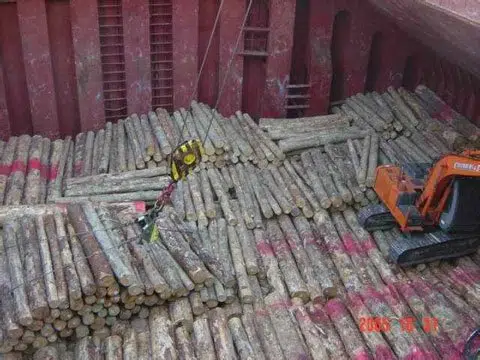
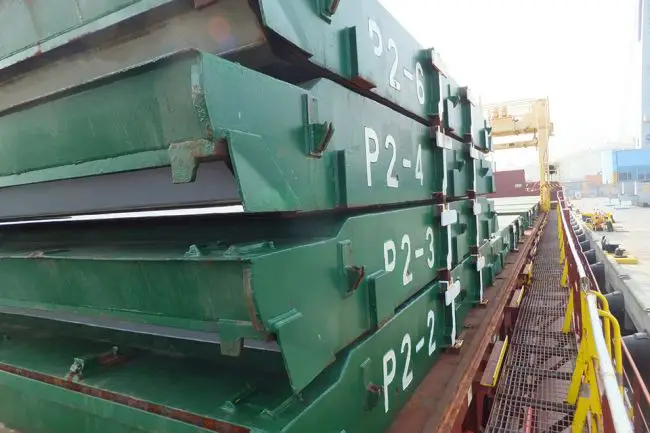
Image for representation purpose only
Oxygen Depleting Cargo
A prominent risk while carrying certain cargoes is oxygen depletion due to the inherent form of the cargo, for example, self-heating, oxidation of metals and ores or decomposition of vegetable oils, animal fats, grain and other organic materials or their residues. The materials listed below are known to be capable of causing oxygen depletion. However, the list is not exhaustive. Oxygen depletion may also be caused by other materials of vegetable or animal origin, by flammable or spontaneously combustible materials and by materials with high metal content:
-> Grain, grain products and residues from grain processing (such as bran, crushed grain, crushed malt or meal), hops, malt husks and spent malt;
-> Oilseeds as well as products and residues from oilseeds (such as seed expellers, seed cake, oil cake and meal);
-> Copra;
-> Wood in such forms as packaged timber, round wood logs, pulpwood, props (pit props and other prop wood), woodchips, wood shavings, wood pulp pellets and sawdust;
-> Jute, hemp, flax, sisal, kapok, cotton and other vegetable fibres (such as esparto grass/spanish grass, hay, straw, bhusa), empty bags, cotton waste, animal fibres, animal and vegetable fabric, wool waste and rags;
-> Fishmeal and fishscrap;
-> Guano;
-> Sulphidic ores and ore concentrates;
-> Charcoal, coal and coal products;
-> Direct reduced iron (DRI);
-> Dry ice;
-> Metal wastes and chips, iron swarf, steel and other turnings, borings, drillings, shavings, filings and cuttings; and
Scrap metal
The atmosphere in any enclosed space may be deficient in oxygen and/or contain flammable and/or toxic gases or vapours. Such an unsafe atmosphere could also subsequently occur in a space previously found to be safe. Unsafe atmosphere may also be present in spaces adjacent to those spaces where a hazard is known to be present.
If fumigation is carried out, detailed recommendations contained in the “Recommendations on the Safe Use of Pesticides in Ships” should be followed. Spaces adjacent to fumigated spaces should be treated as if fumigated.
Conclusion
Failure to observe simple procedures can lead to people being unexpectedly overcome when entering enclosed spaces. While ship’s staff are quite aware of such dangers and observe sufficient precautions, it is also obligatory on the part of the vessel to ensure that cargo holds are well ventilated and the stevedoring company warned of inherent dangers with the cargo carried on board before commencement of cargo work.
Reference : Nautinst.org
Do you have info to share with us ? Suggest a correction

- Real Life Incident: Vessel Collision in Good Visibility

- Real Life Incident: Severe Injury To Deck Crew While Leaving Berth
- Real Life Incident: Departure Damage in Very Restricted Waterway
- Real Life Incident: Low Situational Awareness Has High Impact Consequence
- Real Life Incident: Fouled Anchor in a Designated Anchorage
- Real Life Incident: Fire On Barge Carrying Scrap Metal Causes $7 Million Worth Of Damage



Latest Case studies Articles You Would Like:

Subscribe To Our Newsletters
By subscribing, you agree to our Privacy Policy and may receive occasional deal communications; you can unsubscribe anytime.